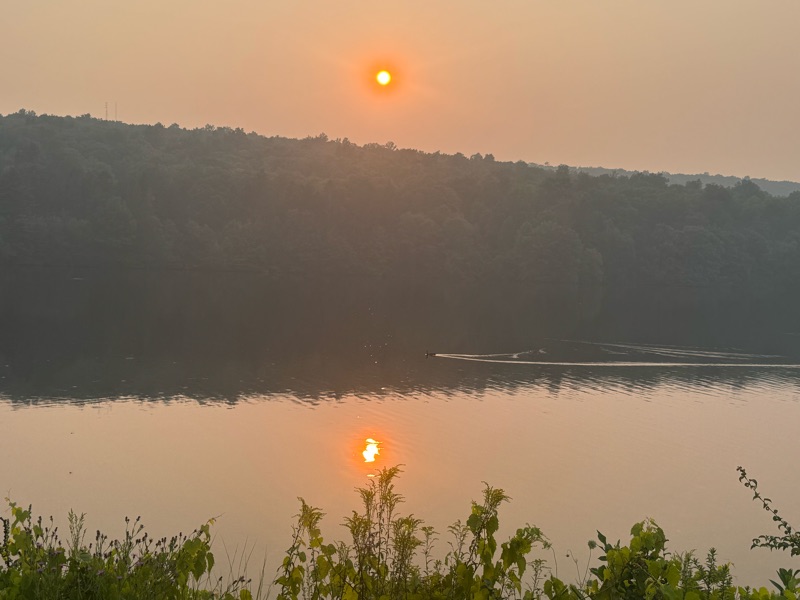
Mid July I found myself sitting beside Reservoir 6 in West Hartford beneath a smoky summer sky. The smoke from wildfires burning in Ontario had drifted hundreds of miles south, softening the afternoon light and turning the sun into a muted orange disc behind a veil of gray. It was an unsettling reminder that landscapes we imagine as separate are often connected in ways we cannot see. The smoke carried the story of another forest along the jet stream into this one.
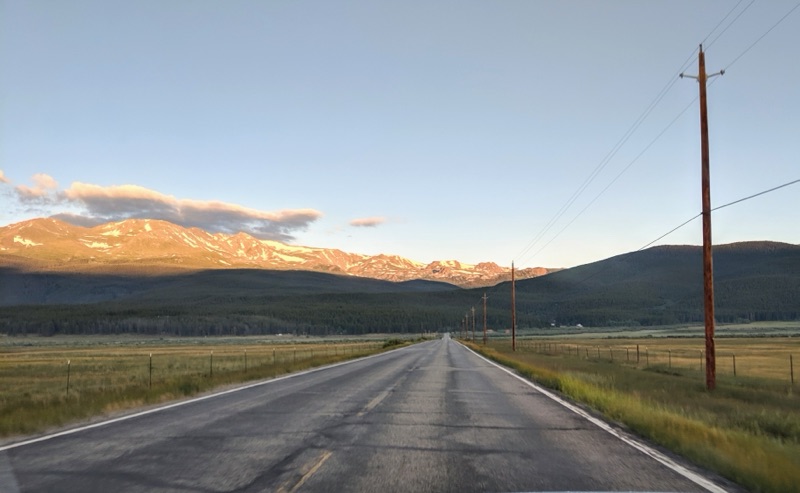
As I watched it settle over the water, I found myself thinking about another landscape and another fire—a mountain in Colorado I had climbed with my daughter nearly six years earlier, and a wildfire now burning through the forests below it. The smoke that drifted across Connecticut had begun near Leadville, Colorado close to the trailhead where Niamh and I started our climb in July 2020. As firefighters worked to contain the blaze and nearby communities faced evacuation, the mountain I remembered as a place of celebration had become part of another story—one of drought, fire, and an increasingly fragile landscape.
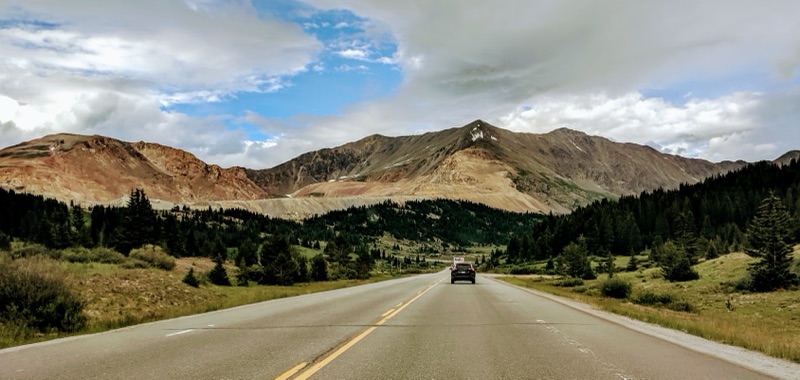
Long before it became Mount Massive on modern maps, this landscape belonged to the Nuu-ciu (Ute), whose seasonal movements followed these mountains for generations. The name Sawatch is generally understood to derive from a Ute word meaning "blue earth," later adapted through Spanish before settling into English. Even the names remind us that landscapes accumulate stories layered upon one another.
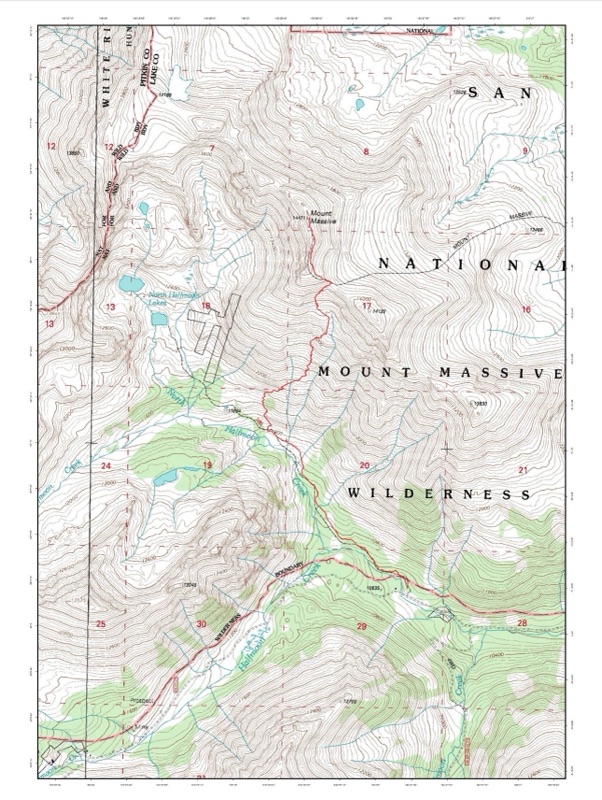
Unlike so many of Colorado's fourteeners, whose names commemorate explorers, politicians, or institutions, Mount Massive is named simply for what it is. A massif is not a single mountain but a massive body of the earth's crust, a compact block of connected peaks formed through immense geological forces over unimaginable stretches of time. Mount Massive, the second highest peak in Colorado, takes its name not from a single summit but from the five fourteen-thousand-foot summits that together form the mountain. Its identity lies less in claiming the highest point than in the breadth of the whole.
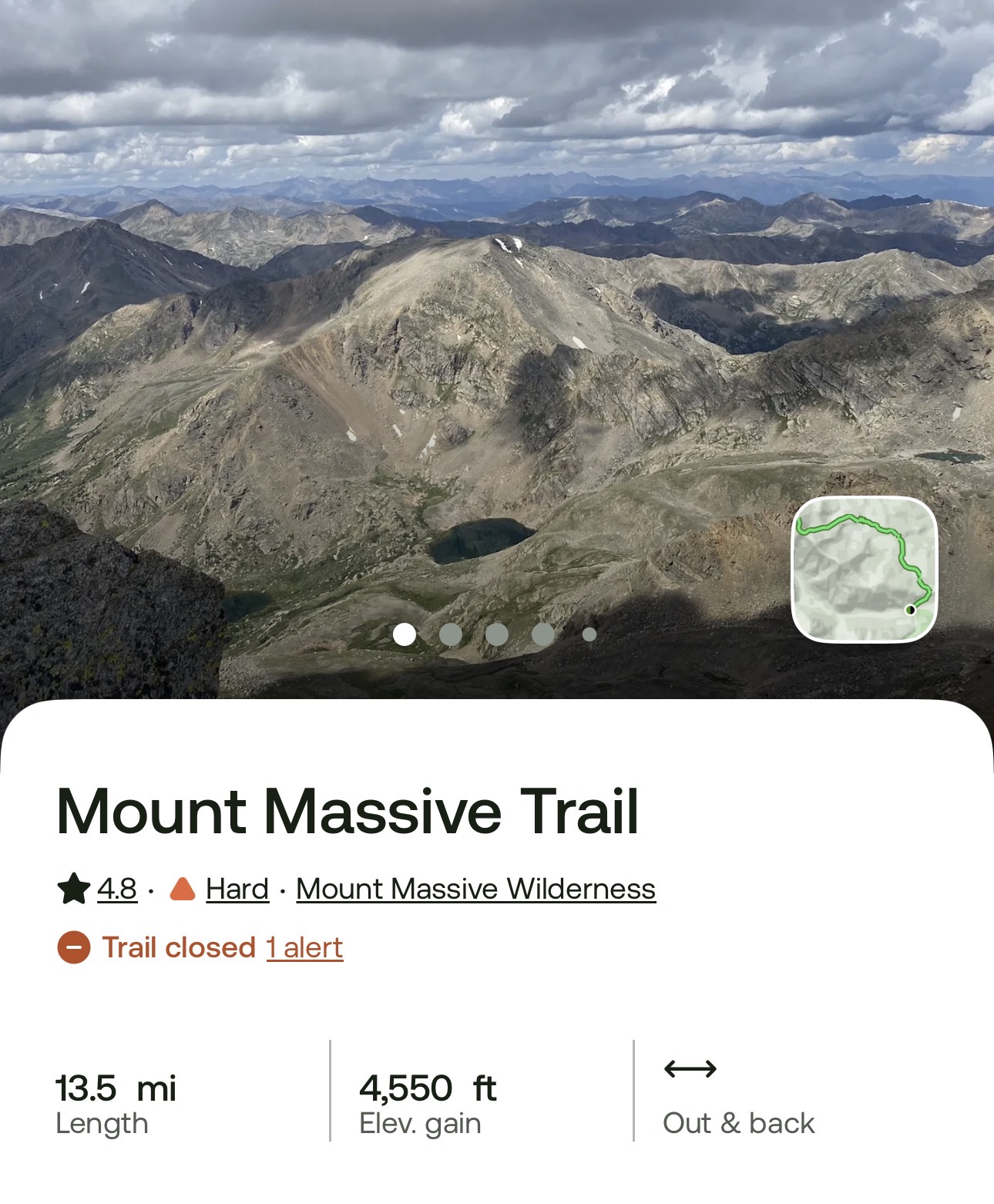 Mount Massive is the highest summit of that massif, but it is the massif itself that gives the mountain its name. The granite beneath our feet began forming nearly two billion years ago before tectonic uplift, glaciation, erosion, snow, water, and fire sculpted the broad shoulders that distinguish it from so many of Colorado's sharper peaks. Long before the Willow Fire appeared in newspaper headlines, periodic burns were already part of the mountain's ecological rhythm, clearing forest floors, recycling nutrients, and creating conditions for renewal.
The spring and summer of 2020 offered an unexpected interruption to ordinary life. Like many, I found myself with time that had not existed before. We were living in Summit County, Colorado, so I made a plan to climb a few of the state's fifty-three fourteeners while I had the opportunity. Turning fifty invited a kind of reckoning. Milestone birthdays have a way of asking us to pause—to look back over the life we’ve built, to measure ourselves against the hopes we once held, and to consider what remains possible. It seemed a good excuse to test myself against something that required preparation, endurance, and humility. Climbing a Colorado fourteener felt like an appropriate way to honor the moment and to set a tone for whatever came next. In ways I could never have imagined--it did.
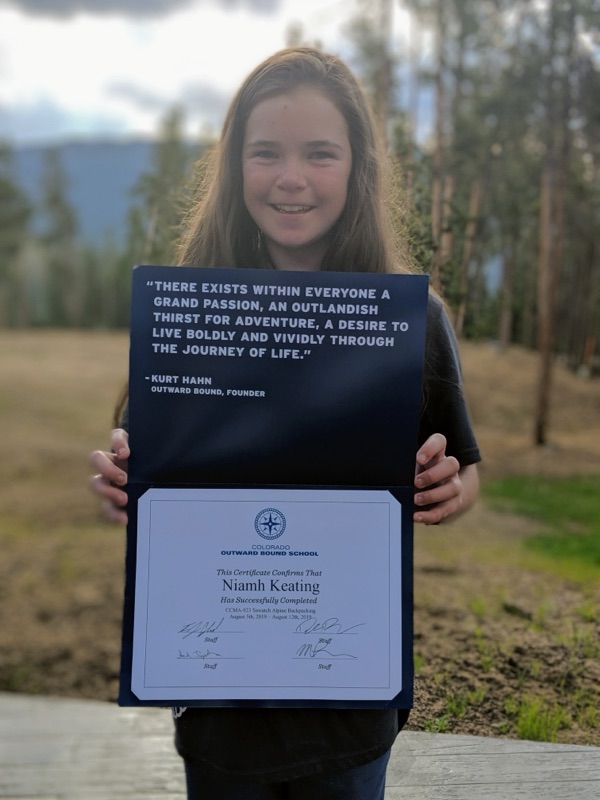
By July 2020, life had become uncertain. I was quietly preparing for another international move, this time to Morocco, while selling furniture, packing boxes, and procuring a cat visa, all why navigating a world that was closed for business. Much of the early summer had been devoted to caring for my brother as he navigated a difficult period in his life. I arrived at my fiftieth birthday somewhat depleted.
We camped beside a stream near the trailhead the night before my birthday climb. The sound of moving water should have made for restful sleep, but headlights swept repeatedly across the tent as climbers drove the rough road toward the trailhead hours before sunrise. Every time another vehicle rumbled past and dust drifted beneath the rainfly, I woke wondering whether we had overslept, whether everyone else was already ahead of us, whether we had forgotten something important. Between the 10,500 ft altitude, the mountain chill, the anticipation, and the logistics of an alpine start, neither of us slept particularly well.

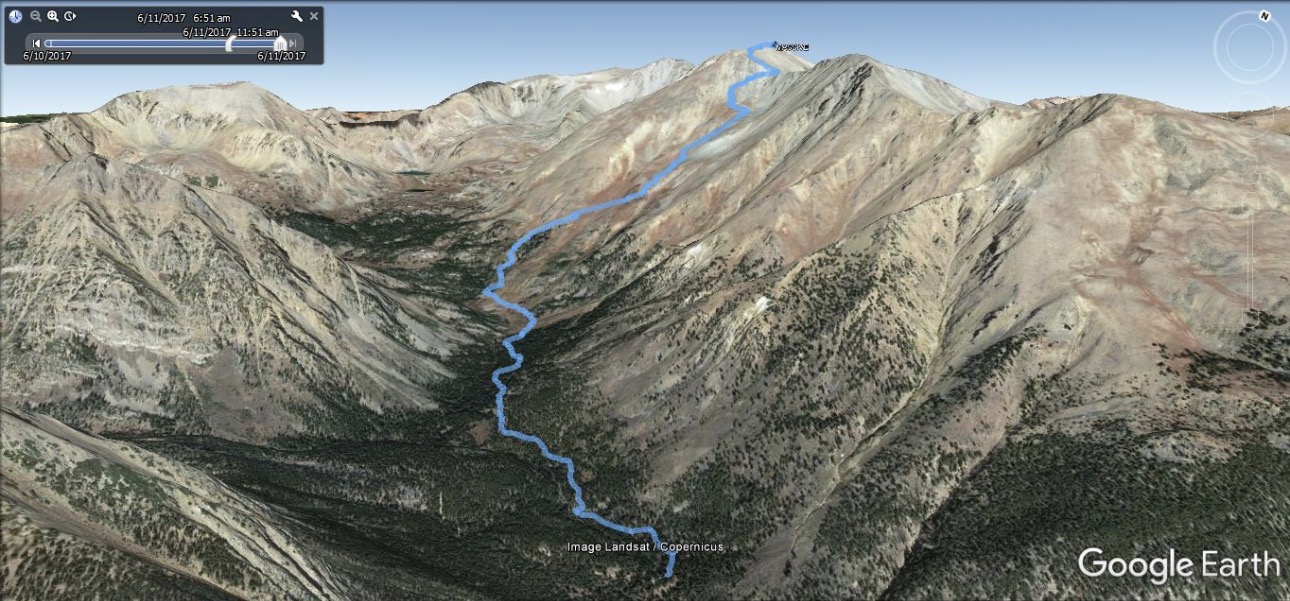
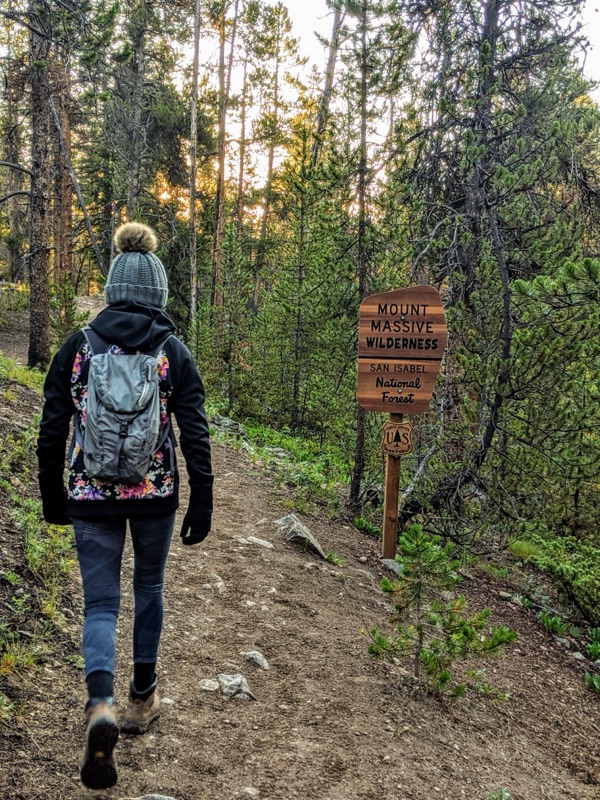
The lower trail winds gradually up through dense lodgepole pine and spruce, and for several miles the mountain keeps much of itself hidden. Unlike peaks that reveal their summit almost immediately, Mount Massive unfolds gradually. The forest narrows your field of vision until your attention settles on the immediate landscape: the next switchback, exposed roots, loose rocks, birdsong filtering through the trees. Only after climbing above tree line does the horizon suddenly open in every direction. The alpine tundra stretches toward distant ridges, and you see glimpses of the summit.
It was not until I began studying eco-chaplaincy that I encountered research helping to explain why experiences like this remain so vividly embedded in memory. Neuroscientists have found that novel environments recruit more of our attention than familiar ones, creating stronger and more durable memories. Hiking at altitude demands constant physiological adjustment. Oxygen levels decrease. Breathing deepens. Muscles fatigue differently. Working memory becomes occupied with balance, hydration, weather, footing, and pacing. The brain has little capacity left for distraction because it is fully engaged with the present moment. Here I found my explanation as to why I do not remember spending hours contemplating life's deeper questions as I hiked along. I remember almost none of the miles themselves. I remember paying attention—to the trail beneath my boots, to the changing weather, to my breathing, to my daughter's comfort, and to the growing awareness that the mountain was asking more of me than I had anticipated.

That attention also sharpened something I had not expected. Throughout Niamh's childhood I had usually been the one encouraging her forward—breaking long hikes into manageable pieces, suggesting one more bend in the trail, one more bridge, one more hill before we stopped. But she had grown into a teen now capable of carrying not only her own weight but, in small ways, mine as well. A summer spent trail running with her cross country team in Summit County had prepared her well for this massive mission.

By the time we reached the final ridge, I was tired. The granite narrowed, steep drop-offs fell away on either side, and every step demanded complete concentration. I have never been particularly comfortable with exposure, and standing on that ridge made me acutely aware of how little separated secure footing from open air. Somewhere along the final approach I noticed that Niamh had begun leaving single M&Ms on rocks ahead of me, just as I had done for her five years earlier while we hiked the Tour du Mont Blanc through France, Switzerland, and Italy.

On our Alps adventure I had scattered those bits of chocolate ahead of her when she was tired, turning the next stretch of trail into a kind of treasure hunt. Now she was quietly returning that kindness. That moment has remained with me. Her willingness to notice that I was hesitant, to encourage me without drawing attention to it, told me something about the young woman she was becoming. Whatever else I questioned about my parenting over the years, standing on that ridge I remember thinking- perhaps I got something right.
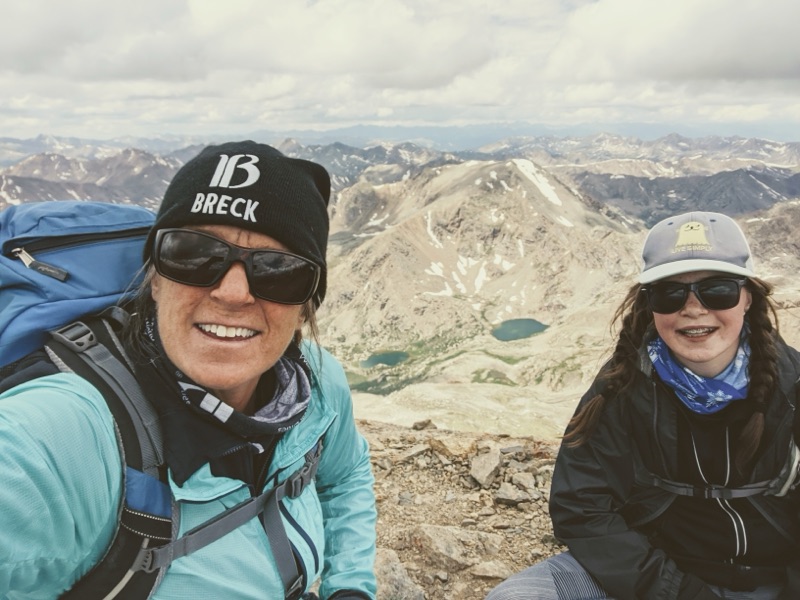
The summit was breathtaking, but it was not triumphant. It was humbling. I gazed out across the Sawatch Range, trying to absorb a landscape so vast that my imagination could scarcely contain it. I was equally aware of my own fatigue, the exposure around us, and the long journey back down. Reaching the summit is only the halfway point. What overwhelmed me was not simply the view but the perspective it offered. The trail that had occupied my attention all morning became one thin line across an immense landscape. Mount Massive itself was only one mountain among many mountains. Our climb was only one day among thousands of days in our lives. The scale of the landscape quietly recalibrated my own worries.

After photographs and contemplative moments, we turned around and began the descent. The only thought that remained was to keep walking before darkness reached the trail. After hours spent exposed above the alpine tundra, the shelter of the forest felt protective again. Clouds had begun building over the ridge behind us, and although there were still miles to walk, I knew the most exposed part of the day was over. Much of the descent has blurred with time except for one brief moment of exquisite relief when I sat beside the icy Willow Creek and plunged my aching feet into the water while the sound of the rushing creek drown out the chatter in my head. I allowed myself to imagine floating away on it. The mountain had been harder than I'd anticipated. Expectation can become its own form of debt. We pay for it whenever reality refuses to honor the stories we’ve already told ourselves. By the time we trudged to the trailhead around six o'clock that evening, ours was the last car remaining in the parking lot.

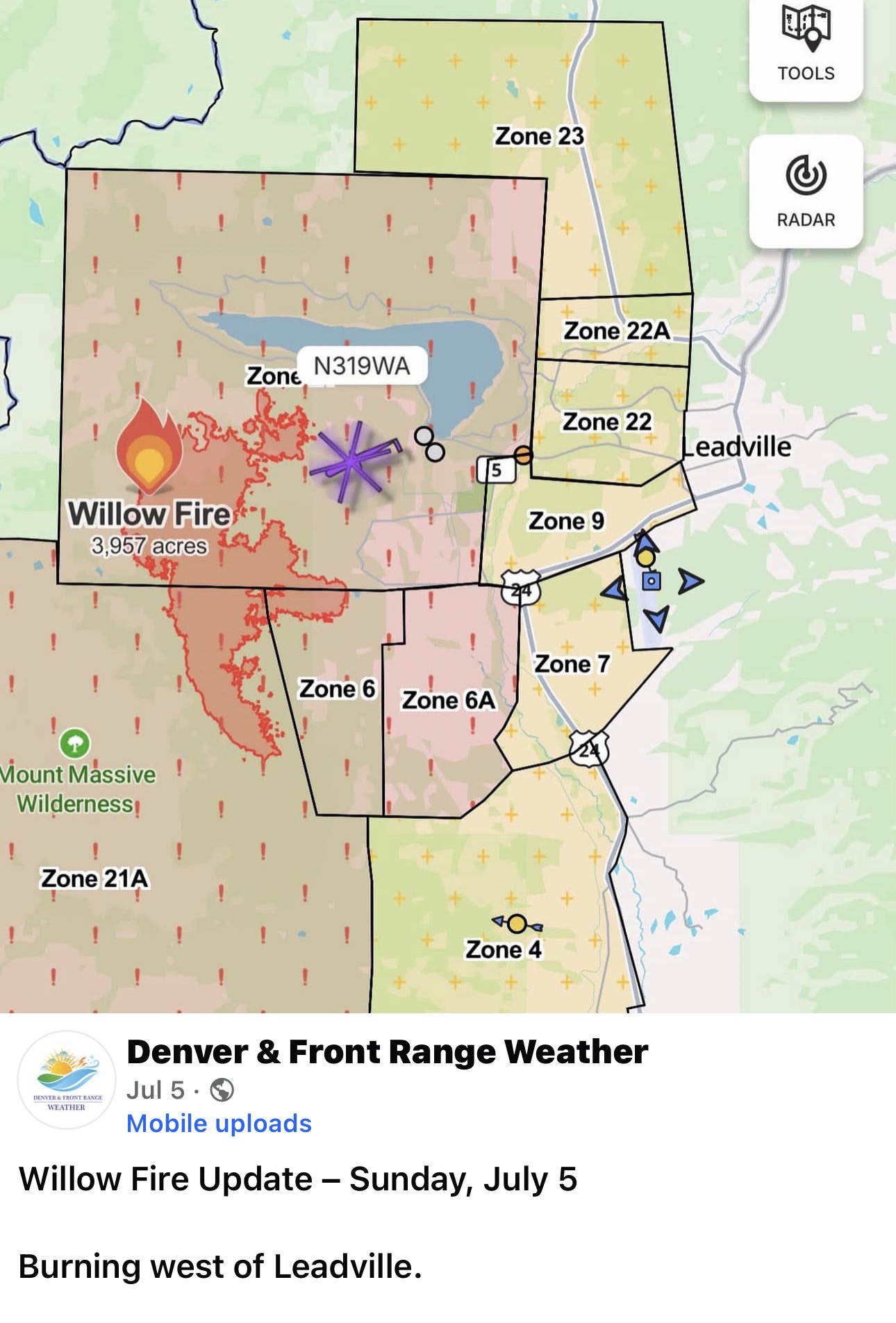
When I read about the Willow Fire burning through the forests below Mount Massive, I found myself reading about fire ecology as well. One of sixteen active fires burning across Colorado and one of hundreds across North America, it has consumed nearly 7,100 acres since igniting through human activity on June 28 and remained only partially contained. 12 people have been injured fighting it. Somewhere in those burning acres were the forests through which we had climbed before crossing South Willow Creek and leaving the Colorado Trail for the long ascent above treeline. The granite endures while the landscape changes.
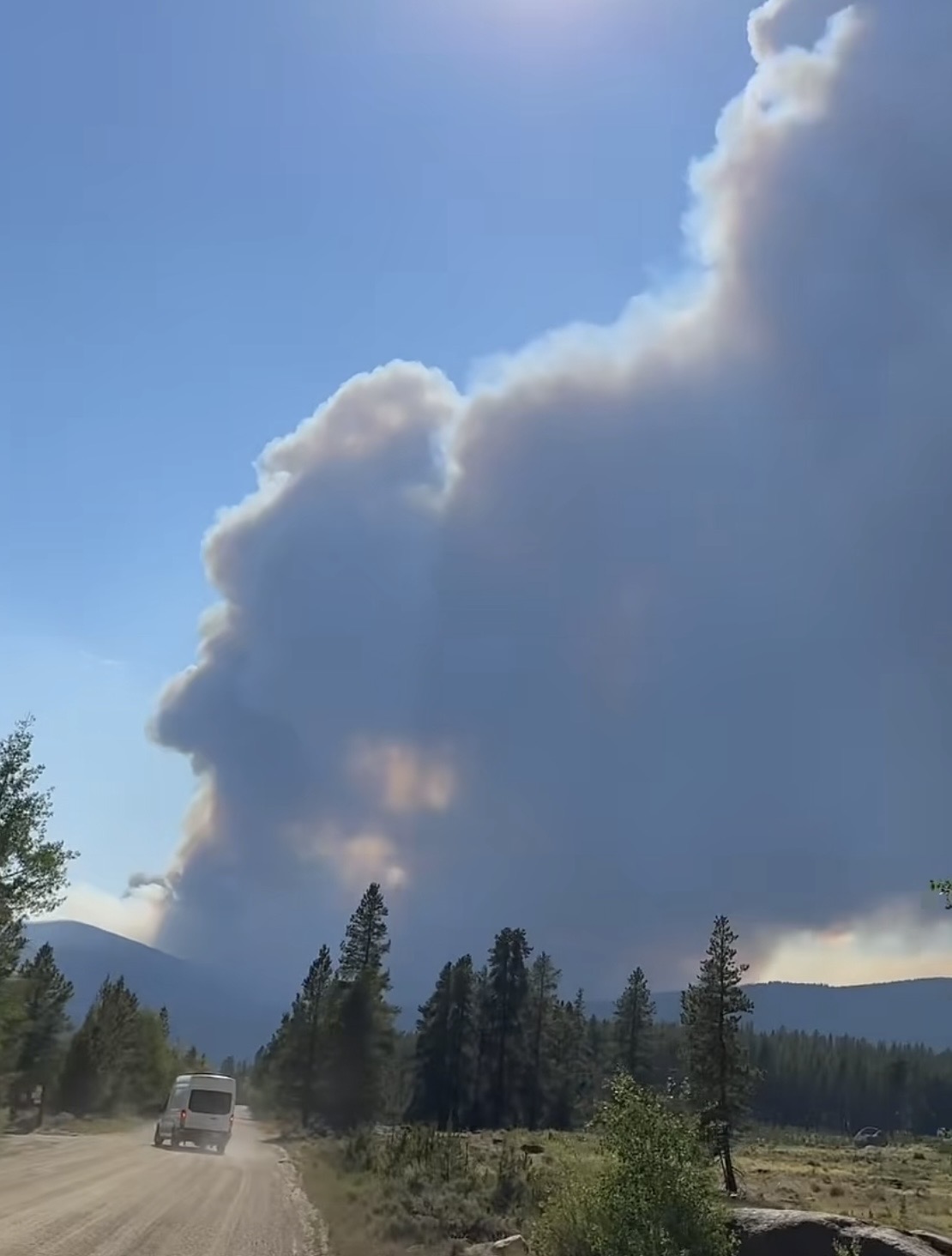
Fire destroys, but in many western ecosystems it also belongs. Some forests depend upon periodic burns for renewal. Heat opens cones that would otherwise remain closed. Nutrients return to the soil. Light reaches seedlings that could never have survived beneath a dense canopy. Fire does not erase the mountain. It changes what grows upon it.
During the past year, my chaplaincy studies required me to conduct an honest inventory of grief. That work became something much larger. Grief was only one layer. Beneath it lay decades of choices, relationships, losses, risks, mistakes, joys, sacrifices, and moments of grace. I kept excavating, hopeful that if I dug deeply enough I might grasp how those layers had shaped the life I had lived. Perhaps healing is not another excavation. It is allowing the undergrowth of regret to burn away until the granite that has always been there is revealed. No single decision, heartbreak, success, failure, or loss explains who we become.
Watching smoke drift across New England from fires burning hundreds of miles away, I wondered whether there comes a point when excavation itself reaches its limit. Reflection has value, but so does recognizing when enough layers have been uncovered. Some things ask to be understood. Others simply ask to be seen clearly.
Sometimes the granite remains exactly where it has always been, while everything growing upon it learns, season after season, how to begin again. It is a lesson I am learning.

