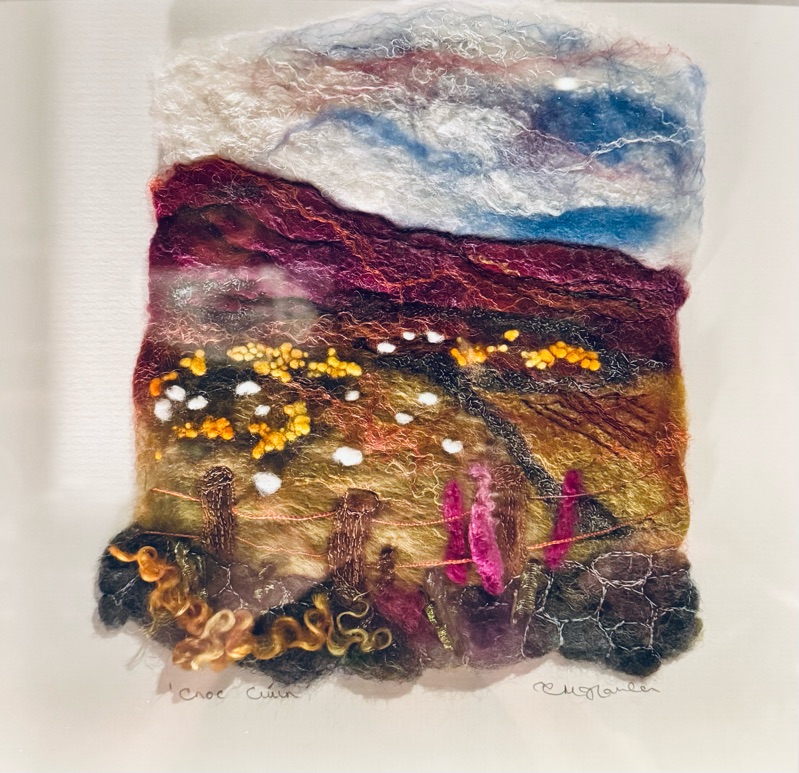
Cnoc Cúin (The Quiet Hill)
Caóilfhionn Murphy O’Hanlon, 2021
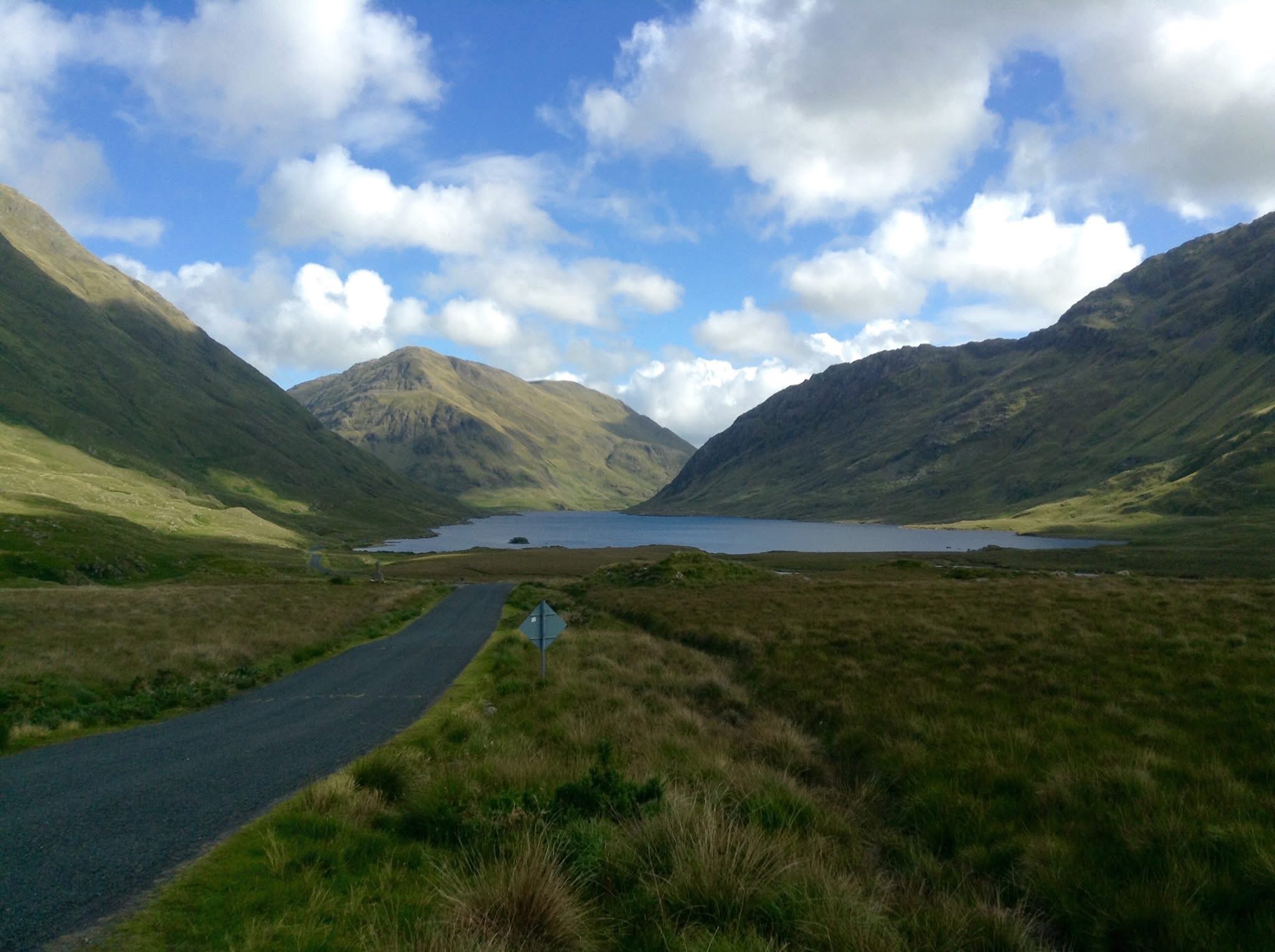
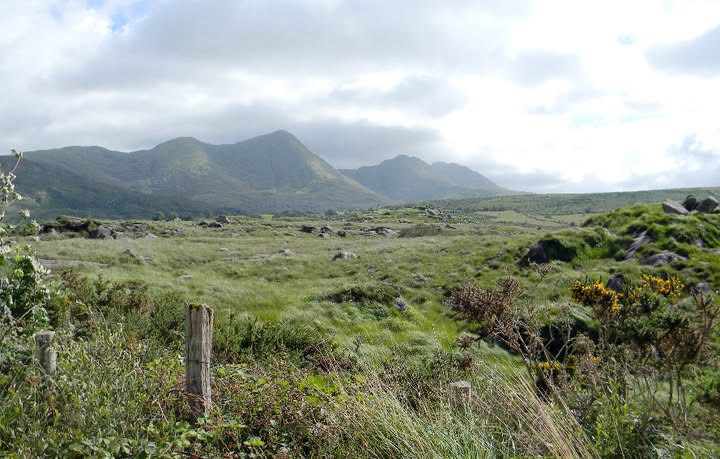
Irish folklore tells of the fód seachráin, the stray sod: a piece of enchanted ground upon which a traveller can suddenly lose all sense of direction. There is nothing to distinguish it from the earth around it. No marker warns you away. You simply step on the wrong patch of ground and a place you thought you knew becomes unreadable. A familiar road seems to lead nowhere. Landmarks that should orient you somehow fail to do so. You may wander in circles, unable to find your way out of a place in which, by every rational measure, you are not actually lost.
That is the part of the story I find most unsettling. The traveller has not been transported somewhere else. The road remains where it was. The wall still divides the field. Home may even be nearby. What has changed is the traveller's relationship to the landscape. I know this place. Why can I no longer find myself within it? There is something almost psychedelic about it: the world remains recognizable, but the familiar coordinates no longer seem to work.
The traditional remedy is wonderfully peculiar. Stop walking. Take off your coat. Turn it inside out. Put it back on. Somehow, the spell is broken and your bearings return.
I am less interested in whether anyone ever believed this literally than in the wisdom hidden inside the ritual. The lost traveller is not told to walk faster or search harder. The first instruction is to stop. Then something familiar is removed and deliberately reversed. The coat that normally protects the body from the world is turned inside out, exposing what is ordinarily hidden: lining, seams, hems, worn places, alterations and repairs. Nothing has been added to it. It is the same coat. You are simply seeing how it was put together.
There is another turned coat in my family. My Nana Keating, raising four children during the Depression and war years while her husband was away on the Italian and North African fronts, once reversed a coat because the elbows had worn through and there was no money for another. I grew up hearing it as one of those family stories about scarcity and ingenuity: you made do. Beside the fód seachráin, I hear something else in it now. When something could no longer function in its familiar form, she turned it over and found another way to wear it. The worn places did not disappear. They simply ceased to determine the usefulness of the whole garment.
The stray sod has stayed with me because grief can produce its own kind of disorientation. Not only bereavement, but estrangement, migration, trauma, the loss of a relationship, a community, a role, or a future we assumed would be ours. When losses accumulate, what disappears is not only the person or place itself. The identity we constructed in relationship to those things can begin to shift as well. We can be standing in a life we recognize and no longer quite recognize ourselves within it.
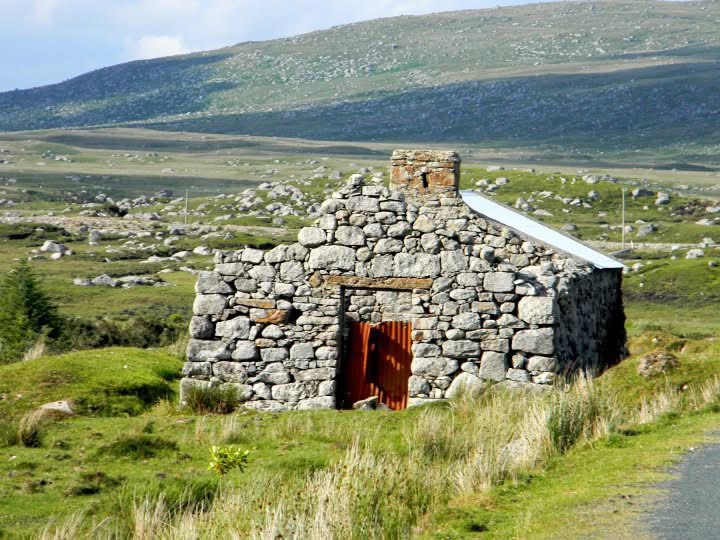
It is difficult for me to separate an Irish story about becoming lost on familiar ground from the history of the ground itself. Land in Ireland has never been merely scenery. It has meant livelihood, family, inheritance and belonging, and who was permitted to possess it—or driven from it—has shaped centuries of Irish history. The fód seachráin predates An Gorta Mór, the Great Hunger, and I am not suggesting that the catastrophe created the folklore. But I find it hard to believe that generations marked by dispossession, eviction, hunger and emigration would not have understood something about the feeling the story describes.
As a child, I knew the simplified Irish-American version of the Great Hunger. The potatoes developed a blight. People starved. Our ancestors came to America. My mother used to say, “Anybody who could leave, did.” I understood that sentence then as an explanation for why our family was here. I understand it differently now. The potato crop failed catastrophically, but Ireland did not simply run out of food. Food continued to leave the country while people starved. Evictions continued. Families disappeared through death and emigration. What I had learned as a story of immigration increasingly looked like a story of displacement.
My mother's sentence now leaves me with two questions I could not have understood as a child. What did it take to leave your family, your village and perhaps the only landscape you had ever known, carrying what you could, knowing you might never return? And what did it take to stay?
I have stood in the ruins of a Famine village near Carlingford, and there is something difficult to describe about being there. Walls remain. The outlines of houses remain. The fields stretch around them. Yet the place does not feel empty in the ordinary sense. It feels marked. Calling that an energy makes it sound more mystical than I necessarily mean it to be, but you feel something there. You feel the loss. There is a certain stillness about it.
Standing among those ruins, I find myself thinking about the people who remained. What happens when your neighbors have died, your family has scattered, houses stand empty and people you love have boarded ships that may never bring them home? The geography has not disappeared. You may still know every road, field and stone wall. But the human world through which you understood your place in that geography has been torn apart.
You have not moved, and still you have been displaced.
That seems to me larger than sadness. Place helps tell us who we are: whose child we are, who our neighbors are, where we belong, what stories are ours, where our dead are buried. When enough of those coordinates disappear, grief becomes entangled with identity. The question changes from How do I live without them? to Who am I here now?
Perhaps that is one reason displaced people hold so fiercely to the things that can travel. Names. Songs. Food. Religion. Photographs. Stories. Ireland entered my own childhood in Connecticut through these fragments. In the basement of our house were boxes of dog-eared photographs and tarnished tintypes, and I spent hours studying the faces of people long dead. Did I have those eyes? What were they like? What made them laugh? I wanted to understand what and who had made me, me.
Years later, while teaching an identity unit to eighth graders at the United Nations International School, I asked students to write “Where I'm From” poems. They were Third Culture Kids whose lives stretched across countries, cultures and languages, and the apparently simple question Where are you from? quickly became something much larger. My 12-year-old daughter's poem began, “I am from books and boxes, airplanes and passports,” and eventually declared, “I am from everywhere.” In another poem she wrote about what happened after every move: her heart would break “over, and over, and over again.”
Both things can be true. A life can be extraordinarily rich and still require something from the person living it. Being from everywhere can also complicate the question of where one belongs. Sometimes it’s hard to believe that we belong wherever we find ourselves.
I understand that differently now too. International life teaches us to expect disorientation when we cross borders. We know that we will have to learn new systems, establish relationships and find our bearings again. Coming home can be stranger still because we do not expect the same uncertainty there. I have returned to the Connecticut landscape of my childhood after spending much of my adult life elsewhere. I know these roads. I recognize the landmarks. I know where I am. And sometimes I have no idea where I am.
That is the fód seachráin I recognize: not being lost in an unfamiliar world, but losing your sense of yourself in a world you know perfectly well. Grief can do that. So can displacement. So can returning. The road has not disappeared. The traveller's relationship to the road has changed.
Which brings me back to the coat.
Turning it inside out cannot restore what has been lost. It cannot repopulate a village, return an emigrant, resurrect the dead, repair every relationship or give us back an earlier version of ourselves. But it does ask us to stop walking in circles long enough to examine what we are carrying. Turn it over. Look at the seams. What was inherited? What was chosen? What has worn through? What was repaired? What no longer fits? What has been stitched together, sometimes by our own hands and sometimes by the loving hands of others?
A seam does not necessarily mean something is broken. It is also the place where separate pieces have been joined.
The Irish language carries an intriguing parallel. Tá brón orm is commonly translated as I am sad or, depending on context, I am sorry, but its construction is closer to sorrow is on me. Tá áthas orm: joy is on me. Tá eagla orm: fear is on me. The emotion is real, but the language places a small space between the person and what the person is experiencing. Irish carries this relationship between loss and distance elsewhere too. Deoraíocht, exile or emigration, echoes deora, tears. Leaving seems to carry grief within the language.
I miss you works differently as well. Airím uaim thú can be understood as I feel you away from me or I feel your absence from me. There is something painfully precise about that. Missing someone is not simply an emotion contained inside the person who remains. It is the felt presence of an absence. Someone once occupied a particular place in our world, and we can still feel the space where that person is not.
Maybe that is what I feel in the ruined village too.
There is something powerful in a language that can acknowledge the full weight of sorrow without requiring sorrow to become the identity of the person carrying it. English so easily gives us I am sad. I am lost. I am broken. The condition attaches itself directly to I am. I don't know that language determines how we grieve, but I have begun to wonder what changes when we alter the construction.
Sorrow is on me.
The coat is on me.
But underneath both - I am.
The old folklore promises that turning the coat will break the spell and restore the traveller's bearings. Life offers no such guarantee. Reorientation is not restoration. Some losses remain losses. Some absences remain. Beginning again does not mean returning to the person we were before them. The coat may always show where it was worn through, and perhaps it should. The purpose of turning it over is not to pretend that nothing happened. It is to see more clearly what happened without confusing what we carry with the whole of who we are.
A therapeutic exercise I once learned makes the same distinction almost absurdly simple. Begin with the way we often speak when an emotion has become large enough to consume the landscape.
I am sad.
Create a little space between the person and the feeling.
I am feeling sad.
And then, without denying the sadness, the loss, the history, the seams, or those we can still feel away from us:
I am.