
There is a phrase in Irish—An Caol Áit. A thin place. A threshold. A moment when the boundary between what was and what is becomes less certain, when time does not move cleanly forward, but gathers.
There are moments when time thins, when everything is closer than it should be. This past week or so has felt like that. My daughter’s nineteenth birthday. My father’s ninety-eighth. The fourth anniversary of Colin’s death. The birthday of someone I once loved. Easter. Good Friday. Ramadan. A rejection from Yale Divinity School. A job rejection. All of it sitting inside the same narrow span of days. Different versions of my life, different versions of myself, drawing closer together. Not in sequence. All at once.
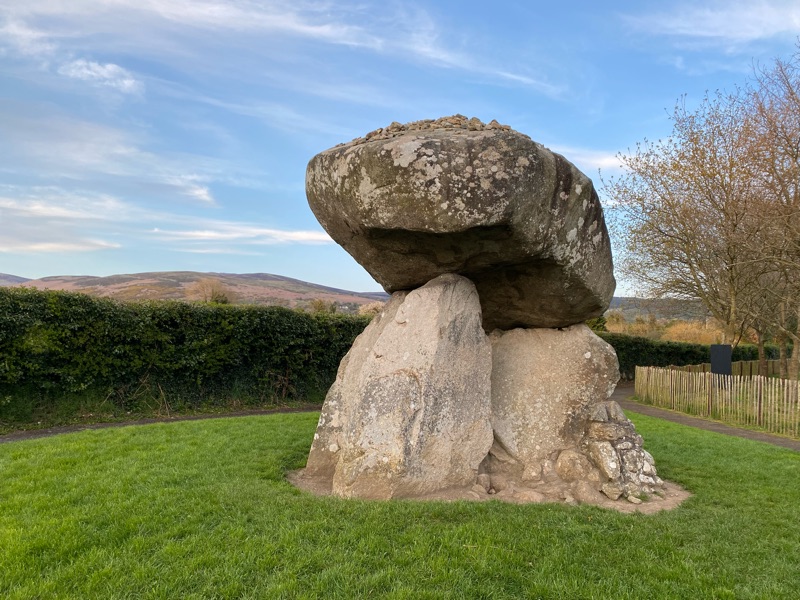
It is hard not to feel the compression of it, the sense that what was is not past, that what is here now is not separate from it. There are traditions that understand time this way. In Tír na nÓg, time does not move as we expect it to. A short stay becomes a lifetime. A lifetime becomes something else entirely. In moments like this, that feels less like myth than recognition.
There are periods of time that are not lived in the usual way. The day continues—you show up, you speak, you move through what is required—but none of it is where your attention is held. You are waiting for a moment that will determine what comes next. Everything else becomes background. Time reduces itself to a single point of focus.
And still, life insists on itself. There are decisions to make. Logistics to manage. Things that cannot wait, even when everything inside you is waiting. You keep moving. Not because you are especially strong, but because there is no other option.

There are moments that divide a life. Who you were before them and who you are after are not the same. The day we were told Colin would be taken off life support was one of those moments. It was more than loss. It was hope floating away like a lost balloon. It was the collapse of a way of understanding. What you lose in a moment like that is the idea that there is still time to fix things—that whatever was unfinished might still be repaired, that there will be another conversation. That possibility disappears, not gradually, but all at once.
When someone is dying, time goes very fast. It collapses and rushes forward. When you are estranged from someone, time goes very, very slow. Each day stretches. The absence repeats itself. Nothing replaces it. You wait in the doldrums. I understand now how the sailors felt.
We measure time in moments—the ones that hold, the ones that rupture, the ones we wish we could undo. But there are other ways we are taught to measure time—in minutes, in counts, in units meant to keep something going. We measure to survive.

Counting has always been a way through uncertainty. In CPR, you count to keep someone alive—compressions, breaths, rhythm, over and over, holding the sequence because the sequence is what stands between life and loss. In the mountains, you count the seconds between lightning and thunder, tracking the distance of the storm, measuring risk in real time. Each number carries consequence. Each one tells you whether to move, to wait, to take cover.
Counting becomes a form of control when control is otherwise gone. A way of staying inside something long enough to get through it.
I have found myself measuring time in another way. In the last two months, as these anniversaries approached, I began using a daimoku app that counts my chants. It tracks how many times I chant Nam-myoho-renge-kyo, how many minutes, how many hours. At first, it felt like a way to make the effort visible, to give form to something that otherwise disappears as soon as it is spoken. I started setting numbers for myself—just another thousand, then another, then another. The counting becomes its own rhythm, something to move toward, something to complete.
Each repetition is meant to matter. Each one, in some way, to repair. I find myself attaching meaning to the numbers, imagining that I am not just moving through time, but altering it—healing karma, healing what has already happened, what is happening now, what might otherwise carry forward. Most often, I am imagining her—my daughter—her heart—trying to reach something in her that I cannot reach directly, trying to lighten what she is carrying so that it does not break her spirit in the way that mine has been.
And yet, like the other ways I have measured time, it does not resolve what I am inside of. The numbers accumulate. The effort is real. But what I am waiting for does not arrive on command. What is the magic number? How many chants are enough? Enough for accountability? For forgiveness? For reconciliation? For recalibration?
The moments that feel most final—the ones that seem to seal something shut—are not actually contained in the way they feel. They are experienced that way, but they exist inside something larger than what can be seen from within them. We give those moments enormous weight, as if they define everything that came before and everything that will come after. That may not be true. It may only be how they feel while we are inside them. Feeling is not the same as finality.
There is a teaching by Pema Chödrön that this moment can be a teacher—that when we reach what feels like the edge, the instruction is not to harden or escape, but to stay. To soften into what is here, even when it is not what we would have chosen. Not as resignation, but as a way of remaining in contact with what is still alive within it.
Staying is not theoretical. I have done it before.

In labor, the contractions came closer together. Five minutes. Three. Two. Time reduced to intervals—something to brace against, something to get through. And underneath it, another rhythm—the steady sound of her heartbeat, one hundred and forty beats per minute. Life continued, whether anything was progressing or not.
The contractions intensified, but nothing opened.
I remember how the rhythm on her heart monitor shifted when she went into distress. 140 beats per minute turned into 160. Someone said- that baby needs to come out- now. The mood of the room shifted instantly—swiftly, silently. I didn’t fully understand why. I could feel it, though—the way voices lowered, the way movements became more precise, the way attention narrowed.
Within the hour, she was born. It was very quiet. No crying. Not from her. Not from me. They had already seen the meconium. They took her immediately to check her lungs. I could hear voices, but not the words.
I was still on the table, numb from the waist down, legs akimbo. No one at my shoulder. No one telling me what was happening. I remember asking, quietly, is everything okay? No one answered directly.
It had been nearly twenty-four hours. I was exhausted, slightly outside of myself. Listening. Fading.
That was the beginning.
I have been here before.
At the beginning of her life, I was alone. In every way that matters—in my body, carrying it, enduring it, bringing her into the world.
And at the moment her father died, I was alone again. Not in the same room, not in the same way—but in the knowing of it, in the way it would land, in the way it would change everything that came after.
These are the two fixed points of her life as I have lived it—her birth and his death, just six days apart on the calendar.
I was there for both.
And now I am not there at all.
Time does not always move in one direction. It stretches. It stalls. It folds back on itself. There are stretches of life that feel full and intact, and others that feel flattened—not because nothing happened, but because something essential was missing.
What gives a life its shape is not only what happens, but who is there to witness it. And even when you are not alone, you notice the empty chair.
In my daughter’s first year of life, I witnessed everything alone—her first smile, her first word, her first steps, the small things that are not small at all. In this past year, I have not been there to witness her life. Whatever is happening to her now—her formation, her milestones, her becoming—I am not there to see it. I am not there to celebrate her. I wonder if she feels the loss as much as I do.
Estrangement removes the witness, but it does not erase the space where that witness would have been. An empty chair is still an empty chair.
There is another way time distorts—when it is measured on someone else’s clock. Waiting for someone to come back, to understand, to decide that you are worth showing up for. Time passes, but it does not move forward. It stalls.
I have spent years inside that kind of time. Waiting for people to show up, to take responsibility, to meet me where I was already standing. Waiting for something to resolve that never did.
Sometimes, it does not resolve.
People do not return. Conversations do not happen. And then people die. And it is over. The clock stops.
Time does not fix what people refuse to repair.
Time moves in one direction, whether it is moving too fast or too slow. And so what remains is not control, but attention. What you saw. What you missed. What you were there for. What you were not. What you think you remember. What you wish you could forget.
Today would have been my father’s ninety-eighth birthday. Friday was my daughter’s nineteenth. Thursday is the day that Colin died.
That is one way to measure time.
But it is not the only one.
There is also what is still possible to witness, what is still possible to return to, what is not yet fixed. Even now, time is not only closing. It is also opening—quietly, without announcement, in moments that do not yet know what they will become.
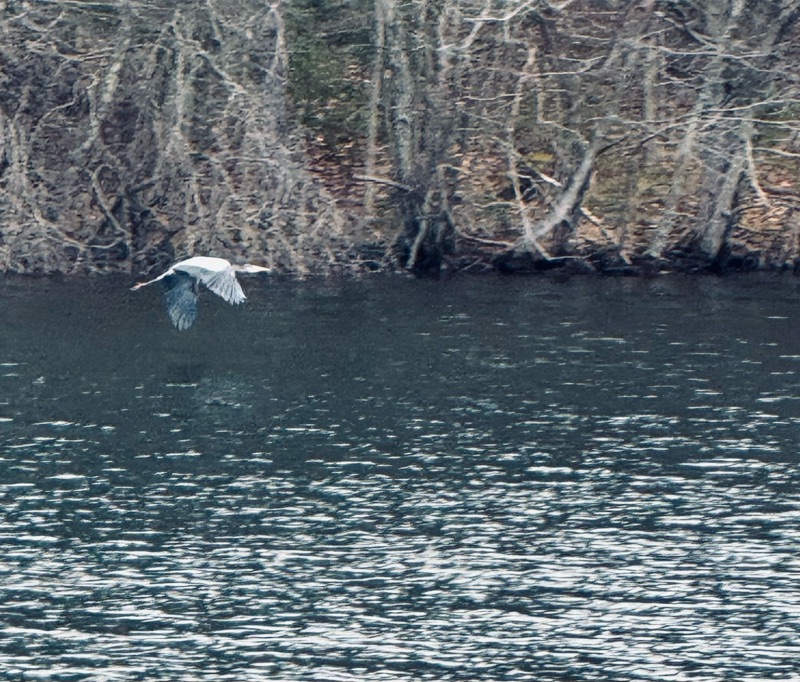
At the reservoir early this morning, as I finished chanting, a Great Blue Heron was perched in the tree across the water, twenty or thirty feet up. It stood there for a time, surveying the surface of the water. Then without any urgency, it lifted, crossed low over the water and landed at the edge. Nothing about it felt rushed. Or stalled. I watched it longer than I meant to.
Attention is not only how we mark what has been lost. It is how we recognize what has not yet disappeared. And what is yet to come.

No comments:
Post a Comment