Cherokee Morning Song— “We n’ de ya ho” (Robbie Robertson version)
A we n’ de Yauh ho — I am of the Great Spirit, Ho.
The Cherokee Morning Song opens many of my dawn walks. Robbie Robertson’s version carries a haunting reverence that reminds me I am entering sacred space. Its refrain—“I am of the Great Spirit, Ho”—feels like both declaration and surrender, a call to remember our shared belonging within creation. Beginning my practice with this song has become a kind of land acknowledgment and invocation, situating me in relationship with the first peoples of this place. It prepares me to meet the land—and myself—with humility, grace, and gratitude.
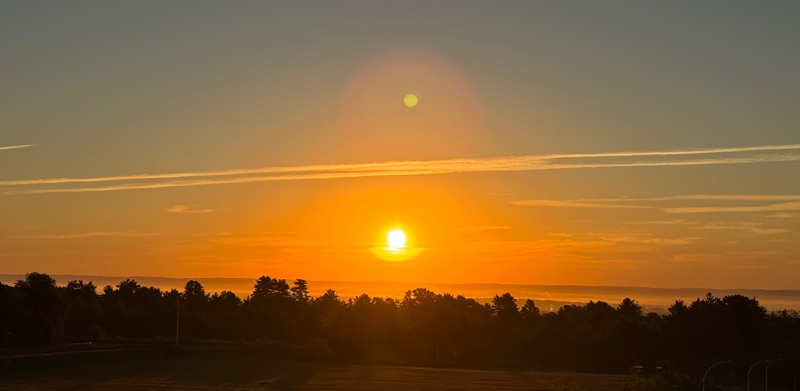
Janisse Ray writes:
“What thrills me most about longleaf forests is how the pine trees sing. The horizontal limbs of flattened crowns hold the wind as if they are vessels, singing bowls and air stirs in them like a whistling kettle. I lie in the thick grasses covered with sun and listen to the music made there. This music cannot be heard by anyone else on the earth. Rustle, whisper, shiver, whinny. Aria, chorus, ballad, chant, lullaby.”¹
Those words have been an anchor for me as I return to Reservoir #6 daily, a place I knew as a child and have come back to after a lifetime spent exploring the world’s sacred and beautiful places. I returned to my hometown in June to be closer to my daughter at West Point and to face inner work I could no longer defer. I promised myself that, no matter how heavy the day felt, I would begin there. Sometimes that meant the long four-mile loop around the water; sometimes the steep four-mile climb to the high cliffs above King Philip’s Cave along the Metacomet Trail; sometimes only the half-mile walk to the old jumping rock where I sit with my feet dangling over the water. I meet myself where I am at. It is both my discipline and my devotional, full of lifelines and lessons.
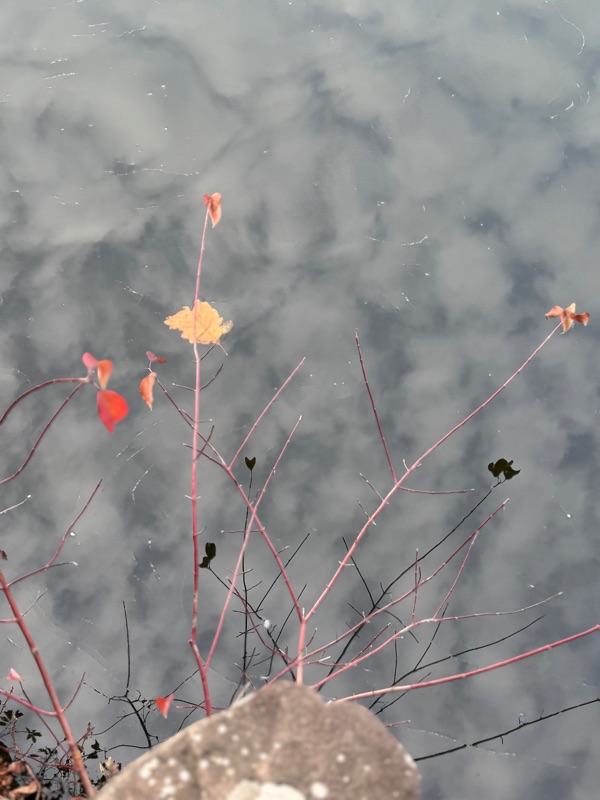
The place—and the time I gift myself there—steadies my soul. Last spring, after my daughter and I became estranged, a friend reminded me of the daimoku I had once practiced and said, “You will turn poison into medicine with each breath.” I answered without hesitation: “I’ll do anything to heal.” That vow—fragile and fierce—became the hinge of my mornings. I chant Nam-myoho-renge-kyo. I am determined to show up for myself. Sometimes, as I sit at the rock and begin to chant, I find myself watching the water’s shifting layers—the wisps of morning mist that drift across its surface, the quick skitter of water striders that dart like my racing thoughts, the ripples that widen and dissolve, the mirrored clouds and the bright red and yellow leaves floating peacefully by. On certain mornings, when the light is right, I can see past the reflections to the silty bottom below. The stillness of that moment feels like seeing into the depths of my own mind. The bugs and ripples are the surface noise; the reflections are what I imagine to be most important; the clear glimpses below are the truth that chanting helps me uncover. Meditation, like this reservoir, reveals what lies beneath the moving surface.
The purpose of chanting daimoku is not worship but remembrance—awakening what is already within. To chant Nam-myoho-renge-kyo is to align breath, body, and awareness with this universal rhythm — to polish the mirror of the mind, transforming heaviness into clarity. Over time, the rhythm of the chant has become a bridge to the rhythm of the natural world: wind over water, the heartbeat of the land, the slow turn of the seasons. In Nichiren Buddhism, to “awaken one’s Buddha nature” means to uncover our innate capacity for wisdom, courage, and compassion—what Western chaplaincy might call the wholeness of being present for holy listening. Chanting aligns the chanter with the Mystic Law of cause and effect that binds all life, a practice of breath and presence that mirrors the rhythms of the natural world. Over months of returning to Reservoir #6, I have watched the sun shift south, the greens fade into reds and golds. The rhythm of the chant has become a bridge to the rhythm of the earth—the pulse of wind across water, the slow turning of the seasons, the quiet exhale of dawn.

As part of our eco-chaplaincy course practice, I added the Four Directions prayer, orienting each chant to East, South, West, and North—and to the Buddhas of the Ten Directions in Nichiren teaching, who embody wisdom and presence through all space. Facing each direction became a dialogue: a torii—a gateway between the ordinary and the sacred. In many Indigenous and earth-based traditions, the Four Directions orient body and spirit to the living world: East as the place of beginnings and illumination, South as vitality and growth, West as release and transformation, and North as wisdom and rest. Turning toward each as I chant deepens my awareness that I am part of these cycles—breathing with the same wind, turning with the same earth.

In both Japan and Thailand, where I have taught, temple gates or toriis as they are called in Japan, serve a similar function, marking the transition between the mundane and the divine—a reminder that sacred thresholds are universal. My experience living within those cultures taught me reverence for ritual as a lived dialogue between the human and more-than-human worlds. In bowing to the land here, I acknowledge its first peoples—the Wampanoag and Metacomet—whose understanding of spirit and creaturely kinship still saturates this ground and deepens my understanding of and connection to nature and to myself.
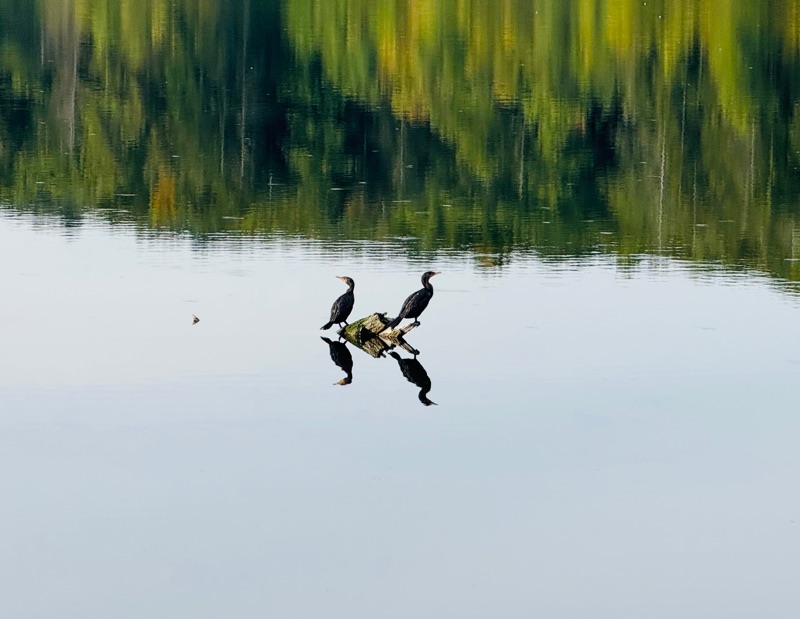
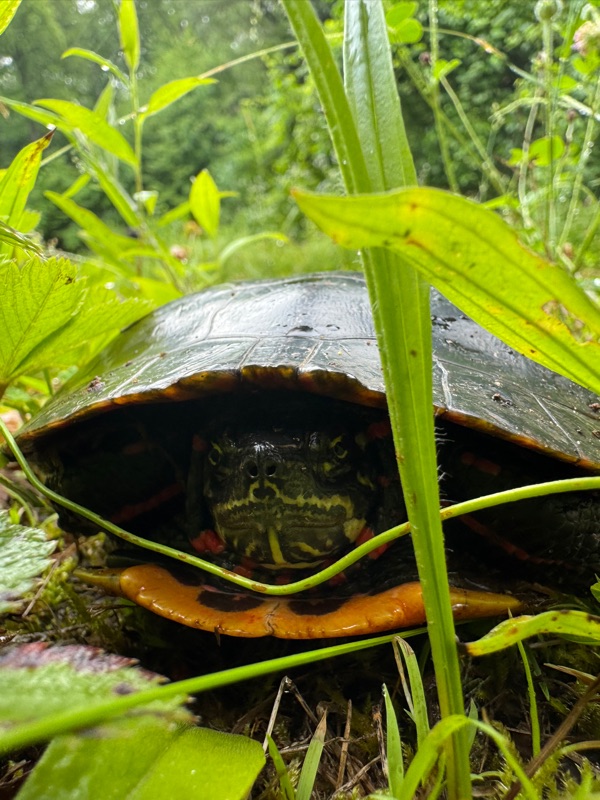
Because I have been showing up and keeping my breath, this place began to answer in ways it had not before. Turtles rose first—slow, ancient messengers breaking the surface for breath before disappearing again. In many Northeastern Native traditions, the turtle is Grandmother Earth—the patient bearer of life, the land itself. The Wampanoag call this continent Turtle Island.
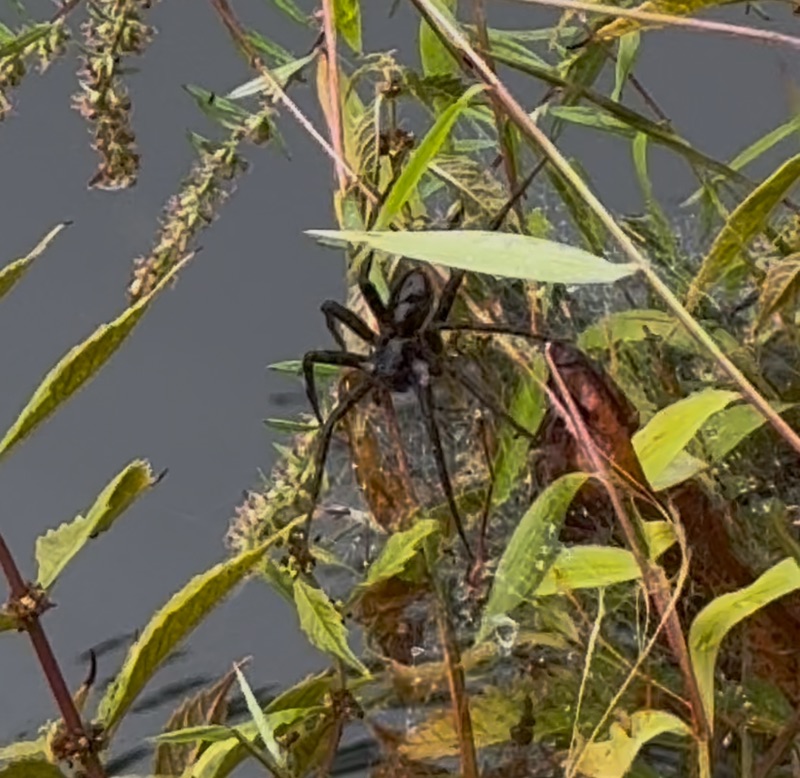
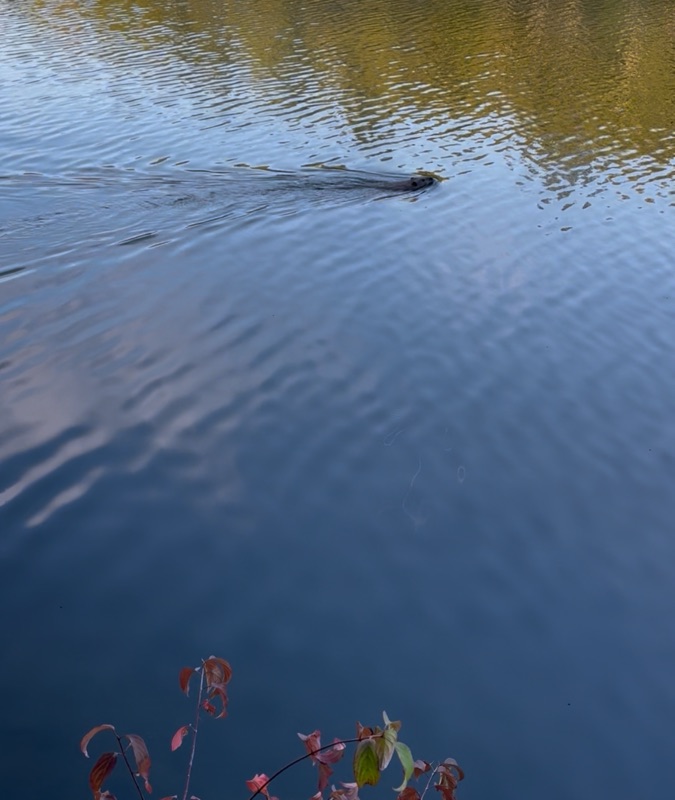
Then, one morning, a beaver surfaced and played in the shallows where I chanted, offering the lesson of patient repair. Another day, a fishing spider—the size of my palm—hovered just below my toes, devouring flies that had distracted me: a teacher of focus and stillness. A porcupine crossed my path and let me walk behind him without raising a quill, his quiet trust a lesson in boundaries.
The bear came once, huge and silently camouflaged in the brush, and for a moment we stood in mutual regard before she snorted and ambled off. Later, a hawk swept past me on the cliffs above King Philip’s Cave along the Metacomet Trail’s ridgeline, its wings stirring the air beside my cheek as I looked out toward West Point—an invitation to see beyond immediate suffering.
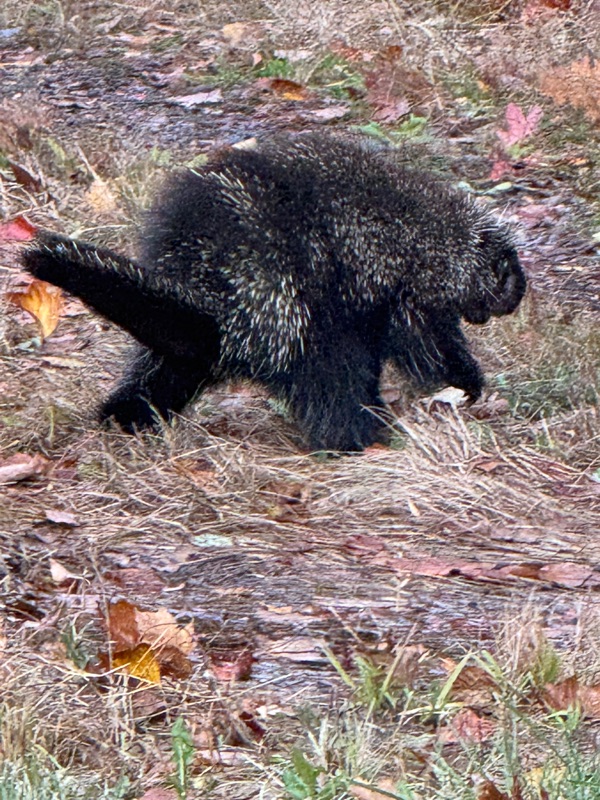
Janisse Ray’s habit of listening for the music of the pines, reminds me to listen for that music in these trees—and to look for the guideposts the natural world offers through the creatures that grace me with their presence. I look to Native traditions to understand their significance: Bear as healer, beaver as builder, porcupine as gentle keeper of boundaries, spider as weaver and order-bringer, hawk as messenger of vision, turtle as earth’s slow heart. These encounters are not accidents but conversations—an interspecies verbatim that teaches me how to listen. Gifts of awareness.
Late one afternoon in early September, after a yoga class focused on releasing the psoas—the muscle said to hold grief and regret—I was compelled to return to the reservoir. I sat at the water’s edge and set a new intention: not only to process my own pain as a mother but to honor the heartache of all mothers, everywhere, across time and place. As I began to chant, the emotion rose like a tide. My tears mingled with those of all those mothers and came not as a gentle stream but as a waterfall—a tsunami moving through me. I felt it in every cell of my body, a deep trembling release that reminded me that grief, at its essence, is love unexpressed. In that moment, I sensed my mother’s presence—steady, luminous and compassionate—near me in a way I had not since childhood. When the chant finally fell silent, I was emptied and filled at once. I was forgiven and renewed by the collective sorrow. My Buddhist mentor later told me this was a glimpse of Buddhahood—the peace that can arise when pain is fully met with compassion, when the personal becomes universal and the universal becomes personal again. It was a gift of hope for my shattered heart.

Calder and Morgan write that “pastoral care acknowledges the environment and our human presence within it as of religious and spiritual concern.”² This ecological CPE approach feels like what I am practicing at Reservoir #6 each morning: an eco-verbatim between my breath and the living world. As Dahill reminds us in This Creek Is the Baptismal River, “baptism into living water means baptism into the community of creaturely life.”³ Her call to rewild ritual and to “think like a tree”⁴ has expanded my sense of chaplaincy from human care to earth care. The reservoir is both font and teacher, a sacrament of attention. A gift to my soul.
Through the readings this term, I’ve come to see that what I am practicing at Reservoir #6 is not separate from the theoretical frameworks of eco-chaplaincy but a living expression of them. Calder and Morgan’s vision of a CPE that listens beyond the human, Dahill’s call to return ritual to the elements, and Macy and Brown’s “Work That Reconnects” have shifted my understanding of pastoral presence from the interpersonal to the inter-being. These scholars have given language to what my body already knew: that healing happens through relationship—with water, wind, creatures, and the turning earth itself.
I look to Afoot and Lighthearted, a Journal for Mindful Walking for words to inspire and guide this work. Mary Oliver’s words, “Attention is the beginning of devotion,”⁵ underscore those of Thich Nhat Hanh who adds, “Walk as if your feet are kissing the earth.”⁶ These lines shape my practice. When I walk with that tenderness, the creatures do not flee: the deer simply watch; even the porcupine remains unbothered. This devotion to noticing has become a way of seeing with new eyes—the very movement Joanna Macy describes in her spiral of the Work That Reconnects, a shift from despair to participation.⁷ As a person who lives with neurodivergence, this practice has also become a way of reclaiming my own mind. My attention doesn’t always move in straight lines—it flares, leaps, fixates. For much of my life, I’ve seen that as something to manage or mask. But out here, it feels like a kind of grace, a superpower. My sensitivity to sound, texture, and rhythm makes me attuned to the subtleties of wind and water, the glint of wings, the smallest motion at the periphery. What once felt like distraction now feels like devotion. Neurodivergence, in this light, is not an obstacle to meditation but another form of noticing—a way of listening deeply to the world’s complexity and beauty.
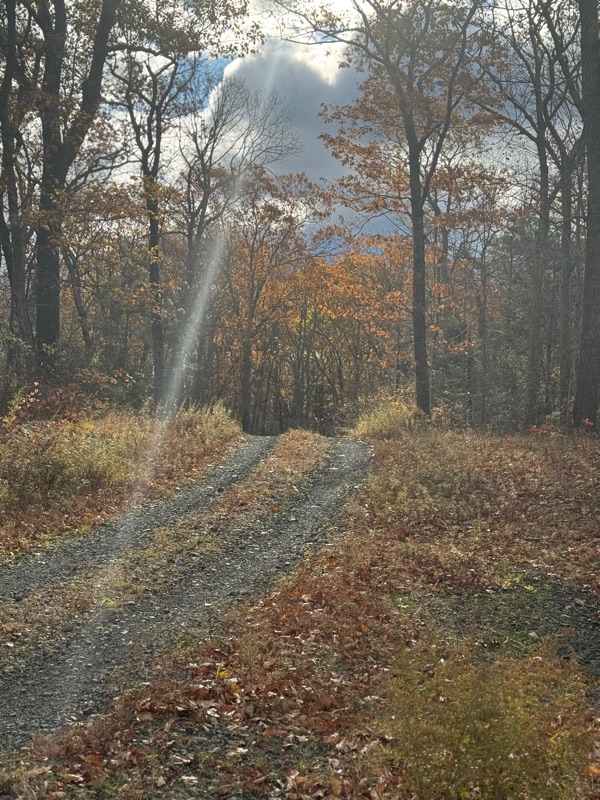
The chaplaincy skills I am cultivating—deep listening, humility, ritual leadership—are being trained here in the field. To be a chaplain in nature is to accompany a wider community of beings, to hear the world’s grief and praise together. The reservoir teaches me to sit with pain without rushing to fix, to see beneath the surface to the silt where lotus roots grow. Chanting does not erase hurt but lets light reach it. That light—reflected, rippling, refracted—guides me toward wholeness and ultimately toward restoration, recalibration, and reconciliation.
The work of writing this reflection has become a crucial component and a necessary extension of the same practice it describes. The rhythm of revision, the patience to listen for what wants to be said, and the courage to name it truthfully are their own form of chanting. The act of shaping words mirrors the discipline of showing up each morning: both demand attention, humility, and a willingness to see beneath the surface. This writing, too, is a torii—a passageway between experience and meaning, between the visible and the unseen. Each sentence is another breath toward wholeness. Another gift.
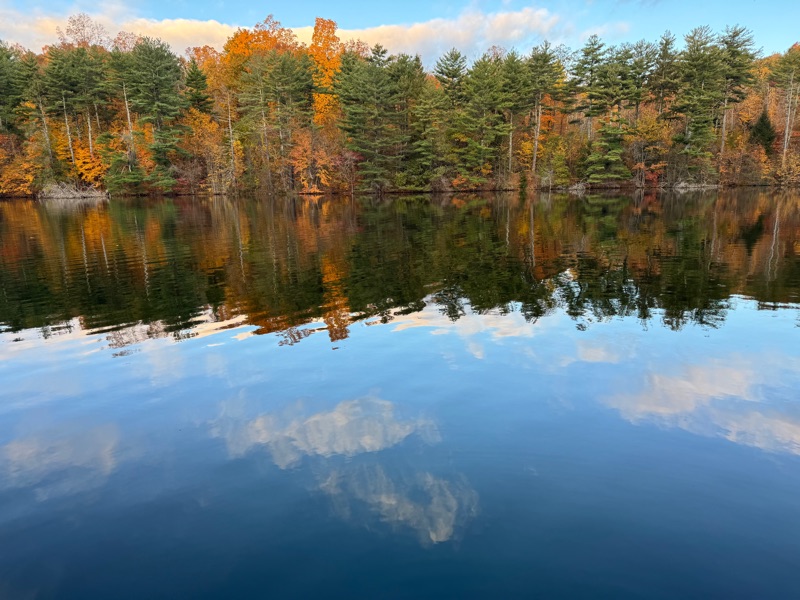
As I leave the reservoir, the pines still murmur in the breeze. Janisse Ray’s words return to me—the “aria, chorus, ballad, chant, lullaby” of the living world. I realize I have been learning to listen for that music all along: in water and wind, in hawk wings and beaver wakes, in the quiet beat of my own heart. The practice that began as survival has become devotion, a dialogue with everything that breathes. This noticing—rooted in stillness, carried in sound—feels like the beginning of a new kind of listening, the kind a chaplain must bring to both forest and human sorrow alike.
Bibliography
Calder, Andy S., and Jan E. Morgan. “Out of the Whirlwind: Clinical Pastoral Education and Climate Change.” Journal of Pastoral Care & Counseling 76, no. 1 (2022): 31–42.
Dahill, Lisa. “This Creek Is the Baptismal River.” Call to Worship 56, no. 2 (2022).
“Holy Shit: Lutheran Carnality and Thinking like a Tree.” Anglican Theological Review 105, no. 2 (2023).
Macy, Joanna, and Molly Young Brown. Coming Back to Life: The Updated Guide to the Work That Reconnects. Gabriola Island, BC: New World Publishers, 2014.
Robertson, Robbie, performer. “Cherokee Morning Song.” Music for The Native Americans. Capitol Records, 1994.
Smith Whitehouse, Bonnie, ed. Afoot and Lighthearted: A Journal for Mindful Walking. New York: Clarkson Potter, 2019.

No comments:
Post a Comment