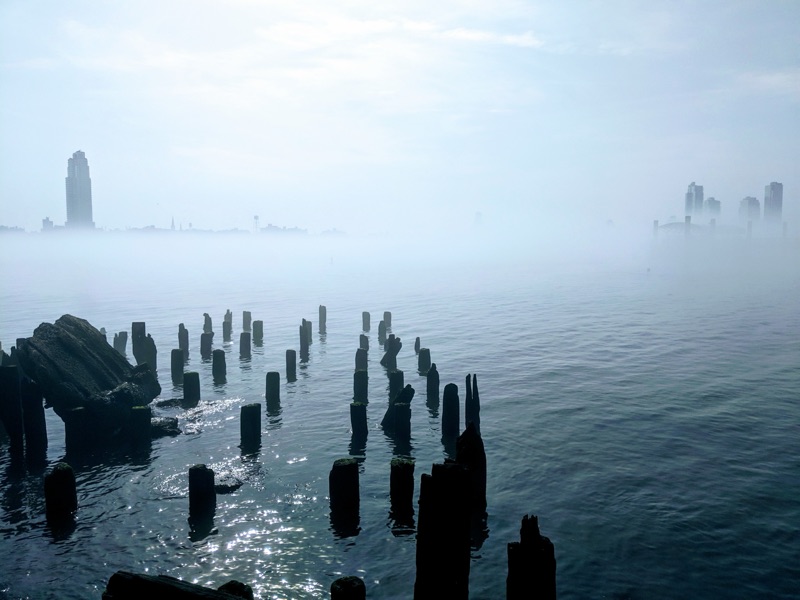
I’ve been treading water in that place Gibran writes of—where the river meets the sea—fighting the currents, unsure of what comes next. The fear, of course, is not the water itself, but the moment you can no longer remain where you are and cannot yet find your way forward. There is fear too in losing your bearings—no longer knowing yourself as you did before.
Water is the beginning of life. We are held in it before we are born. Our waters break to bring us into the world. Across religious traditions, water signifies cleansing, renewal, and transition—whether in baptism, ritual washing, or practices like Loy Krathong, where offerings are set afloat and carried downstream. These rituals remind us that without water there is no life. It regulates climate, sustains ecosystems, and makes all life possible.
And yet water is not benign. It can carry disease, flood cities, pull us under, take our breath. It resists control. It reminds us how dependent we are and how vulnerable. Even where it sustains life, it is never fixed. It rises, recedes, shifts direction. It does not conform to our expectations.
Some theologians and ecological thinkers have suggested that returning rituals like baptism to living waters—rivers, lakes, and streams—can deepen our sense of connection to the ecosystems that sustain us. To stand in moving water, to feel its temperature and force, is different from encountering it conceptually. Perhaps ritual does not create the sacredness of water so much as give us language for what we already sense.
The tension between water as release and water as containment—is highlighted in the film Water: Hindu widows live out their lives along the river—surrounded by a symbol of purification and release. They are also confined and marginalized by their religion and society's constructs around identities defined by loss. The story centers on a child—widowed before she has even grown into the life she was assigned—absorbed into that system without consent, without any path back to who she might have been.
That dynamic feels familiar to me. I am not widowed as society defines it, but the tragic loss of my daughter's father places me within that condition—the way a life's memories and hopes are reshaped around absence. It is a narrowing under the weight of what has been taken, even when the loss doesn't fit neatly into the categories we use to name it.
When loss fits a recognized form, people know how to respond. There are rituals, language, roles that organize care around those who are grieving. When it does not, there is a kind of silence—not intentional, but felt nonetheless—where structures that might hold you simply do not appear.
In that absence, one is left holding what is still as real but less easily named—suspended in that place where the river meets the sea, swirling without direction, unable to find the current.
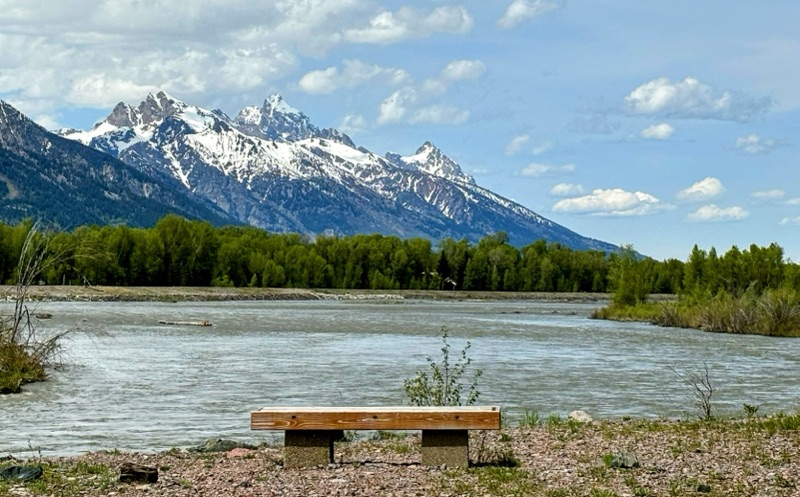
My own relationship with water has never been abstract. I tend toward motion—body and mind always active. But when I sit beside water—a river, a reservoir, the ocean—something shifts. My attention settles into the movement of the water—the ripples, the current lapping the shore. The sound envelopes me and I find solace within it.
A deeper sense of peace comes from time spent with the people I love. Those moments—rare, fleeting—when everything aligns and you feel held within something larger than yourself, where nothing needs to be added or explained. Those are the moments I have spent my life trying to return to. Memories of such moments often overshadow any of the mistakes or misunderstandings that shaped the relationship.
Lately, water has become the place I go when I don’t know what to do with what I've now been carrying for far too long.
There are times when this feels less like forward movement and more like trying to hold position in something that will not settle. Not drowning, but not being carried either. The river does not get to stop. It meets what comes—rocks, bends, barriers—and finds a way through or around. It continues, regardless of conditions.
There is another kind of place water gathers—the place Gibran names in his poem—where the river meets the sea but does not yet become it. Estuaries are not calm. Tides push in as currents pull out. Fresh and salt water mix unevenly, and salinity shifts constantly. Nothing stabilizes. And yet life exists precisely because of that instability. Species that survive in estuaries are not fixed; they adjust continuously to changing conditions, to what the water brings in each moment.
I recognize that kind of place now—not as a crossing, but as a condition. Not having arrived, not having let go, but living inside the mix of what was and what is. It is not stillness. It is not resolution. It is the movement toward discernment and whatever comes after loss.
Sometimes it feels like being caught in an eddy—circling, moving but not progressing, pulled into a pattern that does not release. The panic there is different. It is not the shock of impact or the force of a breaking wave. It is the realization that you can keep moving and still not go anywhere. That you may remain there longer than you thought possible. The fear Gibran writes of is not the sea. It is where the struggle to orient ends. What I fear is becoming caught in the circling, unable to find the current again.
The way out is not force. As with riptides, fighting an eddy will lead only to exhaustion—not escape. The only way out is at the seam—the place where the circling water meets the larger flow. And finding that seam requires something that is not instinctive in moments of fear. It requires a steadiness of attention—the ability to remain present enough to notice where movement is still possible. If I am overwhelmed, I miss it. If I am avoiding, I never reach it. This is the work now—not to force resolution, not to become numb to what I feel, but to remain steady enough to recognize the moment when something shifts.
This week marks one year since I’ve seen my daughter, heard her voice, hugged her and made her a morning cup of tea. Today marks four years since her father was hit by a car and never woke up. We have had some trouble learning to live with that. Loss does not only take people. It takes the imagined future alongside them. The version of life you thought you were moving toward dissolves, and with it, the self that existed within that future. I had imagined that over time he would have become a more consistent and meaningful presence in her life—that there would be shared moments: graduations, rugby matches, milestones, where we would stand together as her parents. Having lost my own father at twenty, I only ever had an imagined version of what that might be like. That story is gone, and my heart aches for what she has lost. And now, even the version where it would be just the two of us—or just me, alone, cheering her on as it always has been—has fractured as well.
There are losses that are visible and named, and others that are not. There are moments when your role is to hold space for someone else’s grief, to ensure they are supported, while your own goes unacknowledged. That absence does not pass quickly. It settles. It leaves a residue, a shadow over everything else.
Since my return here, I have been drawn back to a place I used to go as a teenager—Reservoir 6—where I would sit and watch the sunset, where I would jump from the rocks in the summer. When I visited the other day, I noticed a bowl of fruit left on the stones near where I sit and chant. It seemed an offering of sorts. It reminded me of the spirit houses I had seen in Thailand, where people leave small tokens by water. Months ago, I had left a small feather there—an offering of my own. It had been a small attempt at a symbolic release of someone I once loved. When I came back again, the wind had carried the feather away, and flowers had been arranged in its place.
I am not the only one who comes to that water carrying something. I am not the only one seeking solace there. That shared instinct—to pause, to leave something behind, to mark a moment—feels sacred in itself. Perhaps ritual does not make water sacred so much as help us recognize what is already present. Across traditions, people return to water at moments of transition—birth, loss, renewal—not only because they are taught to do so, but because something in those places holds their heart.
I am still in that place where the river meets the sea. The currents pull in more than one direction. There are moments of turbulence, moments of circling, moments where I cannot see what comes next. But there are also moments—brief, subtle—where something shifts. A faint pull at the edge of the circling. A moment to catch my breath.
Out of the confusion, where the river meets the sea, something new will arrive.