Thursday, June 11, 2026

Bears and Bereavement

Spring

by Mary Oliver

Somewhere
a black bear
has just risen from sleep
and is staring

down the mountain...

There is only one question:

how to love this world.
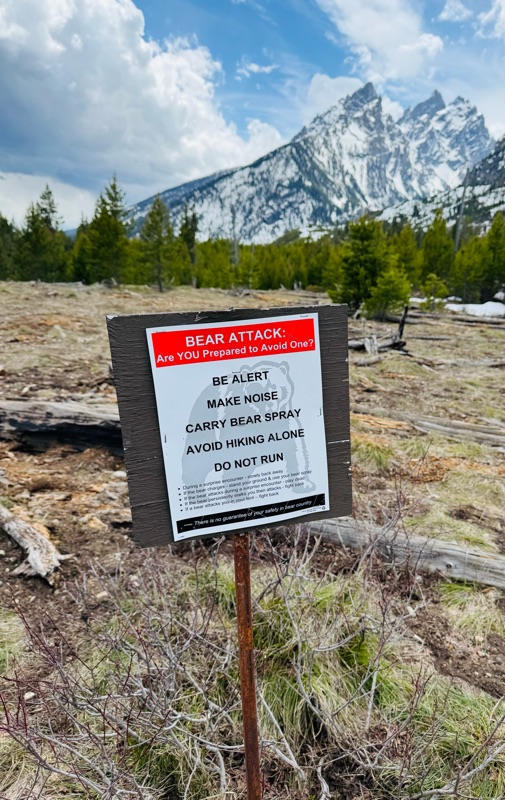

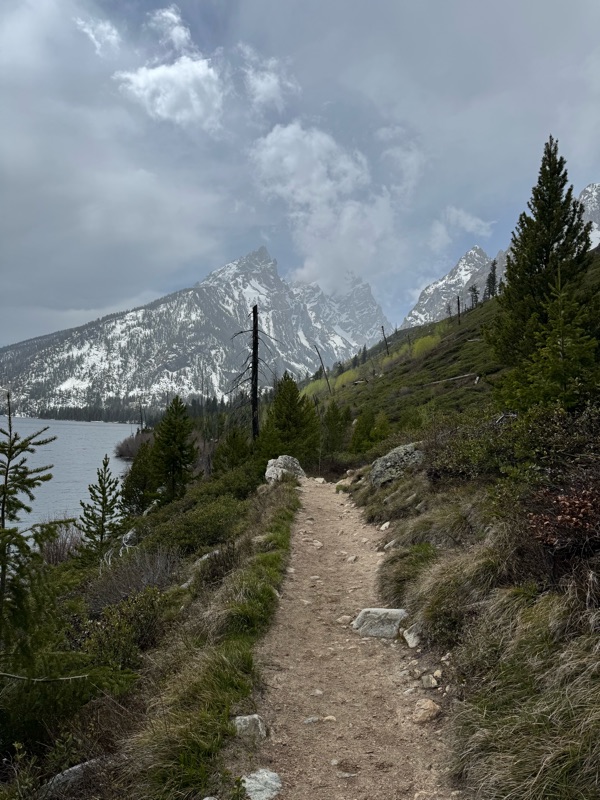
The first bear appeared on Mother's Day last spring. I was circling Jenny Lake beneath the Tetons, carrying a grief I could neither resolve nor avoid. It was a season marked by uncertainty, loss, and remorse. Walking through nature is my way of moving through questions that have no answers. Eco-chaplaincy is teaching me how to take that personal practice and use it to accompany others through their grief.


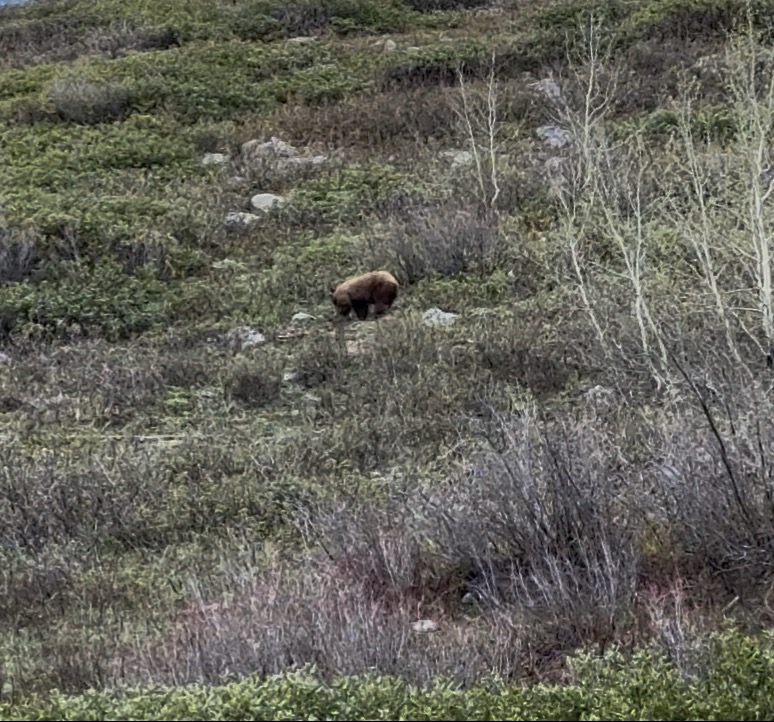
There is a place along the trail where the trees part and the Grand Teton draws your attention upward. When I lowered my gaze, a grizzly was crossing the trail ahead of me—close enough to make me reach for the bear spray on my hip. I held my breath and watched. The bear moved without urgency, entirely unconcerned with my presence. I felt the awesome and visceral fear that being in proximity to a bear evokes. Then it wandered uphill through the sagebrush.


By the time I returned to my car, the vast, blue Wyoming sky had turned dark. Wind and a wall of rain swept across the lake. Hail pelted my car. The landscape I had walked through only hours earlier had transformed completely. The Tetons were enshrouded by clouds.


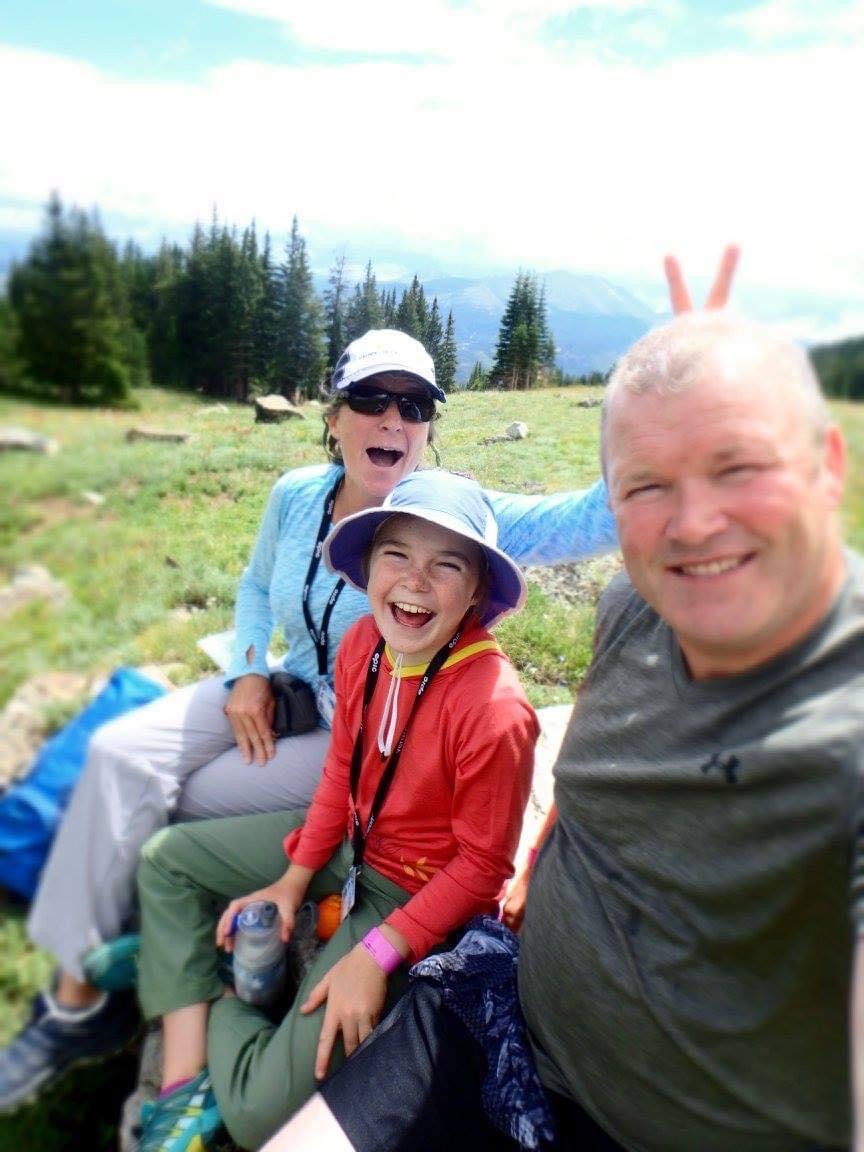
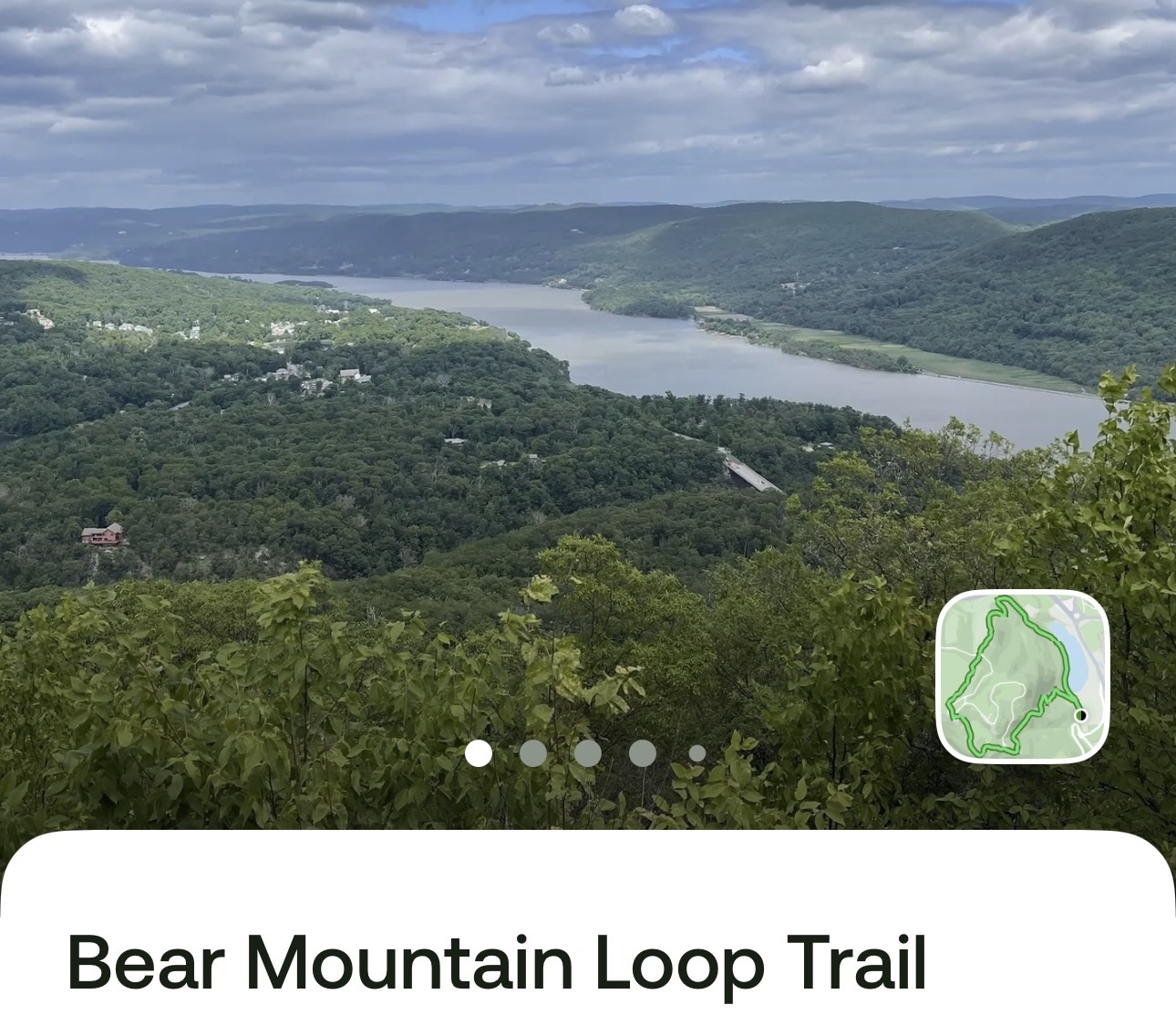
A year later, on Mother's Day, I hiked Bear Mountain in New York with my daughter. The name did not escape me. Just twelve months earlier, I had been circling Jenny Lake wondering whether I would spend the rest of my Mother's Days alone in sorrow. Now I found myself on a mountain that carried the same symbol that had followed me through that difficult year.
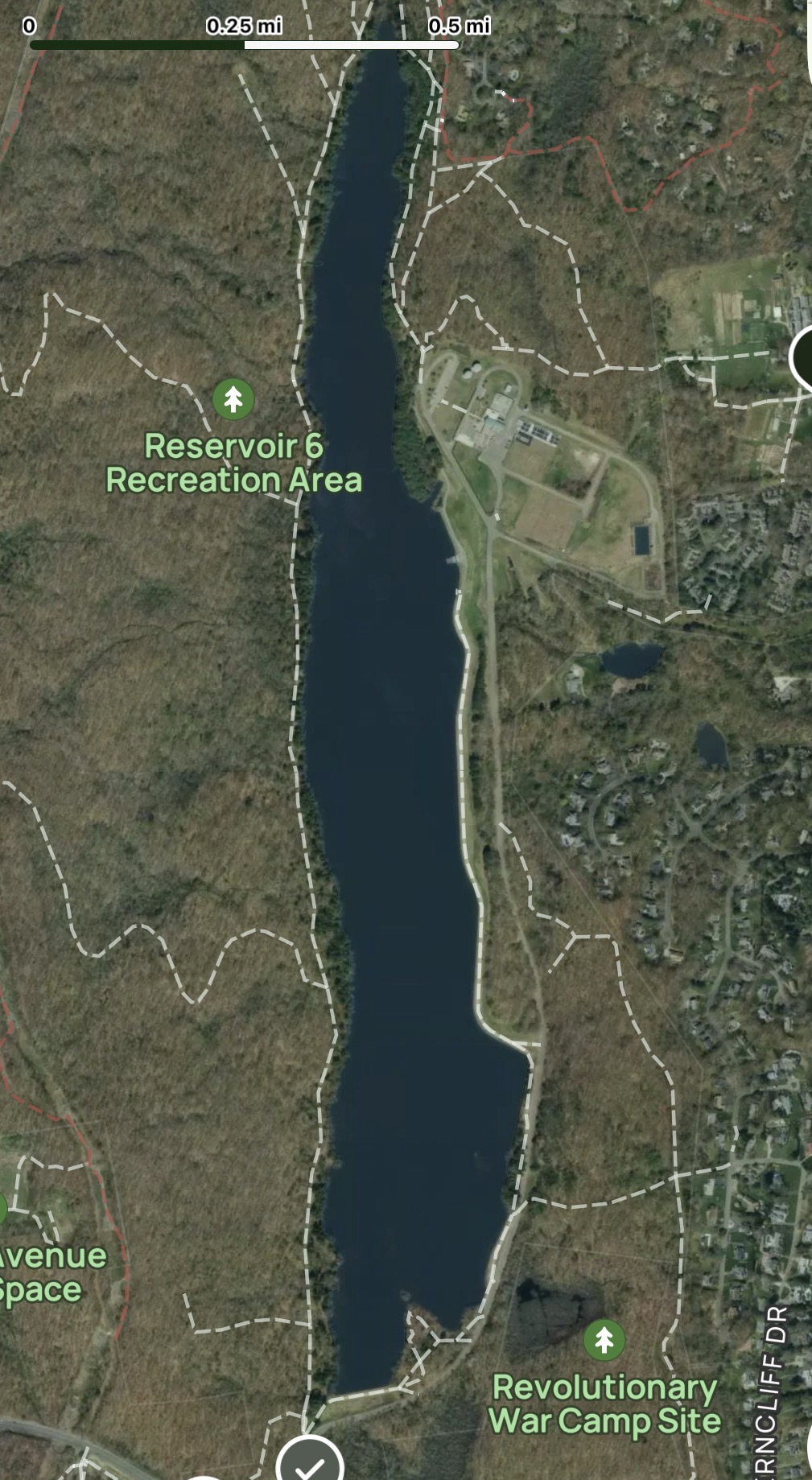
One week later, on the thirty-fifth anniversary of my father's death, another bear appeared. I was circling Reservoir #6 in my hometown of West Hartford. As a teenager, I trained there, dreamed there, grieved there, and returned whenever I was home. My father had walked those same trails decades earlier while battling the leukemia that eventually took his life.

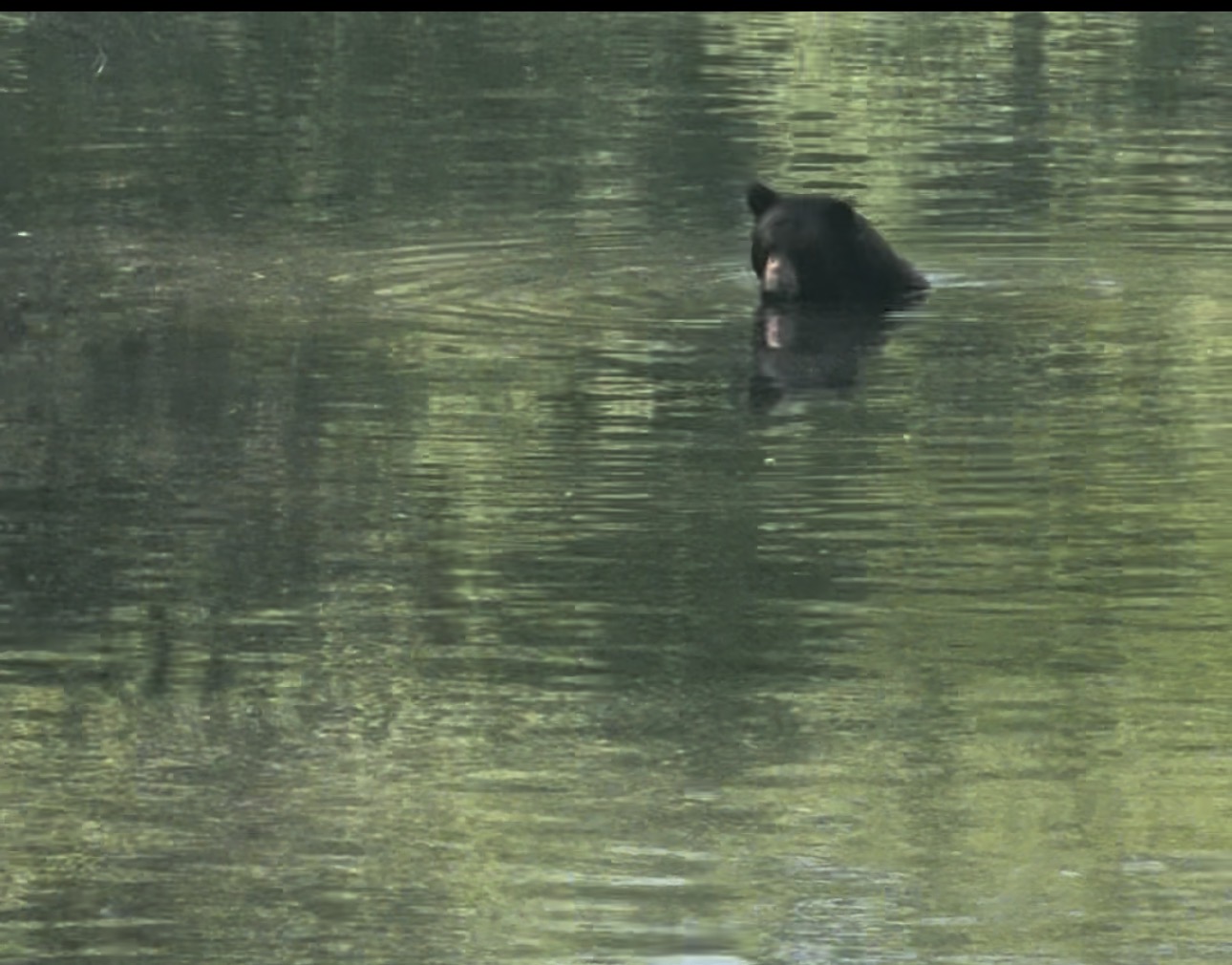
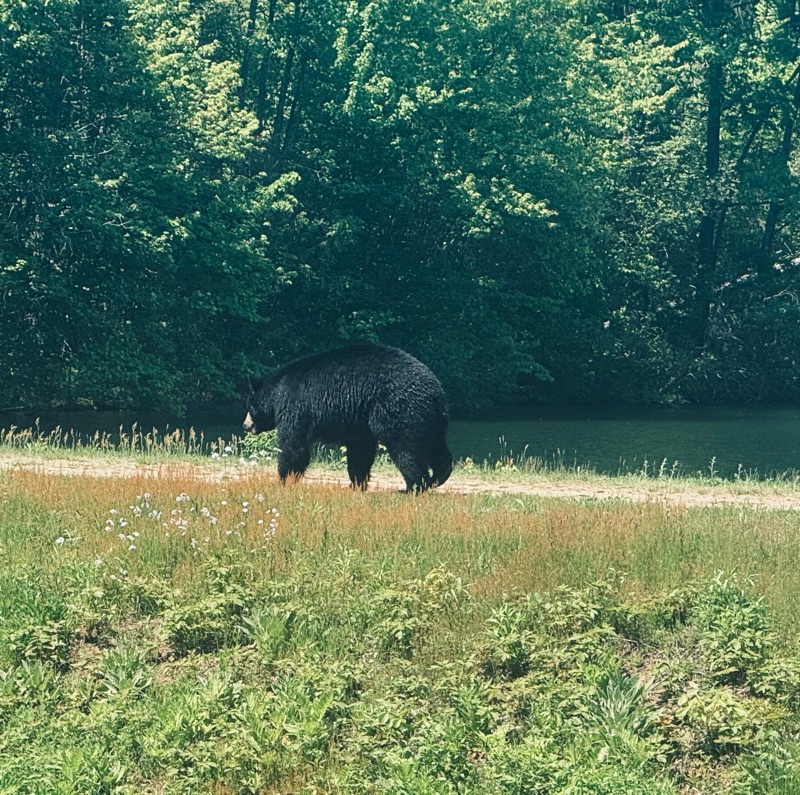
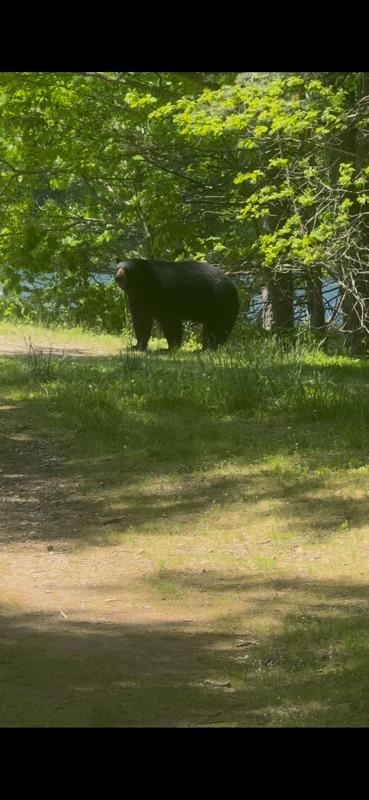
The fear that had defined the previous year had softened. Hope had begun to return, though uncertainty remained, now tempered by hard-won patience and wisdom. As I walked along the shoreline, I saw a black bear bobbing in the water, cooling off on an unseasonably hot spring afternoon. He ambled out of the reservoir a short distance ahead of me on the trail, and I followed slowly behind him, my fascination outweighing my fear.


The encounter felt no less improbable than the grizzly had the year before. Two bears. Two bodies of water. Two anniversaries. Two moments when I was trying to orient myself within a life that no longer looked the way I had hoped or imagined.

The third bear appeared during a week-long immersion in death and dying as part of my chaplaincy studies. We had been asked to write a letter to our loved ones to be opened after our death. It was a beautiful June day, and the classroom felt too small to hold the weight of the question. I carried my notebook to a picnic table near the trees along the Park River—the same river Mark Twain once looked out upon while writing Huckleberry Finn, the same river the Podunk and Wangunk once fished.

As I sat there, I found myself thinking about grief and the things people carry after loss. We carry people. We carry memories. We carry unfinished conversations. We carry hopes for futures that never arrived. We carry questions that have no answers. We carry these invisible things within our hearts: regret, guilt, fear, anger, unanswered questions, and the stories we tell ourselves to make sense of it all. We carry these gifts that remind us of our capacity to love. Halfway through my letter, I looked up and saw a black bear in the woods. It paused beside a tree, scratched its back, and continued on its way. Construction workers were jackhammering a block away. A dog barked at the postman. Car horns beeped. The bear seemed completely unconcerned by all of it. My letter was forgotten as I watched -mesmerized-until it disappeared.
For a long time, I thought the significance of these encounters lay in what the bears symbolized. I wondered too, why my initial inclination was to ask --what does it mean? Eventually, I became less interested in interpretation and more interested in what happened when I noticed them.

Each encounter provided a sacred pause. 

My grief loosened its grip. My breath came easier as my attention shifted away from heartache and toward what was actually present. The bears did not answer my questions. They did not resolve my grief. They didn't not judge my mistakes nor were they concerned with my religious piety or practice. Sometimes symbols and stories give us a way into conversations we struggle to approach directly. We begin by talking about a bear and discover we are talking about grief. We begin by talking about a landscape and discover we are talking about belonging. That realization explains why eco-chaplaincy resonates so deeply with me.
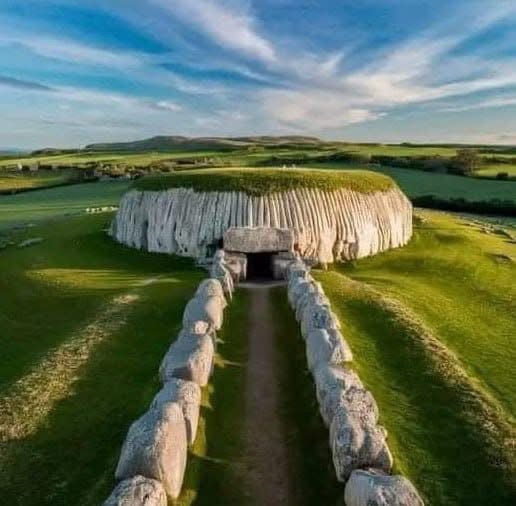
Human beings have been seeking meaning this way for thousands of years. Long before we built seminaries, hospitals, and universities, we gathered around fires or cups of tea and tried to understand what frightened us, sustained us, and broke our hearts. We buried our dead. We watched the movement of the sun and stars. We built places like Newgrange and aligned them with the winter solstice. We left offerings beside rivers and springs. We told stories about bears.


The details differ across cultures and centuries, but the questions remain remarkably consistent. How do we live with uncertainty? How do we continue after loss? How do we find our bearings when the map we were carrying becomes obsolete? I do not know what bears imagine. They just keep living. Noticing patterns is part of what human beings do. We connect stories, places, anniversaries, and encounters in an effort to understand our lives. The bears that crossed my path became part of that process. Yet they were not only symbols. They were also real animals moving through changing landscapes.

The black bear wandering through my Hartford neighborhood was following the Park River corridor through a changing ecosystem. Connecticut's bear population has expanded dramatically during my lifetime, and bears are now found in every municipality in the state. The same encounter that invited reflection on my own life also raised questions about habitat loss, development, climate change, and coexistence. Eco-chaplaincy asks us to hold both realities at once: the personal story we tell about an encounter and the ecological reality in which that encounter occurs. Perhaps we have always been seeking orientation rather than certainty.

Years ago, while earning an M.Phil. in Peace Studies at Trinity College Dublin, I studied the root causes of conflict and the pathways toward reconcilliation. I learned that most conflicts are not really about the thing being argued. Beneath positions lie stories. Beneath stories lie fears. Beneath fears lie needs for belonging, dignity, safety, recognition, and love. Chaplaincy asks many of the same questions, but on a more personal scale. What is this person carrying? What loss remains unnamed? What story are they telling themselves about what has happened? Before people can make meaning from suffering, they need someone willing to witness it. Chaplaincy requires learning to listen beneath the surface of a person's story, noticing the fears, losses, and longings within it. Eco-chaplaincy is not about finding answers in nature. It is about cultivating the pause that allows discernment to emerge. The work is not to provide answers or impose meaning. It is to listen carefully enough to distill what lies beneath the story being told.

My path to eco-chaplaincy began long before graduate school. It began beside reservoirs and rivers, within forests, and on top of mountains. It began through loss, wonder, noticing, and accompaniment. Eco-chaplaincy simply gave language to something I had been practicing for much of my life: the privilege of witness.

Monday, April 13, 2026

An Caol Áit: A Thin Place


There is a phrase in Irish—An Caol Áit. A thin place. A threshold. A moment when the boundary between what was and what is becomes less certain, when time does not move cleanly forward, but gathers.

There are moments when time thins, when everything is closer than it should be. This past week or so has felt like that. My daughter’s nineteenth birthday. My father’s ninety-eighth. The fourth anniversary of Colin’s death. The birthday of someone I once loved. Easter. Good Friday. Ramadan. A rejection from Yale Divinity School. A job rejection. All of it sitting inside the same narrow span of days. Different versions of my life, different versions of myself, drawing closer together. Not in sequence. All at once.


It is hard not to feel the compression of it, the sense that what was is not past, that what is here now is not separate from it. There are traditions that understand time this way. In Tír na nÓg, time does not move as we expect it to. A short stay becomes a lifetime. A lifetime becomes something else entirely. In moments like this, that feels less like myth than recognition.

There are periods of time that are not lived in the usual way. The day continues—you show up, you speak, you move through what is required—but none of it is where your attention is held. You are waiting for a moment that will determine what comes next. Everything else becomes background. Time reduces itself to a single point of focus.

And still, life insists on itself. There are decisions to make. Logistics to manage. Things that cannot wait, even when everything inside you is waiting. You keep moving. Not because you are especially strong, but because there is no other option.


There are moments that divide a life. Who you were before them and who you are after are not the same. The day we were told Colin would be taken off life support was one of those moments. It was more than loss. It was hope floating away like a lost balloon. It was the collapse of a way of understanding. What you lose in a moment like that is the idea that there is still time to fix things—that whatever was unfinished might still be repaired, that there will be another conversation. That possibility disappears, not gradually, but all at once.

When someone is dying, time goes very fast. It collapses and rushes forward. When you are estranged from someone, time goes very, very slow. Each day stretches. The absence repeats itself. Nothing replaces it. You wait in the doldrums. I understand now how the sailors felt.

We measure time in moments—the ones that hold, the ones that rupture, the ones we wish we could undo. But there are other ways we are taught to measure time—in minutes, in counts, in units meant to keep something going. We measure to survive.


Counting has always been a way through uncertainty. In CPR, you count to keep someone alive—compressions, breaths, rhythm, over and over, holding the sequence because the sequence is what stands between life and loss. In the mountains, you count the seconds between lightning and thunder, tracking the distance of the storm, measuring risk in real time. Each number carries consequence. Each one tells you whether to move, to wait, to take cover.

Counting becomes a form of control when control is otherwise gone. A way of staying inside something long enough to get through it.

I have found myself measuring time in another way. In the last two months, as these anniversaries approached, I began using a daimoku app that counts my chants. It tracks how many times I chant Nam-myoho-renge-kyo, how many minutes, how many hours. At first, it felt like a way to make the effort visible, to give form to something that otherwise disappears as soon as it is spoken. I started setting numbers for myself—just another thousand, then another, then another. The counting becomes its own rhythm, something to move toward, something to complete.

Each repetition is meant to matter. Each one, in some way, to repair. I find myself attaching meaning to the numbers, imagining that I am not just moving through time, but altering it—healing karma, healing what has already happened, what is happening now, what might otherwise carry forward. Most often, I am imagining her—my daughter—her heart—trying to reach something in her that I cannot reach directly, trying to lighten what she is carrying so that it does not break her spirit in the way that mine has been.

And yet, like the other ways I have measured time, it does not resolve what I am inside of. The numbers accumulate. The effort is real. But what I am waiting for does not arrive on command. What is the magic number? How many chants are enough? Enough for accountability? For forgiveness? For reconciliation? For recalibration?


The moments that feel most final—the ones that seem to seal something shut—are not actually contained in the way they feel. They are experienced that way, but they exist inside something larger than what can be seen from within them. We give those moments enormous weight, as if they define everything that came before and everything that will come after. That may not be true. It may only be how they feel while we are inside them. Feeling is not the same as finality.

There is a teaching by Pema Chödrön that this moment can be a teacher—that when we reach what feels like the edge, the instruction is not to harden or escape, but to stay.  To soften into what is here, even when it is not what we would have chosen. Not as resignation, but as a way of remaining in contact with what is still alive within it.

Staying is not theoretical. I have done it before.


In labor, the contractions came closer together. Five minutes. Three. Two. Time reduced to intervals—something to brace against, something to get through. And underneath it, another rhythm—the steady sound of her heartbeat, one hundred and forty beats per minute. Life continued, whether anything was progressing or not.

The contractions intensified, but nothing opened.

I remember how the rhythm on her heart monitor shifted when she went into distress. 140 beats per minute turned into 160. Someone said- that baby needs to come out- now. The mood of the room shifted instantly—swiftly, silently. I didn’t fully understand why. I could feel it, though—the way voices lowered, the way movements became more precise, the way attention narrowed.

Within the hour, she was born. It was very quiet. No crying. Not from her. Not from me. They had already seen the meconium. They took her immediately to check her lungs. I could hear voices, but not the words.

I was still on the table, numb from the waist down, legs akimbo. No one at my shoulder. No one telling me what was happening. I remember asking, quietly, is everything okay? No one answered directly.

It had been nearly twenty-four hours. I was exhausted, slightly outside of myself. Listening. Fading.

That was the beginning.

I have been here before.

At the beginning of her life, I was alone. In every way that matters—in my body, carrying it, enduring it, bringing her into the world.

And at the moment her father died, I was alone again. Not in the same room, not in the same way—but in the knowing of it, in the way it would land, in the way it would change everything that came after.

These are the two fixed points of her life as I have lived it—her birth and his death, just six days apart on the calendar.

I was there for both.

And now I am not there at all.

Time does not always move in one direction. It stretches. It stalls. It folds back on itself. There are stretches of life that feel full and intact, and others that feel flattened—not because nothing happened, but because something essential was missing.

What gives a life its shape is not only what happens, but who is there to witness it. And even when you are not alone, you notice the empty chair.

In my daughter’s first year of life, I witnessed everything alone—her first smile, her first word, her first steps, the small things that are not small at all. In this past year, I have not been there to witness her life. Whatever is happening to her now—her formation, her milestones, her becoming—I am not there to see it. I am not there to celebrate her. I wonder if she feels the loss as much as I do.

Estrangement removes the witness, but it does not erase the space where that witness would have been. An empty chair is still an empty chair. 

There is another way time distorts—when it is measured on someone else’s clock. Waiting for someone to come back, to understand, to decide that you are worth showing up for. Time passes, but it does not move forward. It stalls.

I have spent years inside that kind of time. Waiting for people to show up, to take responsibility, to meet me where I was already standing. Waiting for something to resolve that never did.

Sometimes, it does not resolve.

People do not return. Conversations do not happen. And then people die. And it is over. The clock stops.

Time does not fix what people refuse to repair.

Time moves in one direction, whether it is moving too fast or too slow. And so what remains is not control, but attention. What you saw. What you missed. What you were there for. What you were not. What you think you remember. What you wish you could forget.

Today would have been my father’s ninety-eighth birthday. Friday was my daughter’s nineteenth. Thursday is the day that Colin died.

That is one way to measure time.

But it is not the only one.

There is also what is still possible to witness, what is still possible to return to, what is not yet fixed. Even now, time is not only closing. It is also opening—quietly, without announcement, in moments that do not yet know what they will become.


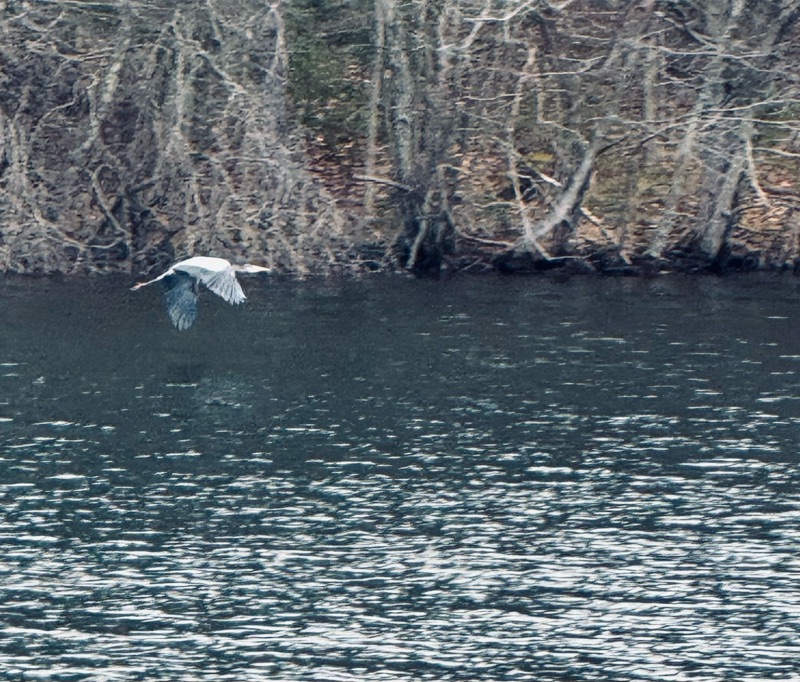
At the reservoir early this morning, as I finished chanting, a Great Blue Heron was perched in the tree across the water, twenty or thirty feet up. It stood there for a time, surveying the surface of the water. Then without any urgency, it lifted, crossed low over the water and landed at the edge. Nothing about it felt rushed. Or stalled. I watched it longer than I meant to.

Attention is not only how we mark what has been lost. It is how we recognize what has not yet disappeared. And what is yet to come. 


Thursday, March 26, 2026

Holding the Current


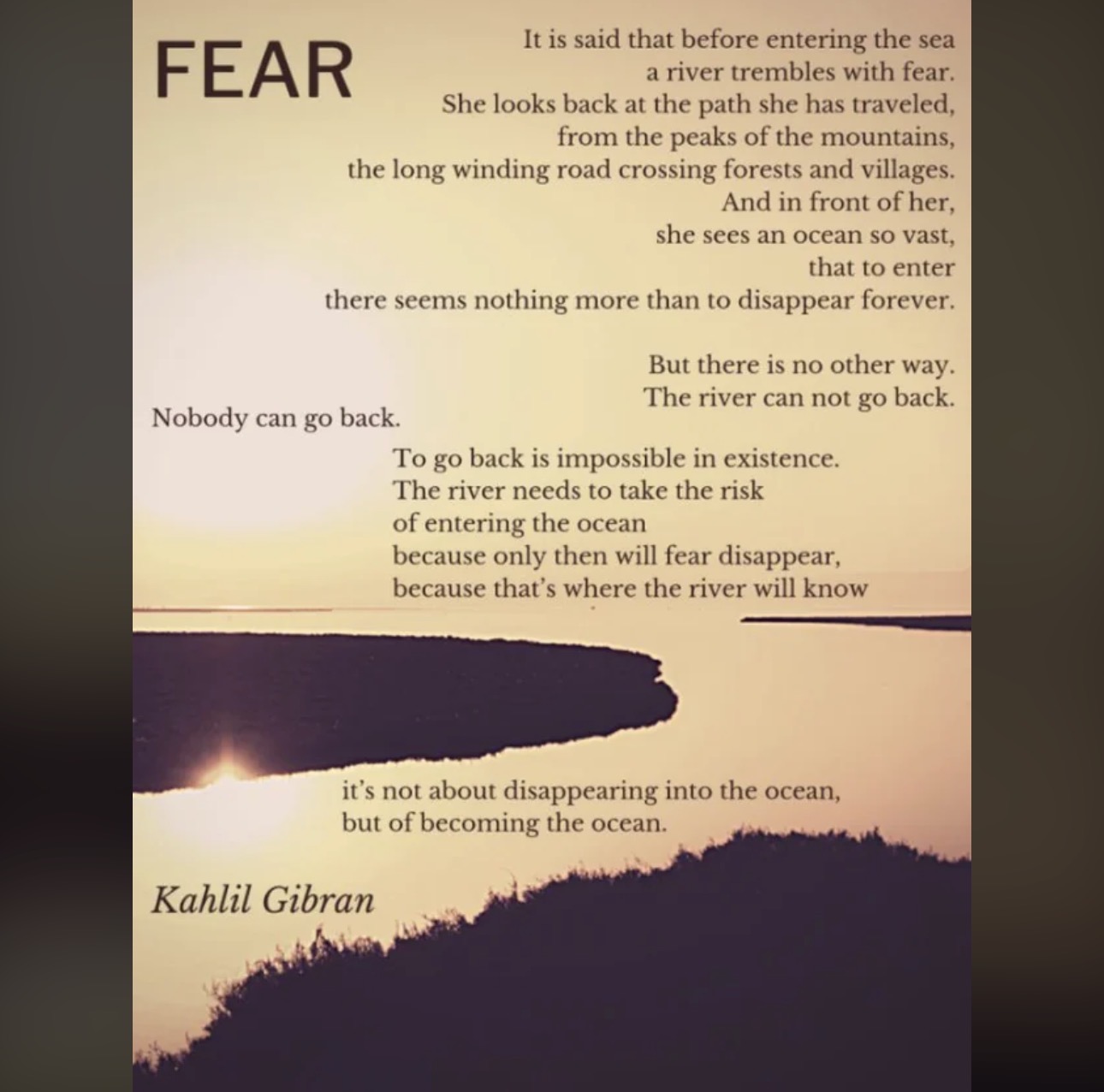
I’ve been treading water in that place Gibran writes of—where the river meets the sea—fighting the currents, unsure of what comes next. The fear, of course, is not the water itself, but the moment you can no longer remain where you are and cannot yet find your way forward. There is fear too in losing your bearings—no longer knowing yourself as you did before.

Water is the beginning of life. We are held in it before we are born. Our waters break to bring us into the world. Across religious traditions, water signifies cleansing, renewal, and transition—whether in baptism, ritual washing, or practices like Loy Krathong, where offerings are set afloat and carried downstream. These rituals remind us that without water there is no life. It regulates climate, sustains ecosystems, and makes all life possible.

And yet water is not benign. It can carry disease, flood cities, pull us under, take our breath. It resists control. It reminds us how dependent we are and how vulnerable. Even where it sustains life, it is never fixed. It rises, recedes, shifts direction. It does not conform to our expectations.

Some theologians and ecological thinkers have suggested that returning rituals like baptism to living waters—rivers, lakes, and streams—can deepen our sense of connection to the ecosystems that sustain us. To stand in moving water, to feel its temperature and force, is different from encountering it conceptually. Perhaps ritual does not create the sacredness of water so much as give us language for what we already sense.

The tension between water as release and water as containment—is highlighted in the film Water: Hindu widows live out their lives along the river—surrounded by a symbol of purification and release. They are also confined and marginalized by their religion and society's constructs around identities defined by loss. The story centers on a child—widowed before she has even grown into the life she was assigned—absorbed into that system without consent, without any path back to who she might have been.

That dynamic feels familiar to me. I am not widowed as society defines it, but the tragic loss of my daughter's father places me within that condition—the way a life's memories and hopes are reshaped around absence. It is a narrowing under the weight of what has been taken, even when the loss doesn't fit neatly into the categories we use to name it.

When loss fits a recognized form, people know how to respond. There are rituals, language, roles that organize care around those who are grieving. When it does not, there is a kind of silence—not intentional, but felt nonetheless—where structures that might hold you simply do not appear.

In that absence, one is left holding what is still as real but less easily named—suspended in that place where the river meets the sea, swirling without direction, unable to find the current.

My own relationship with water has never been abstract. I tend toward motion—body and mind always active. But when I sit beside water—a river, a reservoir, the ocean—something shifts. My attention settles into the movement of the water—the ripples, the current lapping the shore. The sound envelopes me and I find solace within it.

A deeper sense of peace comes from time spent with the people I love. Those moments—rare, fleeting—when everything aligns and you feel held within something larger than yourself, where nothing needs to be added or explained. Those are the moments I have spent my life trying to return to. Memories of such moments often overshadow any of the mistakes or misunderstandings that shaped the relationship.

Lately, water has become the place I go when I don’t know what to do with what I've now been carrying for far too long.

There are times when this feels less like forward movement and more like trying to hold position in something that will not settle. Not drowning, but not being carried either. The river does not get to stop. It meets what comes—rocks, bends, barriers—and finds a way through or around. It continues, regardless of conditions.

There is another kind of place water gathers—the place Gibran names in his poem—where the river meets the sea but does not yet become it. Estuaries are not calm. Tides push in as currents pull out. Fresh and salt water mix unevenly, and salinity shifts constantly. Nothing stabilizes. And yet life exists precisely because of that instability. Species that survive in estuaries are not fixed; they adjust continuously to changing conditions, to what the water brings in each moment.

I recognize that kind of place now—not as a crossing, but as a condition. Not having arrived, not having let go, but living inside the mix of what was and what is. It is not stillness. It is not resolution. It is the movement toward discernment and whatever comes after loss.

Sometimes it feels like being caught in an eddy—circling, moving but not progressing, pulled into a pattern that does not release. The panic there is different. It is not the shock of impact or the force of a breaking wave. It is the realization that you can keep moving and still not go anywhere. That you may remain there longer than you thought possible. The fear Gibran writes of is not the sea. It is where the struggle to orient ends. What I fear is becoming caught in the circling, unable to find the current again.

The way out is not force. As with riptides, fighting an eddy will lead only to exhaustion—not escape. The only way out is at the seam—the place where the circling water meets the larger flow. And finding that seam requires something that is not instinctive in moments of fear. It requires a steadiness of attention—the ability to remain present enough to notice where movement is still possible. If I am overwhelmed, I miss it. If I am avoiding, I never reach it. This is the work now—not to force resolution, not to become numb to what I feel, but to remain steady enough to recognize the moment when something shifts.

This week marks one year since I’ve seen my daughter, heard her voice, hugged her and made her a morning cup of tea. Today marks four years since her father was hit by a car and never woke up. We have had some trouble learning to live with that. Loss does not only take people. It takes the imagined future alongside them. The version of life you thought you were moving toward dissolves, and with it, the self that existed within that future. I had imagined that over time he would have become a more consistent and meaningful presence in her life—that there would be shared moments: graduations, rugby matches, milestones, where we would stand together as her parents. Having lost my own father at twenty, I only ever had an imagined version of what that might be like. That story is gone, and my heart aches for what she has lost. And now, even the version where it would be just the two of us—or just me, alone, cheering her on as it always has been—has fractured as well.

There are losses that are visible and named, and others that are not. There are moments when your role is to hold space for someone else’s grief, to ensure they are supported, while your own goes unacknowledged. That absence does not pass quickly. It settles. It leaves a residue, a shadow over everything else.

Since my return here, I have been drawn back to a place I used to go as a teenager—Reservoir 6—where I would sit and watch the sunset, where I would jump from the rocks in the summer. When I visited the other day, I noticed a bowl of fruit left on the stones near where I sit and chant. It seemed an offering of sorts. It reminded me of the spirit houses I had seen in Thailand, where people leave small tokens by water. Months ago, I had left a small feather there—an offering of my own. It had been a small attempt at a symbolic release of someone I once loved. When I came back again, the wind had carried the feather away, and flowers had been arranged in its place.

I am not the only one who comes to that water carrying something. I am not the only one seeking solace there. That shared instinct—to pause, to leave something behind, to mark a moment—feels sacred in itself. Perhaps ritual does not make water sacred so much as help us recognize what is already present. Across traditions, people return to water at moments of transition—birth, loss, renewal—not only because they are taught to do so, but because something in those places holds their heart.

I am still in that place where the river meets the sea. The currents pull in more than one direction. There are moments of turbulence, moments of circling, moments where I cannot see what comes next. But there are also moments—brief, subtle—where something shifts. A faint pull at the edge of the circling. A moment to catch my breath.

Out of the confusion, where the river meets the sea, something new will arrive.


Friday, March 6, 2026

Safe for Navigation


As a child of literary parents growing up in West Hartford in the 70s, some of my earliest memories of Hartford revolve around visits to the Mark Twain House. My mother was a high school English teacher and loved that Twain’s house was so close. Whenever visitors came to town—especially during the holidays—that was where we went. On the house tour you can see the desk where he sat to write Huckleberry Finn. My mom dressed as Twain for her students, complete with a white suit and gray mustache. Before school one morning, I recall spraying gray into her wig as she transformed into Samuel Clemens for her class. I wish I had a photograph of her like that now.

My brother and I embodied her enthusiasm in our own way. One afternoon, bored and looking for something to do, we began reading passages from The Adventures of Huckleberry Finn aloud, experimenting with the dialects of Twain’s characters. We recorded ourselves acting out the voices. When my mother discovered the tape, she was delighted—not only because we were reading Twain, but because we were doing something creative instead of causing mischief.


At the time I had no idea that Twain’s house had overlooked the North Branch of the Park River. The neighborhood where he lived—Nook Farm—took its name from a bend, or “nook,” in the river that bordered the community. From his Hartford home, Mark Twain once looked out across wetlands and floodplain along the river’s edge.

Twain knew rivers. Before he became a writer, Samuel Clemens worked as a steamboat pilot on the Mississippi River. His pen name—“Mark Twain”—came from riverboat language meaning two fathoms deep: water that was safe for navigation. To pilot a riverboat required more than steering a vessel; it meant learning how to read the currents, depths, and shifting channels of a river. Rivers were not simply scenery to Twain; they were living landscapes that shaped human life. I returned to my hometown to live beside his little river to pause and reflect upon the currents, depths and shifting channels of my own life.

Long before Twain arrived in Hartford,  the rivers of this region flowed through the homelands of Indigenous peoples including the Podunk and Wangunk. The Park River is one tributary within the watershed of the Connecticut River, a river system that has shaped life in this region for centuries. Indigenous traditions across North America emphasize relationships with particular places and landscapes. As Vine Deloria Jr. explains, Native understandings of land differ sharply from Western ideas of wilderness: land is not an empty backdrop for human activity but a living presence within which human life unfolds.¹

By the late nineteenth century Hartford’s relationship with the Park River had changed dramatically. Once known as the Hog River, the waterway became heavily polluted by mills, factories, and urban sewage. Seasonal flooding added to the problem. After devastating floods in the 1930s, city planners turned to engineering solutions. Beginning in the 1940s, the U.S. Army Corps of Engineers buried much of the river in massive underground conduits designed to control flooding and protect development. The project succeeded technically, but it also removed the river from everyday life. What had once been a visible feature of Hartford’s landscape became infrastructure hidden beneath streets and parking lots.²

There is an unsettling parallel here. The same society that buried the Park River beneath concrete has also struggled with the truths Mark Twain tried to surface. Huckleberry Finn, written in this very neighborhood, has become one of the most frequently banned and challenged books in American classrooms. Often, the justification centers on Twain’s use of the N-word. Yet that reasoning obscures the deeper purpose of the novel. Twain used the language of his time to expose the moral failures of that society, not to endorse them. Jim, the enslaved man at the center of the story, emerges as the most humane and morally grounded character in the book. Like the river, the novel forces a confrontation with what lies beneath the surface. And like the river, it has been easier to contain, censor, or redirect it than to fully face what it reveals. What we bury—whether waterways or histories—does not disappear. It continues to shape the world above it.

What happened to the Park River was not unusual. Throughout the twentieth century many cities buried rivers in concrete channels or underground conduits in order to control flooding and make room for roads and development. In recent decades however, urban planners and environmentalists have begun reversing this trend through projects known as ‘daylighting’, which restore buried rivers to the surface. Cities such as Seoul, London, and Yonkers have uncovered waterways once hidden beneath highways and streets, demonstrating how rivers can again become living parts of urban ecosystems.³

A similar transformation has taken place only a few miles away. In neighboring West Hartford, Trout Brook--one of the tributaries that eventually feeds the Park River--has been revitalized over the past two decades into a green corridor with a walking and biking path. What was once a neglected drainage channel is now a vibrant community space where people run, cycle, rollerblade and walk. They can encounter the small ecosystems that persist along its banks. Seeing that restoration makes it easier to imagine what might still be possible for the Park River. Maybe HIU can adopt this stretch of the Park River and do seasonal cleanups as a community to restore access to what it once was. Becoming at home in a watershed may begin with something as simple as noticing the river beside us. However small acts of stewardship embody regenerative future in this place. Our environmental ethics class hosted a guest speaker, theologian Cynthia Moe-Lobeda, who described this kind of shift as the work of moral vision: first seeing clearly what is happening to the Earth, then imagining regenerative futures, recognizing the collective power to move forward in hope, and finally learning to see the beauty that calls us to protect what remains.⁸

Since my return to my hometown in July, I live on Lorraine Street, less than a mile from Twain’s house, at the edge of Hartford International University of Religion and Peace. Just across the street, the North Branch of the Park River still flows above ground for a short stretch before disappearing into the tunnels beneath the city. It's green, dark, and overgrown. After many years living beside rivers around the world—from the Chao Phraya in Bangkok to the Toyohira in Sapporo, the East River in New York, to the Liffey in Dublin and the Tiber in Rome—I realized that another small river was flowing just across the street from where I now live. It is interesting to compare and contrast all these rivers and how they have been incorporated into the societies around them, for better or worse.

What appears to be a small overgrown stream beside the road is actually a part of a much larger system. The Park river watershed stretches across roughly seventy-eight square miles from the Metacomet Ridge-- where I often hike and where legends claim King Philip once roamed--down to the Connecticut River, gathering water from towns across central Connecticut before disappearing beneath Hartford.⁴

In the summer heat, the shaded river corridor acts like a natural air conditioner. Sitting on the covered Victorian porch, you can feel cool air rising from the riverbank and drifting across the street while birds fill the trees with early morning song. My landlady, the mom of one of my childhood friends, who has lived in the neighborhood for decades, remembers when there was once a walking path along the river where she’d  walk her dogs. She described a time when the river was far more open and accessible than it is today.

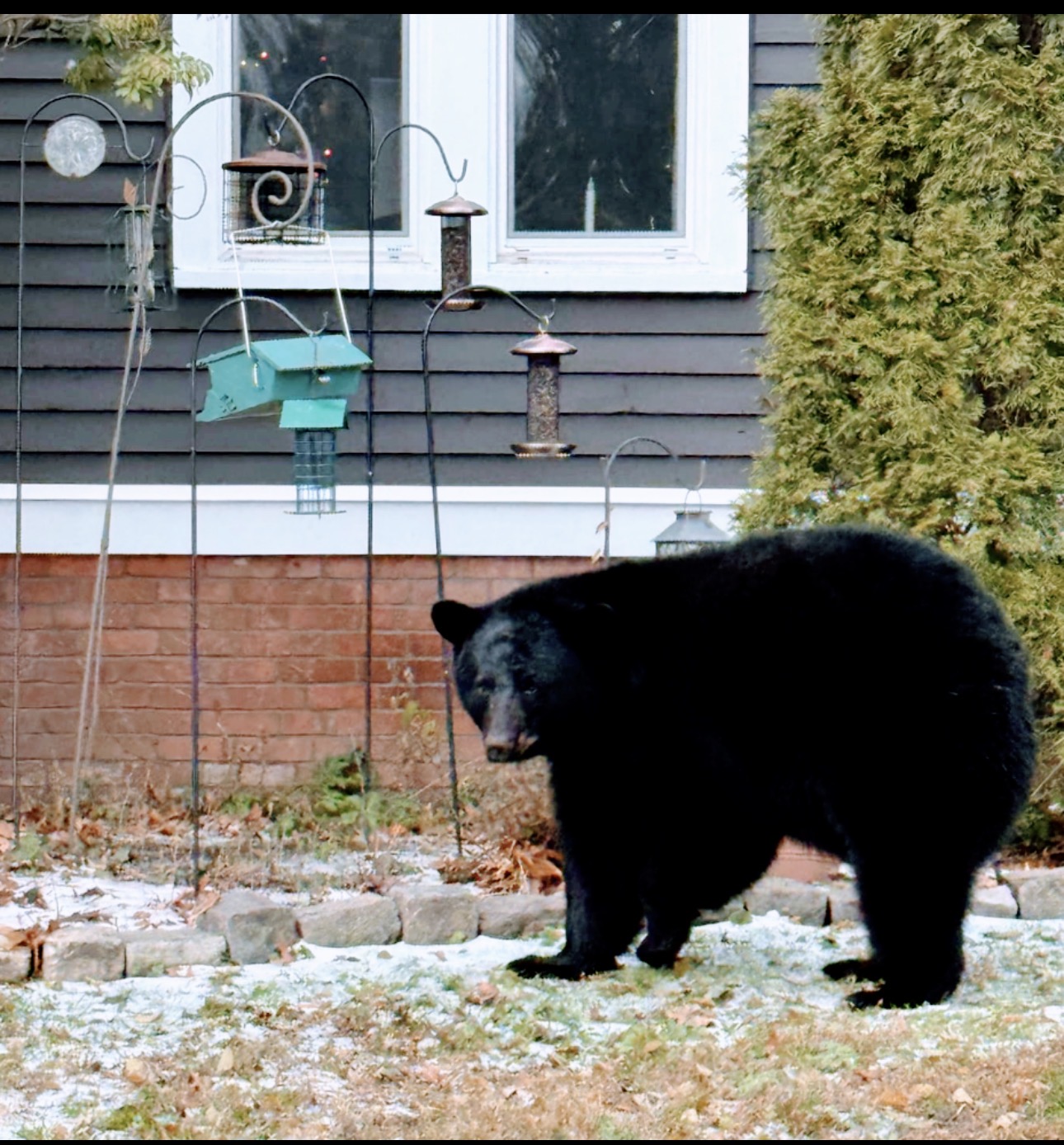
The river corridor is more alive than it first appears. One morning a black bear wandered out of the overgrown riverbank, ambled up through the brush, and continued calmly down the street toward a yard with a hummingbird feeder. Having just lived in Jackson, Wyoming—where we had to worry about grizzlies getting into garbage cans—the sight was  surprising. Never in my life growing up here did I imagine there were bears moving quietly through my hometown shadows. Yet the river still carries a thread of wilderness through this neighborhood on the edge of the urban center.

Paying attention to this small stretch of river has changed the way I think about the place where I live.  Robin Wall Kimmerer compels us that ecological relationships begin with learning to notice the life around us and recognizing that flourishing depends on reciprocity between humans and the more-than-human world.⁵ Writer Barbara Kingsolver underscores the idea that human beings become truly “at home” in a landscape when they begin to learn its patterns, histories, and living rhythms.⁶ Buddhist teacher Thích Nhất Hạnh sagely advises that awakening begins when we see that we are not separate from the Earth itself.⁷

Cities often forget the rivers that shaped them. In Hartford, much of the Park River now flows unseen beneath the streets. Yet standing on Lorraine Street, where the North Branch still moves quietly through a shaded corridor beside my home, it becomes clear that the river has not disappeared. It still cools the air on summer evenings. Birds still gather in the trees along its banks. And occasionally, a wandering bear still follows its hidden path through the city.

Samuel Clemens once learned to read rivers for a living. From his home in Nook Farm he looked out across the floodplain of the Park River while writing stories about life along the Mississippi. Today that same river flows mostly unseen beneath Hartford’s streets. Yet the water continues its quiet journey toward the Connecticut River, moving through the city whether we notice it or not.  I am taking Thich Nhat Hahn’s advice and making a point of paying attention.

Learning to belong to a place may begin with something simple: learning how to read the water and thrive in harmony with its currents.


Notes

  1. Vine Deloria Jr., “American Indians and the Wilderness,” in American Indian Policy in the Twentieth Century, ed. Vine Deloria Jr. (Norman: University of Oklahoma Press, 1985).

  2. Bushnell Park Conservancy, “The Park River.”

  3. Ethan Arcata, “Revitalizing Rivers: The Park River’s Legacy,” ArcGIS StoryMap, November 29, 2023.

  4. Park Watershed, Inc., “About the Watershed,” https://www.parkwatershed.org/about-the-watershed/

  5. Robin Wall Kimmerer, Braiding Sweetgrass (Minneapolis: Milkweed Editions, 2013).

  6. Barbara Kingsolver, “Knowing Our Place,” in High Tide in Tucson: Essays from Now or Never (New York: HarperCollins, 1995)

  7. Thích Nhất Hạnh, The World We Have: A Buddhist Approach to Peace and Ecology (Berkeley: Parallax Press, 2008).

  8. Cynthia Moe-Lobeda, Building a Moral Economy: Pathways for People of Courage (Minneapolis: Fortress Press, 2023).


Bibliography

Bushnell Park Conservancy. “The Park River.” Hartford.
https://bushnellpark.org/about-2/history-2/the-park-river

Deloria, Vine, Jr.  “American Indians and the Wilderness.” In American Indian Policy in the Twentieth Century, edited by Vine Deloria Jr. Norman: University of Oklahoma Press, 1985.

Arcata, Ethan. “Revitalizing Rivers: The Park River’s Legacy.” ArcGIS StoryMap, November 29, 2023.  https://storymaps.arcgis.com/stories/72398371e8b24912903bc30653a95cd6

Kadinsky, Sergey. “Park River, Hartford.” Hidden Waters Blog, September 11, 2024.

Kimmerer, Robin Wall. Braiding Sweetgrass: Indigenous Wisdom, Scientific Knowledge, and the Teachings of Plants. Minneapolis: Milkweed Editions, 2013.

Kingsolver, Barbara. “Knowing Our Place.” In High Tide in Tucson: Essays from Now or Never. New York: HarperCollins, 1995.

Park Watershed, Inc. “About the Watershed." https://www.parkwatershed.org/about-the-watershed/

Thích Nhất Hạnh. The World We Have: A Buddhist Approach to Peace and Ecology. Berkeley: Parallax Press, 2008.

Twain, Mark. The Adventures of Huckleberry Finn. New York: Charles L. Webster and Company, 1884.