Showing posts with label single mom. Show all posts

Saturday, December 27, 2025

Circling the Landing


At the end of the year, reflection is de rigueur. Calendars close. Rituals repeat. Regrets become bygones. People speak in the language of fresh starts and clean slates, as if January can erase what the body remembers. If only. ’Tis the season of good intentions and manifestations. It is the season of hope. This year, I find myself holding on to hope out of habit but seeking something more sturdy. I'm scanning for solid ground to land on.

For the last eighteen years, Christmas centered around my daughter. Never a fan of commercialism, our holidays focused on activity together—exploring the melding of Islam and Christianity in Malta; dancing with Chiang Rai hill tribes and wandering Buddhist temples with Colin; learning to ski in Braunwald; Māori feasts and climbing volcanoes in New Zealand; singing carols in St. Patrick’s Cathedral; or catching first powder tracks in Breckenridge and Jackson—all before French toast and bacon. Each day ended the same way: reading new books by the fire. When your family is just two, Christmas becomes about doing something together you might not otherwise do. It is a time for that elusive and often underrated sacred pause.

This year’s Christmas was quiet. Contemplative. Solitary.

For months now, I have felt myself circling, like the hawks I watch ride the updrafts near the cliffs by Hublein Tower—moving in wide arcs above ground that does not yet feel safe to touch, surveying the landscape, peering into the shadows, all while yearning to touch the sky. Anyone who has flown knows the sensation: the plane keeps turning while conditions below remain unclear. From inside the cabin, the mix of fear and impatience can feel interminable. From the cockpit, however, it is deliberate. Circling is not failure; it is judgment. It is what pilots do when visibility is compromised and a forced  landing could cause harm. Better to wait. Better to get everyone safely home.

Home, I’ve realized, is not a place I failed to find. Home was wherever I was with my daughter. I endeavored to make the journeys themselves our home—to make home a state of mind. When I am asked why I never settled, or reminded that I “made my choices,” this is what comes to mind. I notice the urge to ask why those who say it  allowed themselves to settle, to stagnate, and to grow complacent. I never actually say that out loud. I wonder why some feel it is ok to comment at all. What I know instead is this: after living all over the world, I am skilled at making a home wherever I find myself. Home is not a destination. It is a practice I returned to—sometimes in motion, sometimes in exile, sometimes circling while waiting for permission to land.

We like to tell ourselves that home equals permanence. But permanence is an illusion we allow ourselves so that we feel in control. I learned young what that saying about the best laid plans really means. Coming back to my hometown this year was not a sentimental homecoming. It was a re-entry—a full-circle return after decades of movement. The streets are familiar. The geography is known. There is comfort in that. There are memories around every corner. And yet everything feels subtly altered, as though I had been living in a parallel version of my life and only now crossed back through a thin seam. When I see people I knew in my youth, I am startled by how little they resemble my memory. Then I catch my reflection and remember how much time has passed.

I have lived through uncertainty before—my dad’s ten year cancer journey, Colin’s coma, job loss, war zones, flood evacuations—real danger—and I always believed there would be a safe landing. Learning to sit inside uncertainty is one of life’s harder disciplines. This year has felt like sustained turbulence: no clear altitude, no horizon, no reliable sense of when or how it will end. Like flying inside storm clouds, I have often lost my sense of up and down. What I understand now is that circling cannot last forever. Fuel is finite.

In 2007, I gave birth alone, knowing that I would. I prepared for it like I would have a championship lacrosse game. There were doctors and nurses, of course, but they were doing their jobs. I was bringing a new life into the world. It was powerful. Primal. Sacred. It was April in Aspen—shoulder season, heavy wet snow falling hard enough to close the runway. If something went wrong, there would be no quick flight to a larger hospital. Labor was long. There was meconium. Real risk. Birth plan altered. In the wee hours my daughter arrived quietly and was handled with urgency and care.
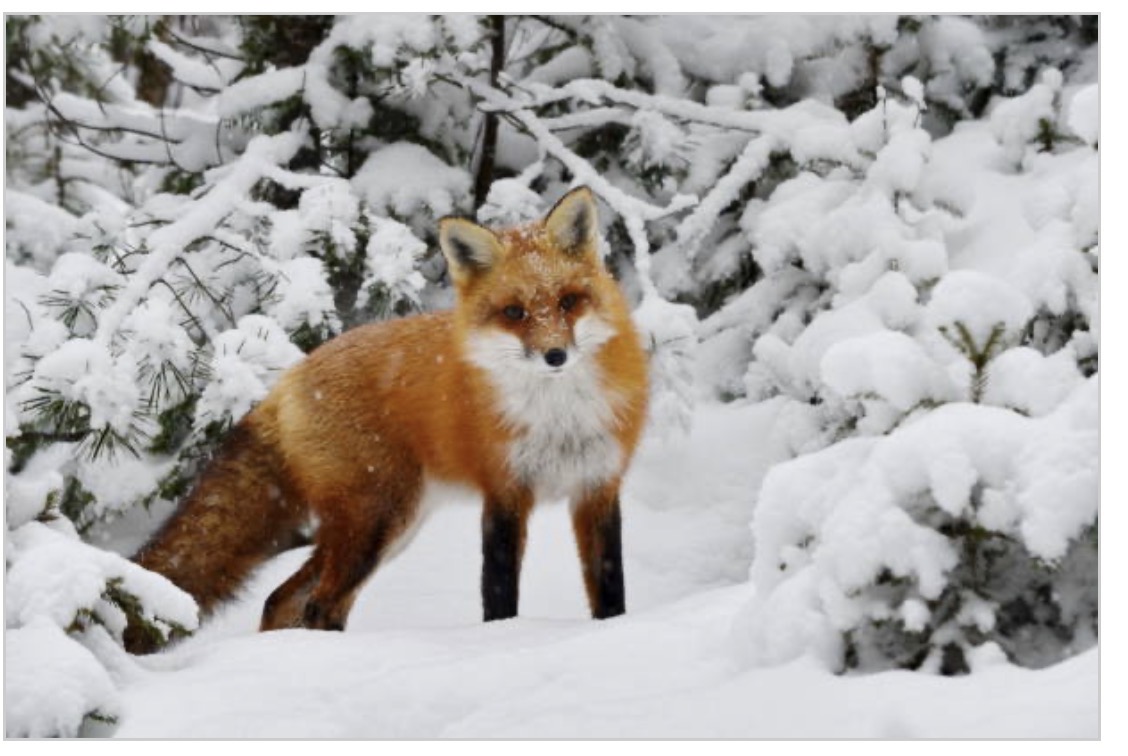


The morning after her birth, holding my tiny daughter in my arms, I looked out the hospital window and saw a red fox flash across the bright white snow. It paused—vivid and poised—long enough to meet my gaze before trotting away with a swish of its bushy tail. I noticed it then, and I remember it now. In both Japanese and Irish traditions, the fox is a guide at thresholds, a creature that moves between worlds—spirit and human, wilderness and settlement—without belonging fully to either. It survives through attention, timing, and discernment rather than force. The fox did not linger. It did not look back. It crossed the snow cleanly and disappeared. Its presence felt as if it was noting a crossing already underway. I turned back to the new life in my arms, knowing I would be learning how to guide her across many such thresholds myself.


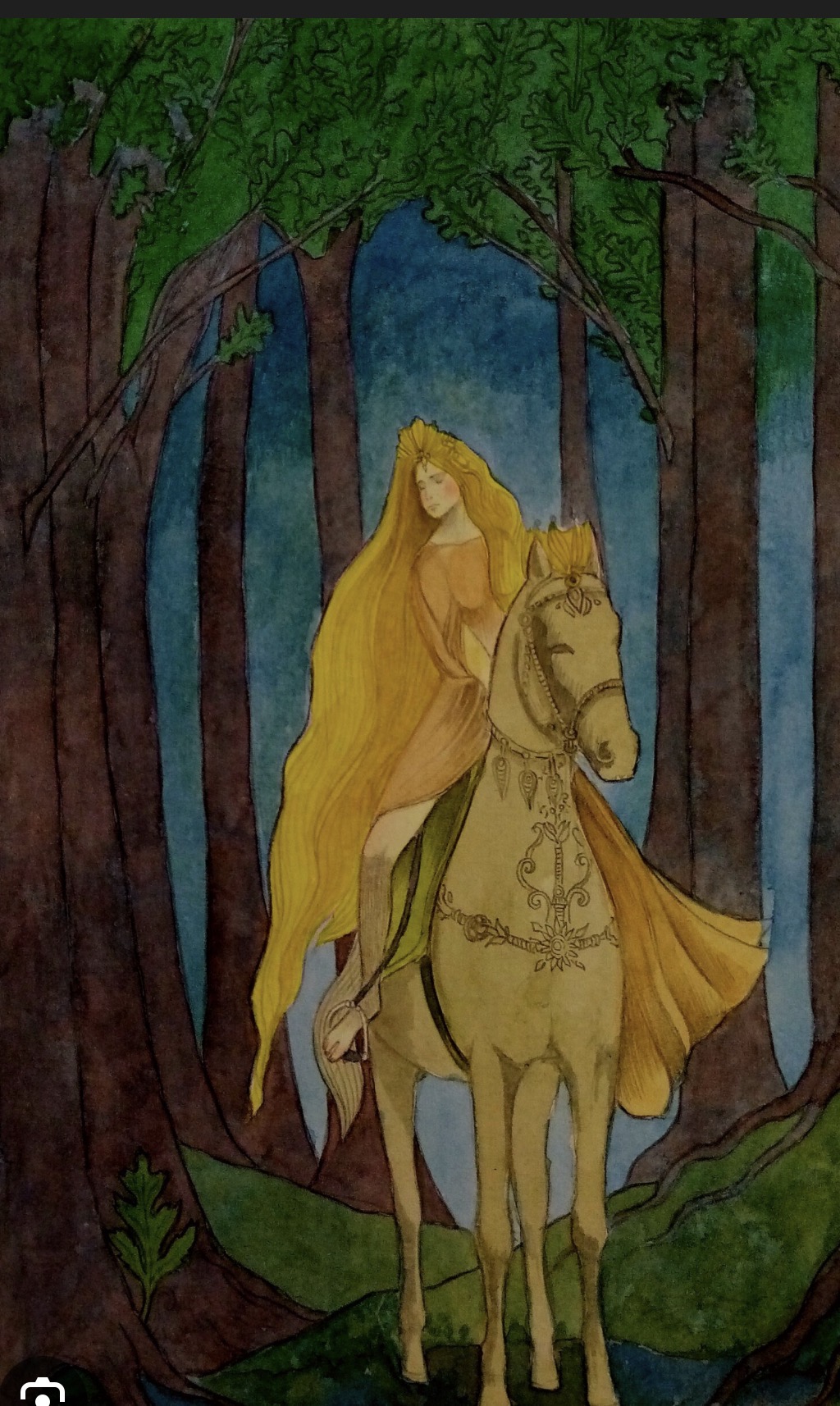
I turned back to my daughter and named her Niamh—after the princess of Tír na nÓg, the land of youth in Irish mythology. She is the woman who rides over the sea on a white horse, crossing between worlds, choosing both love and adventure for herself over safety and stasis. In the old stories, waves are often described as white horses, carrying her between realms. Tír na nÓg is a place without aging or decay—a place of vitality, courage, and belonging. It held all the things I wanted for my daughter. When Niamh was small, she believed completely that she was that princess. I read her the story so often it lived in her bones. Even her name carries a crossing—Niamh, sounding like nieve, the Spanish word for snow.  She is of the sea and of the snow. A child born between elements. And she is most at home in both.


A week earlier, heavily pregnant, I had stayed alone in a hut at Snowmass Monastery. I slept. I meditated. I prepared. Each evening I waddled past elk in the fields to the stone chapel where I let myself be carried away by the somatic power of monks chanting vespers. I had very little. I had no plan. I was dismissed by my child’s father, by my employer, by my family. And still, I believed all would be well—not because the ground was safe, but because I trusted myself and the love I already felt for the life that was making its way toward me.  

When people speak easily about “the choices we make,” they often imagine a level runway and plenty of fuel. They imagine a warm car waiting in the pickup lane, smiling faces at the arrivals gate. They assume time, support, and room for error. But some decisions are made while circling, with incomplete information and very little margin. In those moments, choice looks less like preference and more like responsibility. You do what you must. You keep flying because you are accountable for the life you are carrying and the future you are trying to protect. Much of my life has been shaped by decisions made under those conditions. I chose love. I chose courage. Not because they were ideal options, but because they were the ones available to me.

In recent years, in the days before Christmas, my daughter and I added Love Actually to our holiday movie playlist. Much of the film is outdated fluff—power imbalances disguised as romance, longing framed as virtue, waiting to be chosen. But the candid opening and closing scenes at Heathrow arrivals have always moved me. Real people filmed without performance. Faces lighting up as loved ones appear. We don’t know their histories or their fractures. What we see is simple and true: people choosing to show up. We are reminded of the privilege it is to be present for someone—and the good fortune to have someone be present for you.

Over time, I’ve learned that love isn’t proven by endurance or by how long someone tolerates absence. It’s revealed by who arrives, and how, without keeping a ledger or demanding something in return. Love, at its most honest, is choosing to show up. Again and again. 

When my daughter was small, we watched Brave on repeat. She loved Merida’s fierce independence. I was drawn to the mother who learns—too late and painfully—how easily protection becomes control. Current circumstances make me wonder if the film was fate’s foreshadowing. In that tale, the mother becomes a bear not as punishment, but through her own fear and misunderstanding. The spell breaks not through conquest, but through recognition.

I have seen bears up close. A grizzly crossed my path on Mother’s Day last spring as I walked around Jackson Lake—massive, alert, looking for food and uninterested in dominance. At that same moment, my daughter was in the sky above, crossing a continent and an ocean back to her father’s home—Ireland. The bear did not charge or retreat. It ambled across my path while I held my breath. Strength does not always announce itself as danger. Sometimes it arrives as a reminder of what we contain within us.

I once heard that some Indigenous peoples believe when humans move too fast, the body can arrive before the soul, and the soul needs time to catch up. I believe this is true. I have felt it myself. I have lived much of my life in motion, crossing borders and systems, always adapting, always arriving efficiently. I never learned how to arrive whole as some part of me was always left behind. Perhaps this season of circling is not failure but reintegration. I was drawn to return here perhaps because this is where my soul knows how to find its origin point. Perhaps pieces scattered across years and places are finally being given time to find their way home to me.

When some say that I made my choices, I don’t disagree. I chose love. I chose courage. I chose to keep showing up without keeping score. I am not here because my journey failed. I am here because journeys sometimes pause.  If there is a landing ahead, it will be because conditions changed. Until then, I will keep circling—not in indecision, but in care. Scanning the landscape for a clearing. Not as a performance, but as a witness. Not as a plea to be chosen, but as a refusal to disappear.

At the end of this year—this year of the snake—this is what I know: I am still here. I am telling the truth in a form that can hold it. I am allowing time for all of me to arrive. And I will keep showing up, because that is what I can do.



Sunday, November 9, 2025

From Tea to Protest: Ritual and the Sacred Pause


Across the many countries I’ve called home, ritual has been my quiet teacher. Whether kneeling on tatami mats in Japan, joining monks in Thailand, or pouring tea after an Irish funeral, I have come to see how ritual carries us—through joy and grief, belonging and exile, belief and doubt. It is the thread that ties the sacred to the ordinary. What began as a reflection for my chaplaincy course has become something larger: a meditation on how ritual holds the human story together—from tea bowls to protests, from solitude to solidarity.

I. Rituals of Discipline: The Way of Tea and the Way of the Sword

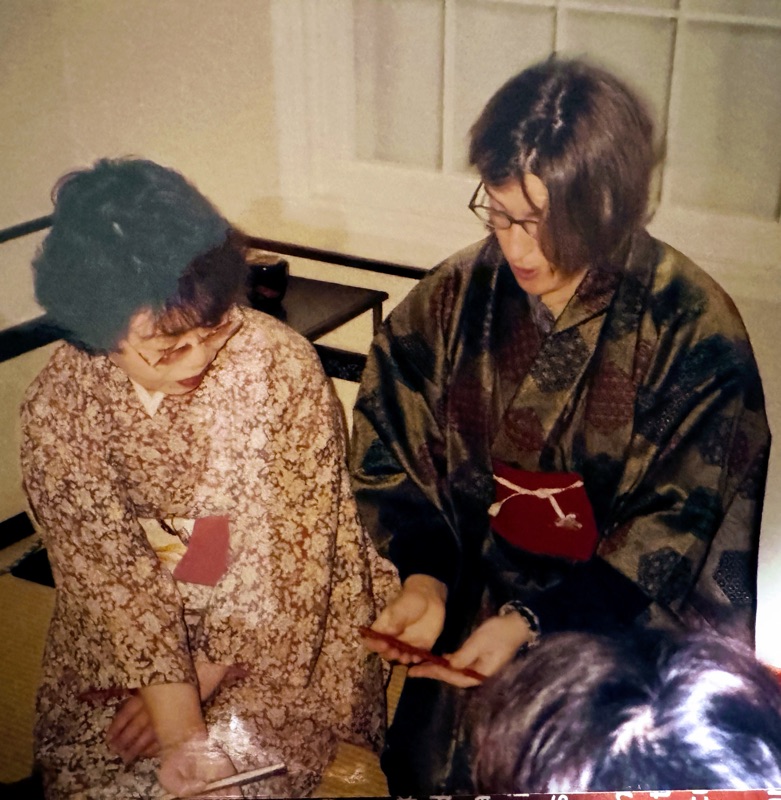
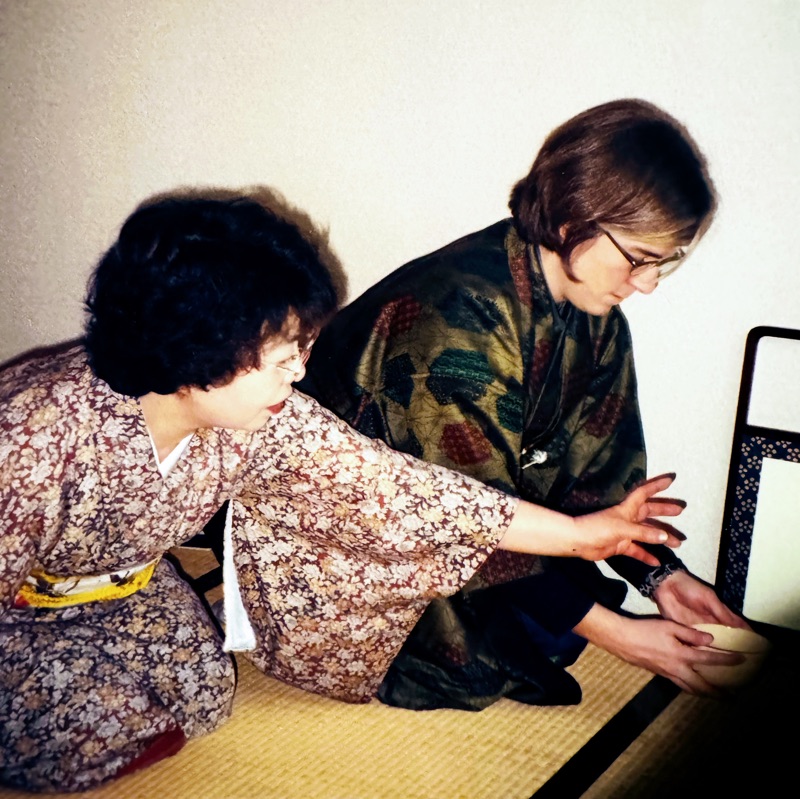
When I was teaching middle school history in Sapporo, Japan, we were in the midst of a unit on Buddhism, Shinto, and the Samurai. My students were fascinated by how the samurai code, or bushidō, emphasized discipline, mindfulness, and ritual practice. To bring those ideas to life, we accepted an invitation to the home of one student’s grandmother to participate in a traditional tea ceremony—chadō, the Way of Tea. She dressed me in a kimono and guided us, step by step, through the precise choreography of bowing, pouring, and serving. Every movement was deliberate, every gesture full of intention. My small class translated her words while we all tried—unsuccessfully—to ignore the ache in our legs, giggling through the kneeling. The tea itself tasted like grass to me, but the grace of the ritual was unforgettable.


As Aaron Rosen suggests in “Curating an Interfaith Pilgrimage,” interreligious understanding often arises through shared movement and aesthetic encounter—what he calls a kind of “curated pilgrimage.” Participating in the tea ceremony felt much like that: a walk through beauty and discipline that revealed connection across difference. Though I was an outsider to the tradition, I was invited to move, kneel, and breathe within its rhythm, discovering common ground through the act itself rather than through words or doctrine.
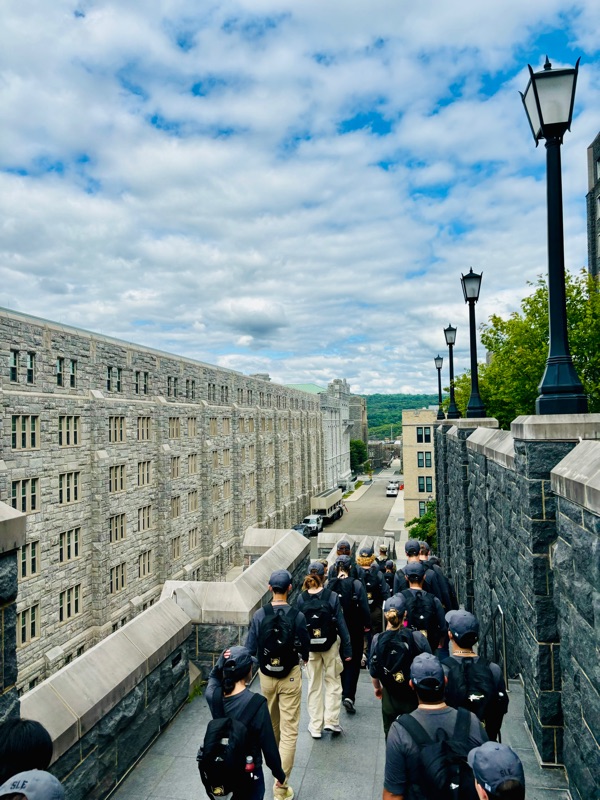
The samurai used ritual to prepare mind and body for combat. In that sense, chadō was as essential as sword training—a spiritual discipline that balanced mastery with humility. Years later, as I watched my daughter commit to her own path of disciplined service at West Point, I recognized a similar rhythm. Like the samurai, the cadets’ rituals—salutes, parades, and pledges—shape the moral muscle memory of duty, restraint, and honor. Both traditions sanctify discipline as a sacred act, revealing how ritual lends dignity even to the art of war.

II. Rituals of Renewal: Mochi, Monks, and Mutuality


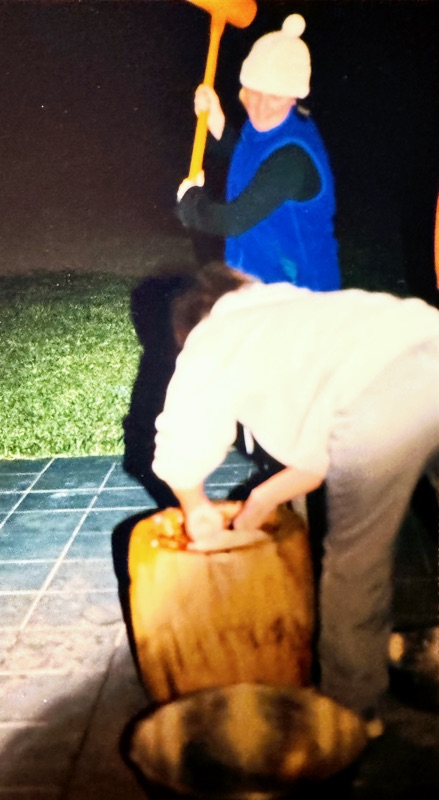
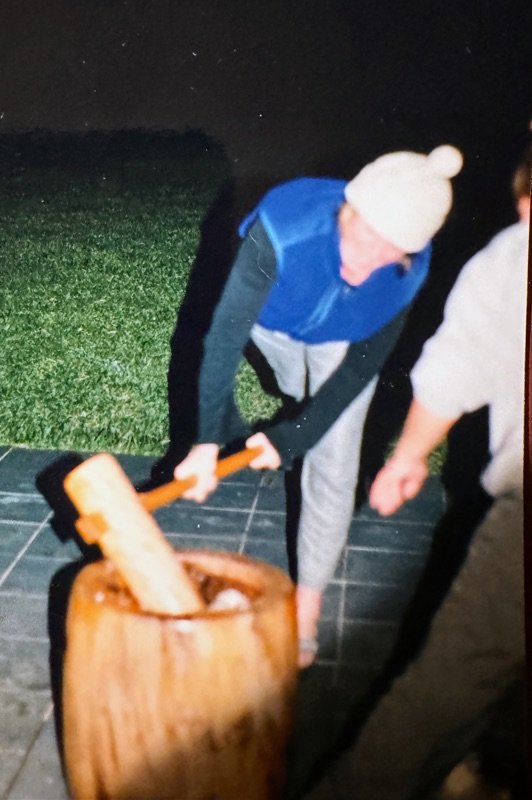
That winter, I joined another Japanese New Year’s ritual—the pounding of mochi, or sweet rice cakes. This ceremony contrasted the meditative tea ritual. It was loud, messy, rhythmic, communal—and yes, there was plenty of sake, itself a sacred distillation of rice. On the island of Iriomote Jima, villagers and I took turns hammering sticky rice in heavy wooden mortars while others turned it between strikes, a dance of coordination and trust—especially considering the sake involved.


I learned later that mochitsuki is far more than a festive custom. It is a ritual of renewal and gratitude performed at the New Year, when the boundary between the human and divine is thought to be thin. The pounding transforms separate grains of rice into a single, unified mass, symbolizing communal strength and harmony. The cooperation between the pounder and the turner becomes a physical expression of interdependence, while the finished mochi is offered to the kami in thanks for the harvest and as a prayer for health and prosperity. Even the laughter and noise carried a sacred undercurrent—transformation through effort, joy, and togetherness.


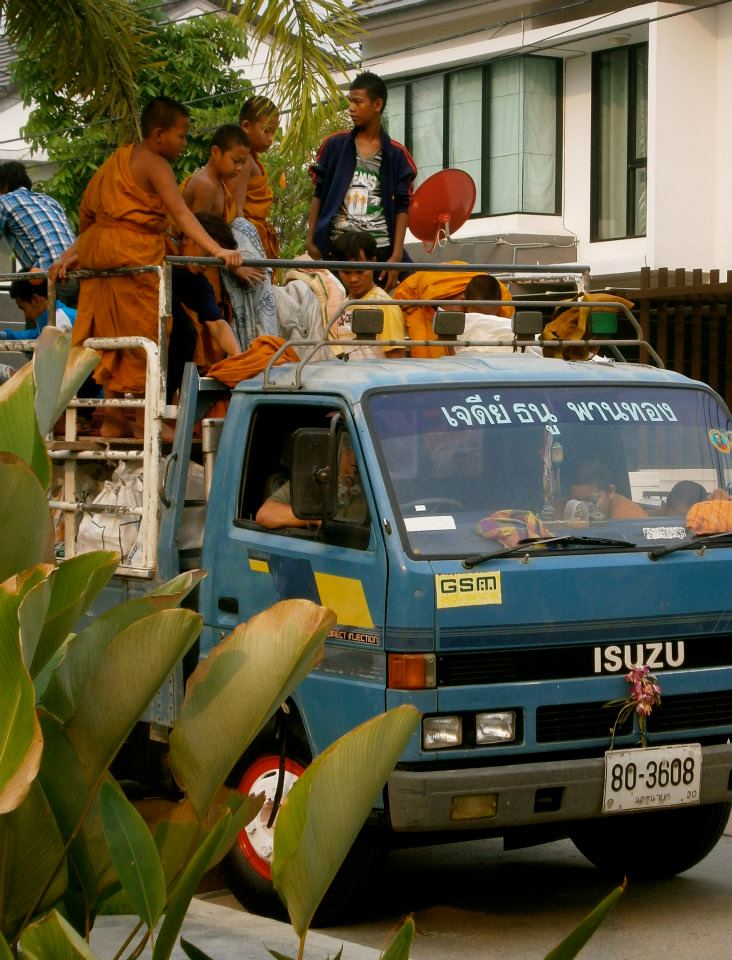
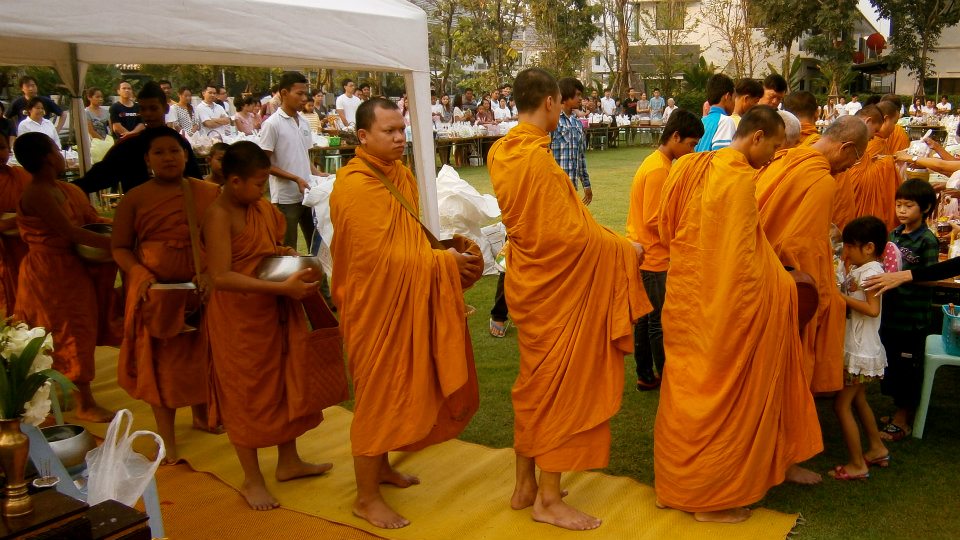
While teaching in Thailand, I encountered another kind of ritual renewal. My four-year-old daughter and I had just moved into a new moo ban (neighborhood) in Bangkok. One Saturday morning, we joined our neighbors for a house-blessing ceremony. A truckload of monks in saffron robes arrived to chant and receive offerings of rice and fruit. The air was fragrant with incense and sunlight. The monks’ procession wound past each home, blessing us as they passed. Though I didn’t understand the words, I understood the rhythm—the giving, the receiving, the quiet joy.


During Songkran, the Thai New Year, and Loy Krathong, the festival of lights, I learned that ritual could be both solemn and playful. Songkran’s exuberant water fights and Loy Krathong’s candle-lit boats symbolized cleansing, renewal, and remembrance. In Thailand, anyone could participate; belonging was porous, joy the common language. There is a reason Thailand is called the Land of Smiles.

III. Rituals of Reflection: Faith and the Feminine Journey


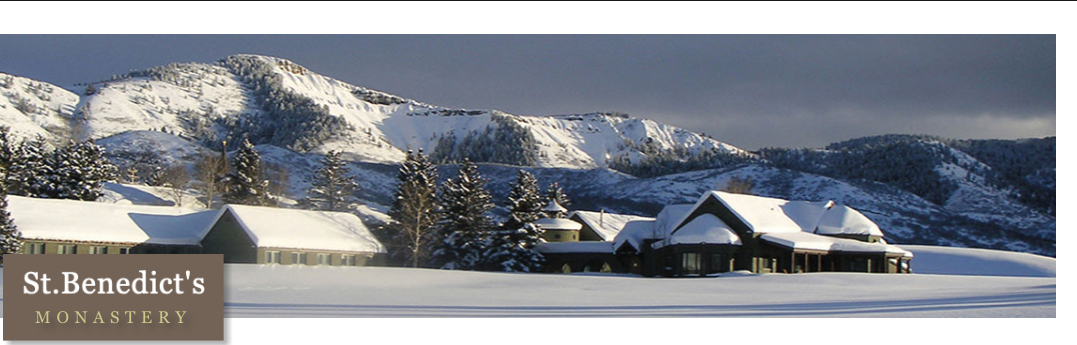
In the final month of my pregnancy, I stayed at the Snowmass Monastery near Aspen, Colorado. I wanted a retreat—a time to rest and reflect before my daughter was born. There, guests could stay in simple stone huts overlooking the Rockies and pay what they could. Elk herds grazed in the fields. Each evening I waddled down to the chapel to hear the monks chant their vespers. Their ritual. Their declaration of faith. I felt enveloped in peace. The music was low and steady, like breath itself. My daughter was born a week later.


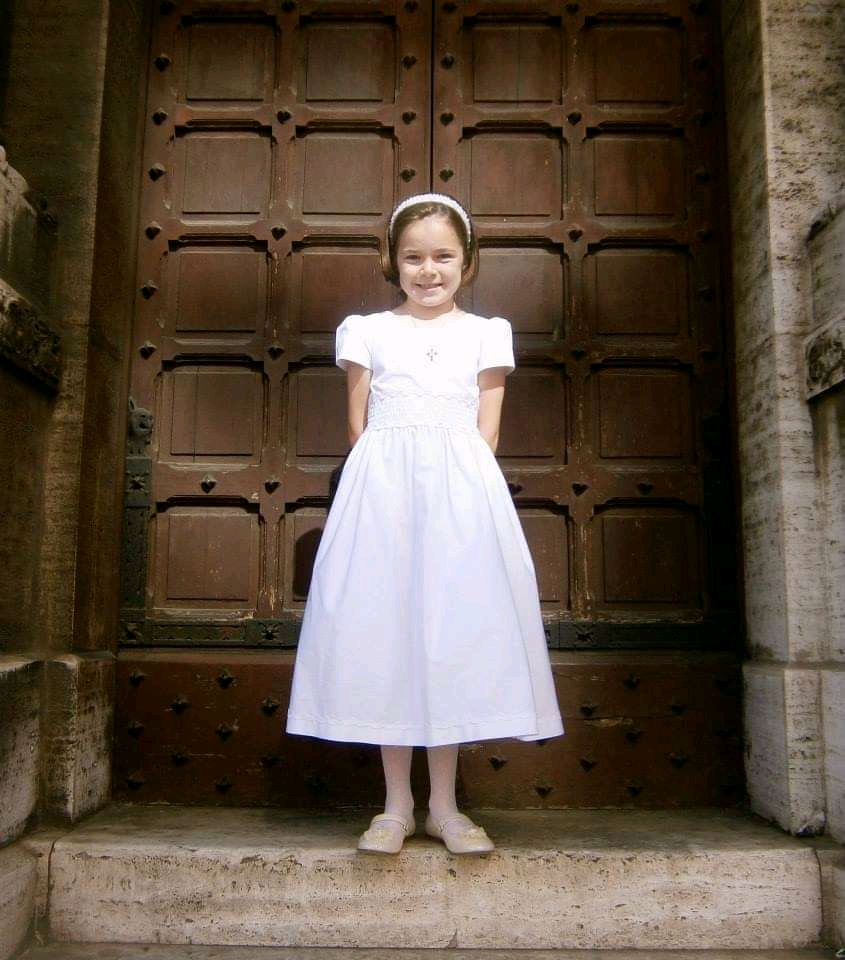
Years afterward, when we were living in Rome, she made her First Communion with her classmates at Marymount International School. For me, this was less an act of religious obligation and more an act of cultural integration. We were guests in a Catholic country, and I wanted her to experience the beauty of that tradition with her Italian classmates. The ceremony, with its white dresses, lilies, and ancient hymns, offered a kind of belonging that transcended belief—it was community made visible.


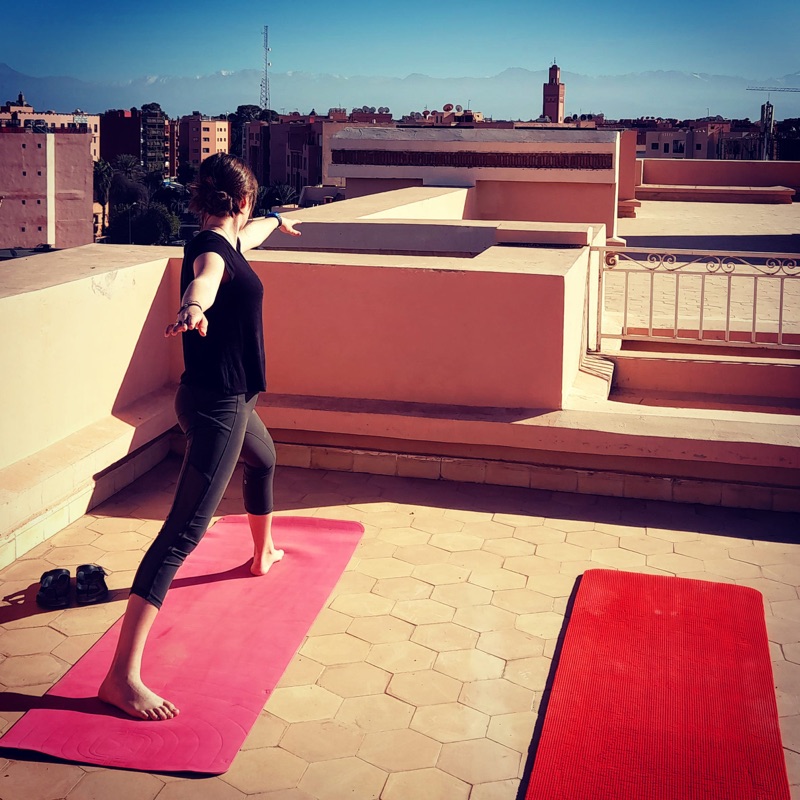
Later, in Morocco, we lived beneath the pink walls of Marrakech. Some mornings, my daughter and I would do yoga on our rooftop as the call to prayer echoed across the city toward the Atlas Mountains. That daily soundscape—sunlight, breath, and the mingled voices of devotion—became its own form of prayer. It reminded me that ritual, wherever it is practiced, opens a window between body and spirit, culture and faith.


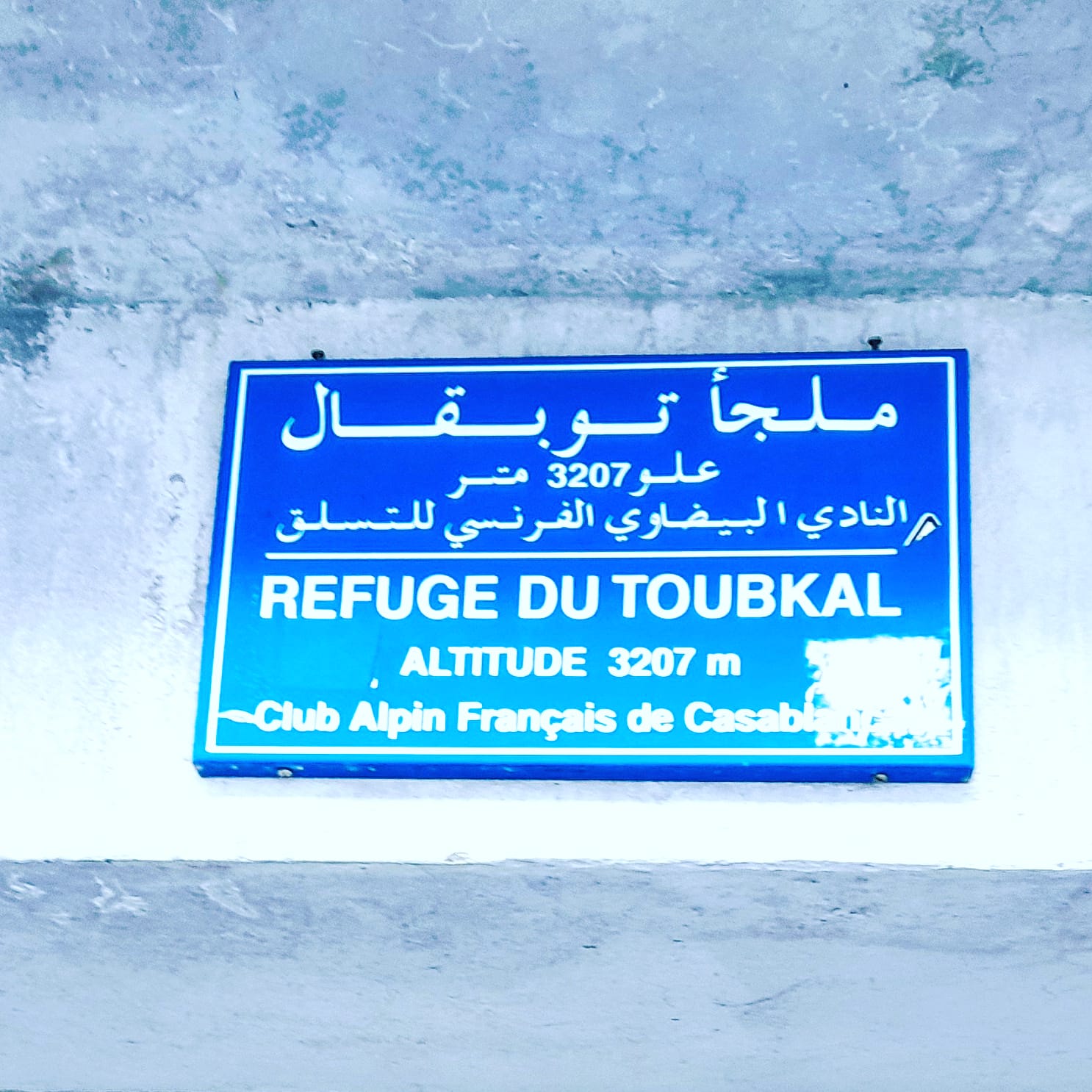
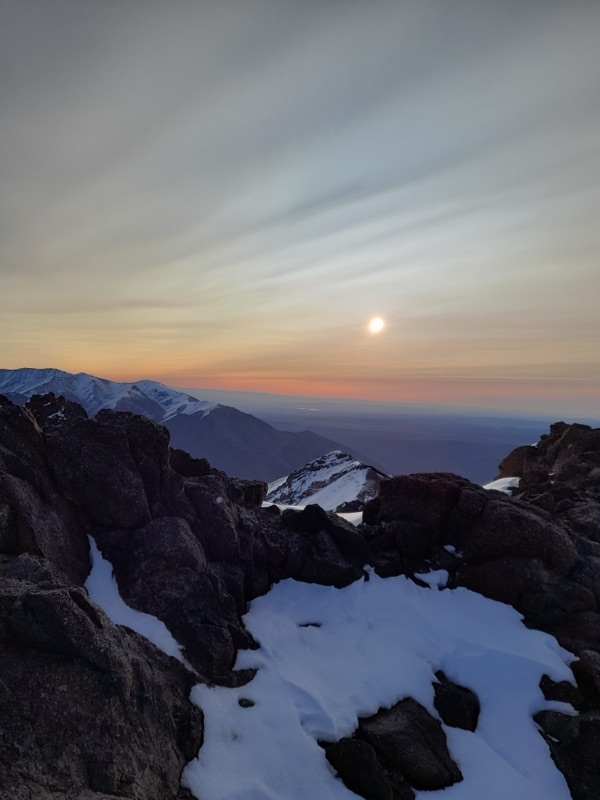
My daughter and I traveled from Marrakech into the High Atlas Mountains to climb Mount Toubkal—the highest peak in North Africa. The ascent began in the village of Imlil and carried us past rocky fields and herds of goats until we reached the stone refuge at the mountain’s base. We rose before dawn to reach the summit by sunrise, overlooking the Sahara, where fine red dust mingled with snow.


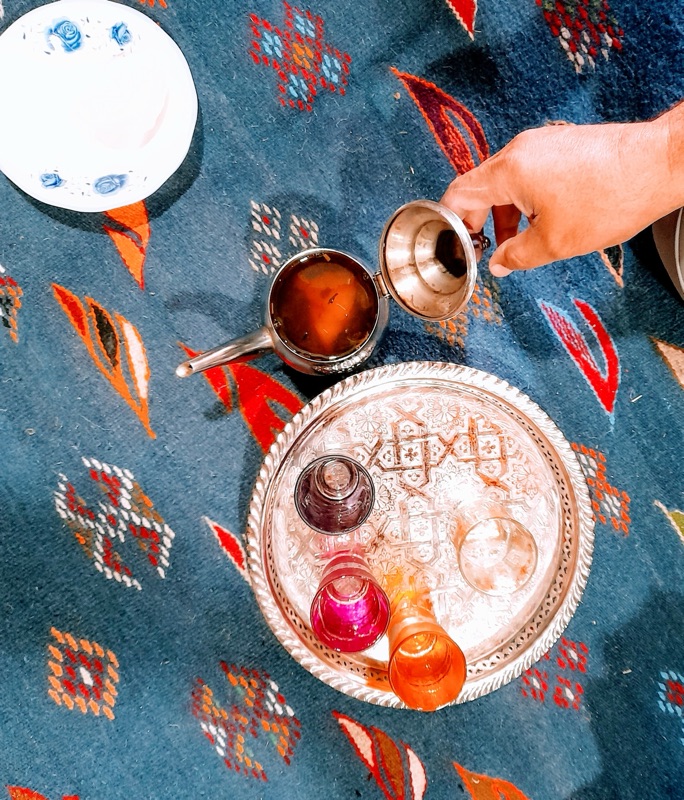
After our descent, our hosts prepared a feast and served glass after glass of steaming mint tea poured from high above into colorful jeweled cups.
That sweet, fragrant tea—shared in exhaustion and gratitude—was a ritual of welcome and renewal. The next day, in a carpet shop back in Imlil, we were plied again with mint tea until I found myself buying a rug I hadn’t known I needed. In Morocco, as in Ireland and Japan, tea is never just a drink; it is an offering, a conversation, a way of saying you belong here.


IV. Rituals of Remembrance: Death, Tea, and the Rosary
In April 2022, my daughter’s father, Colin, was struck by a car near his home in Ireland. He died after three weeks in a coma. My daughter turned fifteen during those suspended days. Colin was 51.


The Irish are particularly adept at mourning the loss of a loved one and saying goodbye. They have a saying—An rud a ghoilleas ar an gcroí caithfidh an t-súil é a shileas—which means “What pains the heart must be washed away in tears.” I keep the Irish here deliberately: for centuries the language itself was forbidden under British rule. To speak it, like to grieve aloud, was once an act of resistance.
Colin lay in his coffin in his family’s sitting room, his body surrounded by photographs, flowers, and the people who loved him. Neighbors streamed in to pay their respects and stay while sandwiches were passed. They stayed when the room grew still as the family encircled the open casket and began to pray the rosary—An Choróin Naofa. The words flowed like a tide down tear-streaked faces—recited not for performance but for endurance. We clung to the rhythm to steady our grief. In that ritual one witnesses the truth that grief is love with no place to go. The community surrounded us with their care. I do not remember all their faces, but I will never forget their presence.
The next morning, his coffin was lifted into a glass-sided hearse. We walked slowly and silently behind it through the narrow roads of Kilcurry as the neighbors stood along the road and made the sign of the cross as we passed. The farmers stopped their tractors and tipped their caps. His rugby teammates carried his coffin into the church. The incense mingled with the scent of rain. It was ritual as revelation—a choreography of profound loss, love, and dignity.
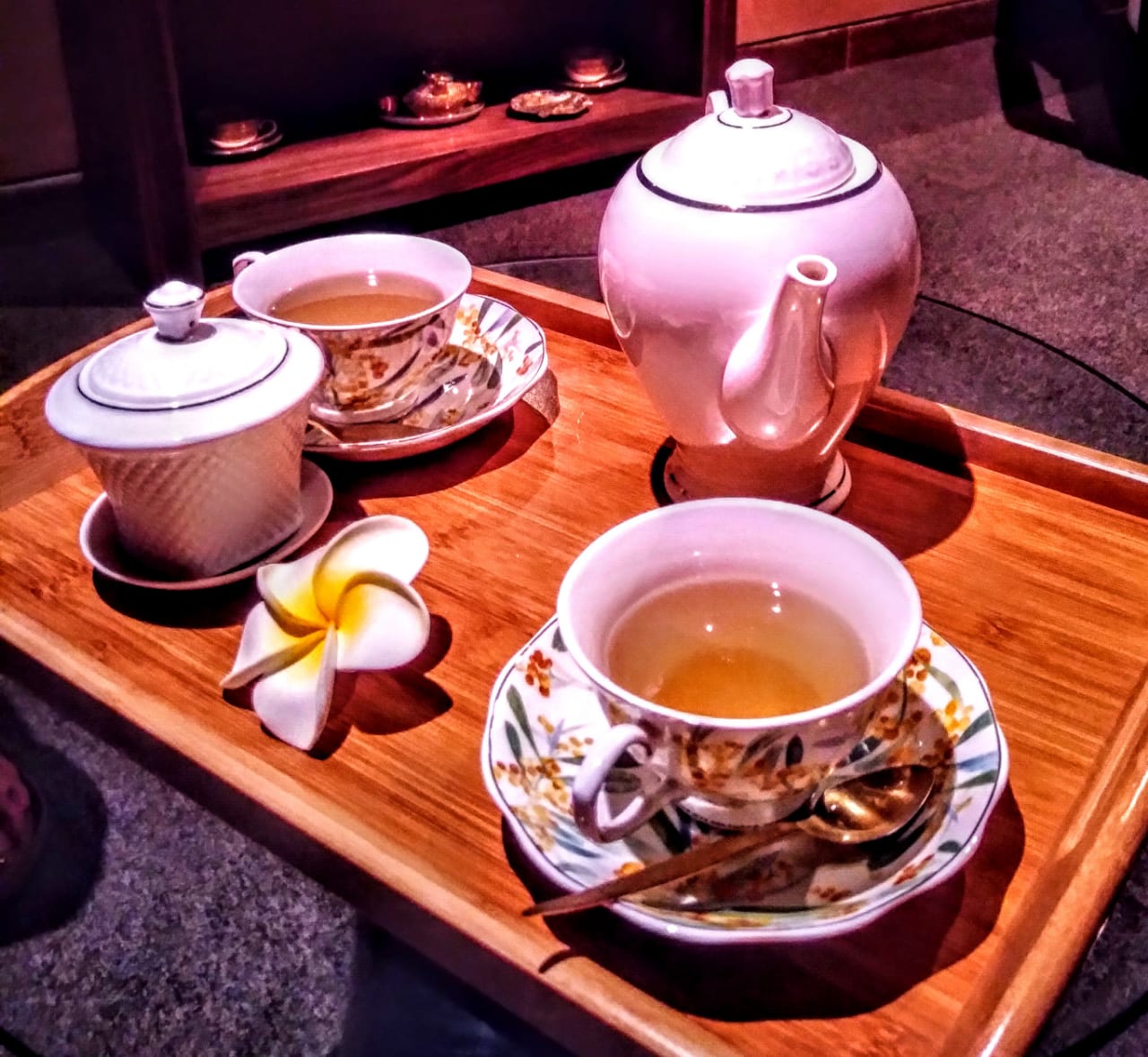
Afterward, more tea was poured. The work of mourning paused as people gathered around kitchen tables, telling stories and passing endless plates of sandwiches and biscuits. Tea, in Ireland, is how people hold the unholdable. It steadies trembling hands, gives the bereaved something to do, and turns private grief into shared humanity. This ritual became one I built for my daughter—a nod to her Irishness and our own small act of continuity. Every morning I would make her a cup of Irish tea as she was waking up and preparing to face the day. Over the years, that ritual began to reverse—sometimes she would make the tea for me. In those quiet exchanges, love took its simplest and most enduring form.


V. Rituals of Duty: West Point and the Moral Imagination


My daughter is now in her first year at the United States Military Academy at West Point. Her education there will span five years, followed by a minimum of six years of service. She has entered a world defined by ritual—from the Reveille that wakes cadets at dawn to the silent handshake in which a medallion passes palm to palm, symbolizing honor and belonging.


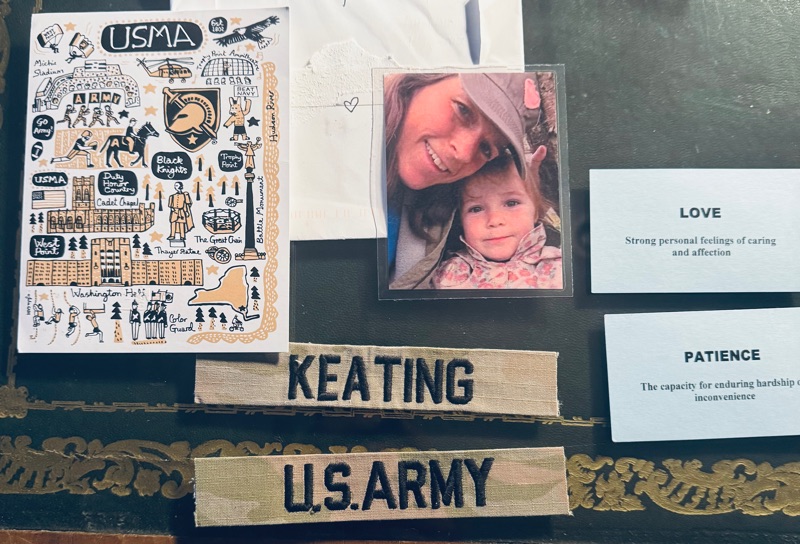
Last month, she sent me two cards. One contained a “Proud West Point Mom” sticker; the other, two of the academy’s moral-compass cards—one on Love, another on Patience. These cards, drawn from a larger deck, are virtues cadets are asked to memorize and embody. When she returned from Summer Leadership Experience at West Point after her junior year –she hung those virtue cards on her bulletin board to become her daily mantras.


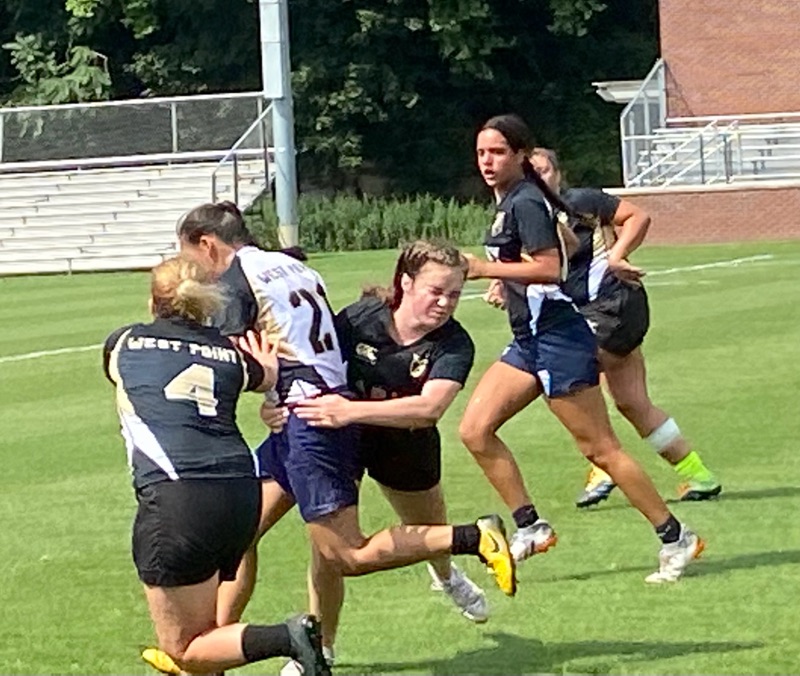
My daughter will play rugby for West Point—a sport steeped in its own codes and rituals of courage, teamwork, and respect. Watching her step into that world, I see the same sacred choreography I once studied in samurai culture: repetition as transformation, form as formation. Ritual can elevate service into vocation—but it can also conceal the cost of violence beneath its pageantry. I once told her that the pomp and circumstance of war can draw a veil across its brutality. Ritual gives shape and dignity to what might otherwise be unbearable.

VI. Rituals of Resistance: Bread, Protest, and the Anointing of Kings


Since returning to my hometown in Connecticut, I’ve been volunteering two mornings a week at the House of Bread in Hartford. Two weeks ago, while serving breakfast, a fellow volunteer asked why I had attended the “No Kings” protest at the State Capitol.
“What protest?” he asked.
 “No Kings.” I said. Surprised he wasn’t aware of it.
“What are you protesting?” he asked.
“Where should I start? Abuse of Power?”
He looked at me with genuine conviction. “You know, our president is anointed by God.”
His sincerity caught me off guard. We were standing in a soup kitchen founded by Catholic nuns, serving the city’s most impoverished residents—people whose very need was born from systemic inequity. A few minutes later, another volunteer, an older man, pulled me aside and said gently, “You know, he’s a good man.”
And I thought: Is goodness measured by the banana bread he bakes for those he believes God has not anointed?
That morning stayed with me. It was a portrait of America’s cognitive dissonance—the quiet collisions of faith and politics, charity and blindness. These are the same contradictions that keep our nation divided. They are also the rituals of belief that sustain power.


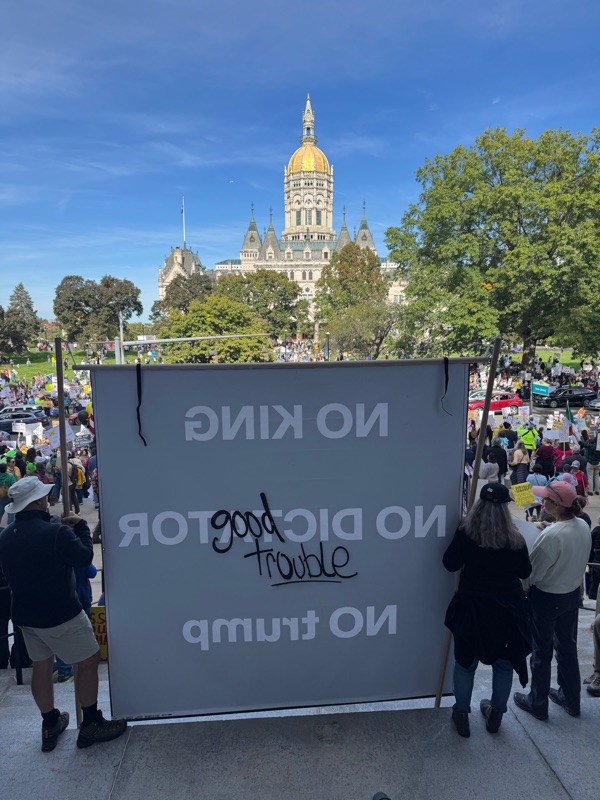
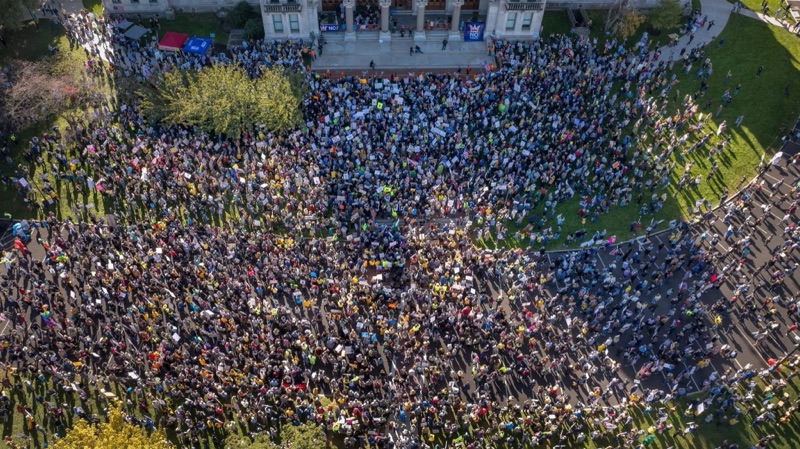
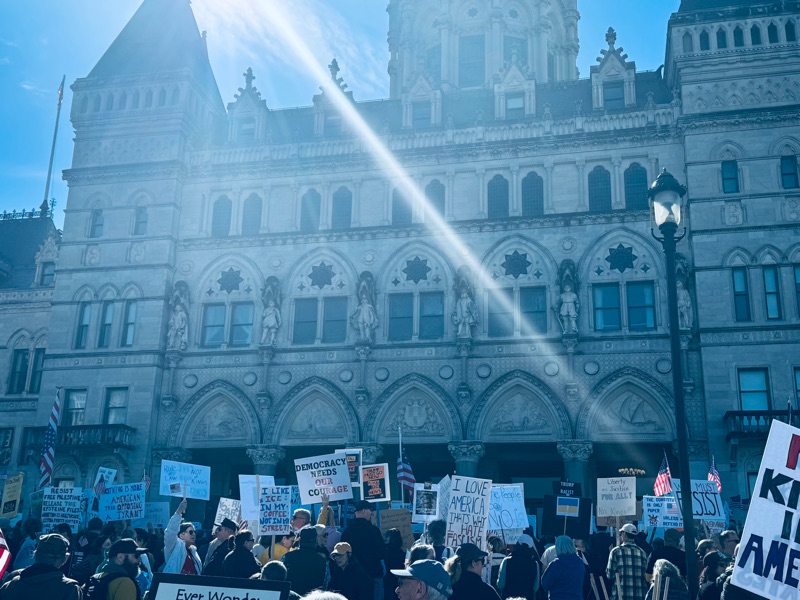
The “No Kings” protest took place a mile away, beneath the gold dome of the Capitol overlooking Bushnell Park. The crowd was mostly educated, middle-aged, middle-class citizens—people like me. The protest echoed the Boston Tea Party, resurrecting the symbolism of tea and rebellion. But this was no isolated event: it was part of a coordinated movement across the United States and even around the world—a shared choreography of conscience.
Protest, too, is a ritual and a right of democracy—a recurring act of collective remembrance that insists power must answer to the people. Like any ritual, it is rooted in repetition and symbol: the tea invoked rebellion, the chants called for renewal, and the crowd enacted a collective moral pause before power.


As the call-and-response rose and fell—
 “Show me what democracy looks like!”
 “This is what democracy looks like!”—
 I found myself remembering Langston Hughes’s 
“Let America Be America Again.”

Say, who are you that mumbles in the dark?
 And who are you that draws your veil across the stars?
 I am the poor white, fooled and pushed apart,
 I am the Negro bearing slavery’s scars…
 O, let America be America again—
 The land that never has been yet—
 And yet must be—the land where every man is free…
 Where never kings connive nor tyrants scheme.

It is significant that these lines were written by Langston Hughes, a Black poet speaking during the Great Depression—a time of economic despair and racial oppression. His audience was America itself. His protest was both lament and hope: a demand that this country live up to its own creed. Standing there in Hartford, I heard his voice still calling across the decades.

VII. Rituals of Return: The Sacred Pause

In Ireland, the kettle is its own kind of bell. The work of the day stops; people gather, pour, and talk. Tea becomes communion—an everyday liturgy of pause and presence. I think of it often now, how across continents and centuries, ritual keeps offering that same invitation: to stop, to see, to listen, and to connect.
From tea bowls to battlefields, from temples to protests, ritual endures as humanity’s most faithful way of remembering itself—and each other.


Bibliography

Harmakaputra, Hans A. “(Inter)Religious Ritual Participation in a Classroom Setting.” In The Georgetown Companion to Interreligious Studies, edited by Lucinda Mosher and Chad Pecknold. New York: Georgetown University Press, 2022.

Hedges, Paul Michael. Understanding Religion: Theories and Methods for Studying Religiously Diverse Societies. Oakland: University of California Press, 2021.

Hughes, Langston. “Let America Be America Again.” 1935. In The Collected Poems of Langston Hughes, edited by Arnold Rampersad. New York: Vintage Classics, 1994.

Rosen, Aaron. “Curating an Interfaith Pilgrimage.” In The Georgetown Companion to Interreligious Studies, edited by Lucinda Mosher and Chad Pecknold. New York: Georgetown University Press, 2022.

Saturday, February 20, 2016

Leaving Libya


“Do you know that there’s a halfway world between each ending and each new beginning? It’s called the hurting time, Jean Perdu. It’s a bog; it’s where your dreams and worries and forgotten plans gather. Your steps are heavier during that time. Don’t underestimate the transition, Jeanno, between farewell and new departure. Give yourself the time you need. Some thresholds are too wide to be taken in one stride.” 
― Nina GeorgeThe Little Paris Bookshop

        My daughter and I have had many endings and new beginnings-some planned, some highly anticipated, others unexpected or dreaded.  It is fair to say that I have greatly underestimated transitions between each farewell and new departure. With each goodbye, you lose a little of yourself. I read this book after my mom died last August. It spoke to my grief. We were in Bali waiting for a work visa to come through for my current teaching job in Papua.  I know, tough life. 'Stuck' in Bali.  But my daughter and I had driven directly from my mother's memorial in New York to Logan airport to board a flight to Indonesia. The delayed work visa had already held us up for four weeks, so at the time, I felt a sense of urgency to get there-- to get started, to get settled. I was torn between my grief and sense of duty to stay and my sense of being completely unsettled and unmoored.  I was given the impression that the visa MUST be coming soon.  We rushed to Bali to wait for what I thought would be just a few more days. We ended up with 6 more weeks of suitcase living,  of financial stress, of uncertainty, of living week to week, unable to plan ahead, totally alone and overwhelmed with grief,  all in a holiday paradise.  The experience brought me back to another taxing time of uncertainty, another waiting time, another halfway world. That time occurred after we fled Libya in 2011 at the start of the revolt against Gaddafi's regime.
Niamh in the Sahara, Ubari Lakes region, November 2010.


         February 21st marks 5 years since I fled Tripoli, Libya with my three-year-old daughter.  I was employed by the American School of Tripoli, a small, international community school. Friends and family questioned my sanity when I announced we would be moving there.  Libya conjured images of Lockerbie and  Gaddafi's Amazon guards in their heads.  Indeed, life in Libya was a challenge and required people to seek one another out. It was too difficult to manage day-to-day things sometimes there without help, support and advice from others. Consequently, it was one of the places where I have felt the most at home and part of a supportive community because people were genuinely caring.


Niamh meeting a little girl in the market area
       
      There were power outages on a daily basis. The internet was there in word only most of the time, and to drive there was to take your life in your own hands. I was told that the motto there for drivers was, 'If there is pavement, fill it up.' The shop and road signs were entirely in Arabic so elaborate, hand-drawn road maps were photocopied and shared. Mile markers and directions like, 'go past the first mosque and then two olive groves and then the third set of two speedbumps not three and then make a right,' were the norm.  The hardships and stress were balanced by the adventurous and inclusive community. People organized caravans to explore the beautiful Mediterranean beaches, or the Roman ruins at Sabratha, or a Troglodyte cave dwelling, or even expeditions to the desert. By February, 7 months into my contract, I was thinking long-term. I could see a future there. Niamh was happy in preschool and we were making life-long friends. And then, I was throwing toothbrushes, underwear, my diplomas, and a teddy bear into a tiny green suitcase and we were running away. Listen to the radio interview about that at the link here.

Radio Interview with PRI/NPR about evacuation from Libya

        But fleeing wasn't the end of it and it wasn't the worst of it.  I didn't know where to go or what to do for weeks. Thankfully, our school continued to pay our salary and our benefits and provided our travel allowance. My head of school, despite her own uncertainty, did all she could to provide references for all us. I found myself wandering Europe and North America with my three-year-old and my battered green suitcase in tow. We stayed with kind-hearted friends while trying not to wear out the welcome, run out of money or have a nervous breakdown. And through it all, looking for a new job--writing e-mails to schools and having skype interviews--trying to sound cool and calm. That was life for four months. We went from Malta to Milan, back to Malta to Ireland then to Vancouver then Seattle.  

        I remember saying to an Irish friend who works for the UN that I felt like a refugee. Since she worked with refugees in South Sudan, she kindly corrected me, "You are not a refugee." she said, "You are displaced. There's a difference."  She was right, of course. I had my US passport and some money in the bank and people to stay with and my health. I was one of the lucky ones.         
         In late May I was offered a job at an international school in Bangkok and by mid June we were on a plane to Thailand. Two years later, we recovered a few small boxes of our belongings, now musty and ruined. The school never re-opened and life for the Libyans we encountered there has never been the same. I have kept in touch with many of the people we knew there, Libyans and foreigners, through the miracle that is social media. I learned that you never know  and cannot control what lies ahead, despite the best laid plans and intentions.  I am thankful for the time we had in Libya and for the friends we made there. I am learning how to respect the time between endings and new beginnings.  


Monday, February 15, 2016

Kamoro Tribe, Mware

          Our school went to visit one of the local Kamoro tribes last week.  If you have read or seen Guns, Germs, and Steel by Jared Diamond, you may be familiar with the tribes in Papua, New Guinea that he interacted with and based his theories of the roots of inequality upon. We met with the distant cousins of those tribes here in West Papua, with the help of a man named Kal Muller. Like Diamond, Muller has lived with and studied the tribes here for decades. He has done much to educate people about the Kamoro way of life and the challenges the people face due to encroachment on their territory.  
        Diamond shares an anecdote about a tribal man asking him, thirty year ago, why the white men have so much 'cargo'.  Fair question. When foreigners first came here, the fact they had so much sophisticated cargo gave them a sense of power and supremacy over the tribes. Diamond explains his theory of geographic luck--how some civilizations have thrived simply because they were born into a place that enabled them to do so. He maintains that racial supremacy has nothing to do with it and that the tribes have had to use tremendous ingenuity to overcome great challenges to survive here in this jungle.  Diamond asserts that he could never survive the jungle without the help of the tribes and after spending a day watching them work--I have to agree. 
Niamh using an adze to pound the Sago.
Tequila chaser needed
We watched the step-by-step process of turning pith of the Sago palm into pulp. Sago starch is a staple of the Kamoro diet and the process we were shown requires some endurance.  Some of us sampled a tribe delicacy, mollusc-like creatures called Tambelo,  found by splitting logs in half. The succulent Tambelo killed my appetite so I passed on the meal of fish and crab that had been slow-cooked over a smoky fire.  

The log where the Tambelo treats are found


Not only did the tribe show us how they make their  food, they also demonstrated  how they weave and carve.  There was a lot to see and it was incredibly hot and muggy and smoky and crowded. Sensory overload kicked in sometime after the Tambelo incident. I had to step back for a bit and just observe.  When I did so I realized that the local kids, the ones who weren't involved in the spectacle, were watching us--the sweaty, pink-faced, over-dressed folks--as much as we were watching them. The security and police that were sent to protect us had their cameras out too.  
Wood Carvers at work

As I stood there,  I thought about Jared Diamond's theory about haves and have-nots and about being born lucky.  Tomorrow the tribe will not be in their grass skirts and headdresses. That was for us, to share their world with us. These people, this tribe, they know who they are, they know where they are from. Who's to say who the haves or have-nots are anyway, really? 


new friend


Friday, February 12, 2016

Papuan Perspective

Kuala Kencana, Papua, Indonesia


Kuala Kencana, Papua, Indonesia  is our latest port of call. We have been here for a few months now. It is a remote, surreal, fascinating and challenging part of the world.  Recently, our school had an outing to a local Papuan School. The excursion provided much needed perspective on life here. We live in a purpose built town, erected by the American mining company its inhabitants are all here to serve in one capacity or another. Our school is one of the most well-resourced schools I have ever worked for on the international circuit. We just don't have many students.


The Papuan school we visited was one example of what the mining company for which I work does for community outreach. The school is funded by the company and the children who attend come from various tribes in both the lowlands and the highlands of Papua. They all board there and so once they go to the school they will not see much of their families again. The students ranged in age from kindergarten to high school. They slept in bunk rooms with as many as 20 per room. The rooms for housing and learning were clean and simple but well equipped enough for learning to take place. The children welcomed us a bit coyly but seemed eager and proud to show us their school.

The hope is that our school and their school can begin a meaningful exchange over the course of the school year.  Watching my daughter interact with the Papuan students made all the stress, sweat, loneliness and tears of the past months fade a bit. She declared that this was the best day yet since we moved to Papua in October ( there have been many sad days).  It was the happiest I have seen her. An hour into the visit she had a new best friend named Fani.   I know she won't remember all the trips and adventures of her childhood but I hope that somewhere in her soul she will hold that feeling she had this day--that is the excitement of overcoming linguistic and cultural barriers and finding a new friend. After all, this is why we live this nomadic life.


Sunday, February 7, 2016

Where I'm From...

6 Hartwell Rd


I have been thinking a lot about Home lately. Home and what it means to have one. It's not just watching the news about the Syrian refugees that has triggered this. It's personal too. My mom died suddenly back in August. She was 80. She had been fairly healthy and then she had a stroke and that was the end. I think she would have chosen to go like that. Quick and painless. My Dad died nearly 25 years ago. So within weeks of her death, her house, our family home since 1964, was cleared out, put on the market and sold-- a lifetime of memories gone. Just like that.  If you are prone to pondering like me, this sort of thing makes you question everything.

I have been traveling all over the world for years, using teaching as a means to do so. I will share some truths I have learned on my travels in this blog eventually.   Throughout all my travels, I have never stopped thinking about that house at 6 Hartwell as my home. Even though I haven't lived there in decades and despite the fact that it wasn't the happiest of homes, it was still the place that made me who I am today. Knowing where I am from and what made me who I am, has made the rootlessness of my nomadic life easier to bear. So what happens now that my home of homes doesn't exist anymore?

And what of my daughter?  She is nearly 9. She has already lived in 6 countries and spent considerable time in many more. How will she define home? What can she say when she is asked the question, 'So where are you from?'  Since her father is Irish and I am American she usually says she is from Ireland and America-- yet she has hardly lived in either country. And so to the bigger question--Does it matter?  People often tell me that my daughter's home is with me. But what if that isn't quite enough? In my daughter's experience, you can fly to almost anywhere in the world, get off the plane and find someone you know there. She is truly a third culture kid. Seems Cool. But I can't shake the feeling that one needs to have a sense of Place to have a sense of Self.  Where are you from? I am inclined to think that knowing the answer to that question matters a lot. I am sure there is some truth to those sayings that home is where the heart is but I am beginning to think that whoever coined that term never felt truly without a home.

My mother's birthday was a few days ago. We had not celebrated any birthdays together, hers or mine, in some years. We had been estranged. But this one, well, I missed her. I felt the loss in my solar plexus. She was a teacher. She always told me I should write so, in honor of what would have been her 81st birthday, I am finally writing my first post.   Should anyone who knows me read this, they might scoff and say--but you ran away! You went off to explore! You hadn't seen your mother in years! Those people would be correct. But they don't know everything. They don't know why and they don't know the cost. I could never find a way to explain how I missed home every single day and in every single place I have lived. In my search to find words for this, I came across this word: hiraeth.

Maybe my feelings of hiraeth have more to do with turning 45 and finding myself in my 9th international teaching job posting and finding I can fit all my worldly possessions in a few suitcases as well.   Some say, ah you are really living free. No possessions to tie you down.  And yes that is true. But what I imagine most feel as those mid-life doubts begin to crop up, is that they haven't done and seen enough of what they once dreamed when they were young. For most, the idea of randomly moving to a new country every year is so daunting they would never dream of trying it. It is commonplace for me. And now, as I reach the supposed pinnacle of life, I find the thing that has been just out of reach for me is that-- settling down. The word settle always had a negative connotation to me. You're settling for what life has handed out and making it work. Now I see that as the ultimate challenge and achievement. I am ready now to make my own home, for myself and my daughter. But before I do, I want to take time to reflect on all the adventures that have got us to this point. I have a lot of ground to cover. Watch this space.

My mom and I in 1972